Postflight Crew Health and Performance Data Collection
Since the Artemis II crew splashed down in the Pacific Ocean on April 10, 2026, after their record-setting mission around the Moon, NASA science teams have been busy collecting and analyzing data from the flight. The crew—NASA astronauts Reid Wiseman, Victor Glover, Christina Koch, and Canadian Space Agency astronaut Jeremy Hansen—have contributed critical health data to help the agency understand how the human body reacts to spaceflight. Collecting this data as soon as possible after landing is essential to understand how the body adapts from microgravity to Earth's gravity. The findings will inform NASA's understanding of how quickly crews can complete mission-critical tasks after landing on a planetary surface like the Moon or Mars, where there will be no landing support personnel to assist.
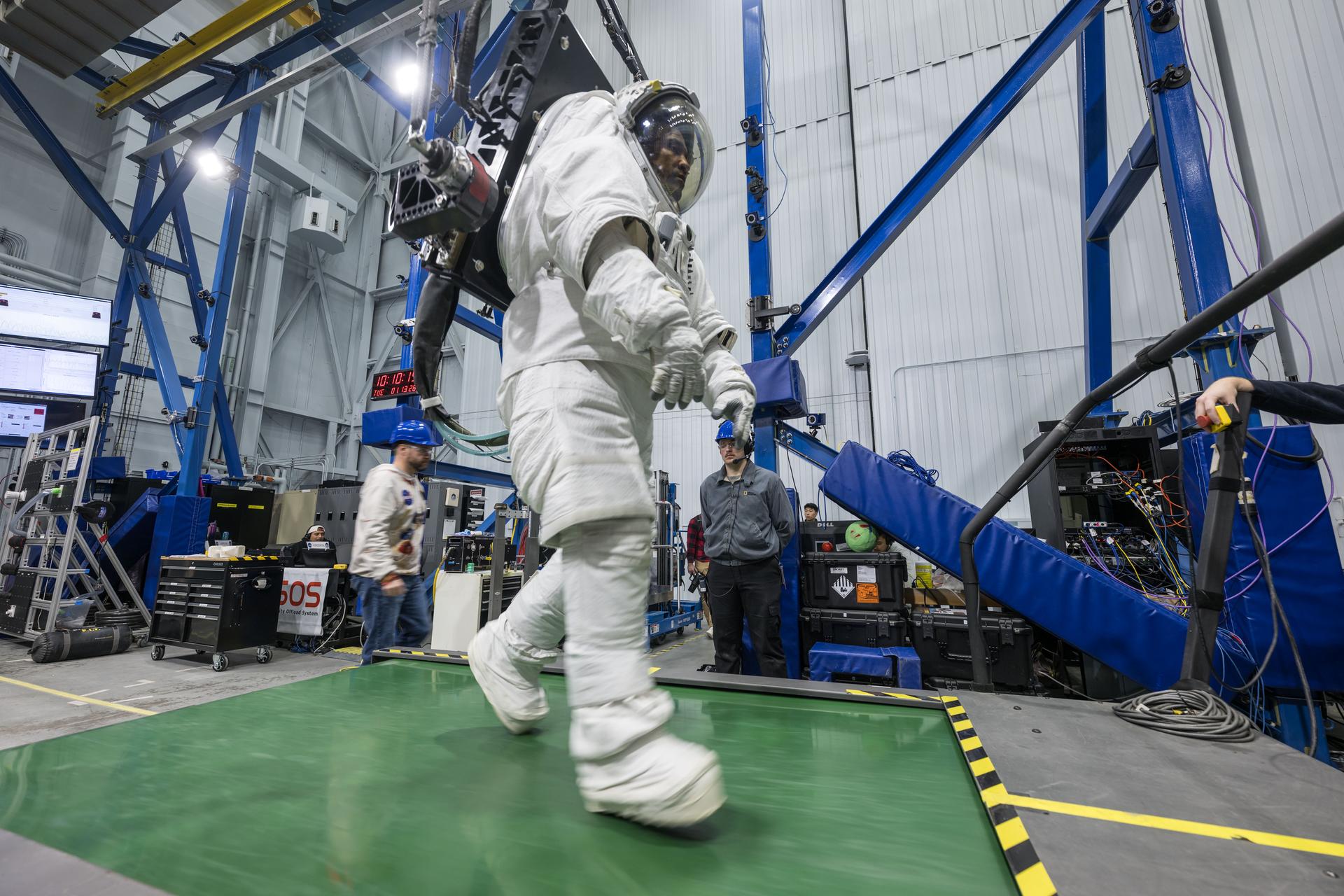
Within a day of splashdown, researchers collected a suite of measurements for the Artemis II Spaceflight Standard Measures study. This study is part of a larger effort across the astronaut corps to gather a baseline set of health measurements, including blood pressure, heart rate, eye health, and motor control. Crew members also completed a mini obstacle course that involved lying down, standing up, unfurling a rope ladder, climbing, and other tasks to assess how their bodies were adapting to Earth's gravity. Once the crew returned to NASA's Johnson Space Center in Houston, researchers guided them through further medical check-ups and tests of motor control.
Analyzing Astronaut-Derived Organ Chips Flown Around the Moon
In addition to crew health data, scientists are analyzing organ chips that were flown on the Artemis II mission. These chips, derived from astronaut cells, were exposed to the deep space environment and are now being studied to understand the effects of space radiation and microgravity on human tissues. The results will help researchers develop countermeasures to protect astronauts on long-duration missions, such as those to the Moon and Mars. The organ chip technology is a key part of NASA's strategy to conduct detailed biological experiments in space without requiring invasive procedures on crew members.

Lunar Imagery and Audio Data Release
NASA is also processing and preparing to release a wealth of lunar imagery and audio collected during the Artemis II mission. The crew captured high-resolution images of the Moon's surface and recorded audio descriptions of their observations. This data will be made available to the scientific community and the public, providing valuable insights into lunar geology and the experience of traveling around the Moon. The imagery and audio will also serve as a historical record of humanity's return to the lunar vicinity.
Blueprint for Future Lunar Surface Science
Results from Artemis II's science investigations will help support safe human exploration of deep space and provide a blueprint for how future missions will conduct science on the lunar surface as NASA builds a Moon Base and develops an enduring human presence there. The postflight health data, organ chip analyses, and lunar observations are all contributing to a comprehensive understanding of the challenges and opportunities of living and working on the Moon. NASA's Artemis program aims to establish a sustainable human presence on the Moon by the end of the decade, and the lessons learned from Artemis II are critical to achieving that goal.
Preparing for Mars and Beyond
The data from Artemis II is not only relevant for lunar missions but also for future human missions to Mars. Understanding how the human body adapts after weeks in deep space and how quickly crews can perform tasks after landing on a planetary surface is essential for planning Mars expeditions. The Artemis II crew's experiences and the scientific data collected will help NASA design safer and more effective missions for the next generation of explorers.
As NASA continues to analyze the Artemis II data, the agency is already looking ahead to Artemis III, which will land the first woman and the next man on the lunar surface. The knowledge gained from Artemis II will directly inform the science operations and crew health protocols for that mission and beyond.
This article is based on reporting by science.nasa.gov. Read the original article.
Originally published on science.nasa.gov