A proposed answer to a fundamental cosmic question
A new theoretical study suggests that a long-hypothesized type of particle may have briefly dominated the energy budget of the infant universe, changing the pace of cosmic expansion and helping create conditions in which matter ultimately prevailed over antimatter.
The candidate is the right-handed neutrino, a hypothetical counterpart to the neutrinos detected in nature. The work, published in Physical Review Letters on Sept. 8, does not report the discovery of such a particle. Instead, it offers a scenario in which these particles could resolve part of a deeper puzzle: why the observable universe contains so much matter at all.
That question follows from a basic expectation in particle physics. Processes in the early universe should, in broad terms, have produced matter and antimatter in closely related quantities. When matter meets antimatter, the two can annihilate. If the balance had remained exact, there would be little ordinary material left to form stars, planets or people.
Why neutrinos are unusual
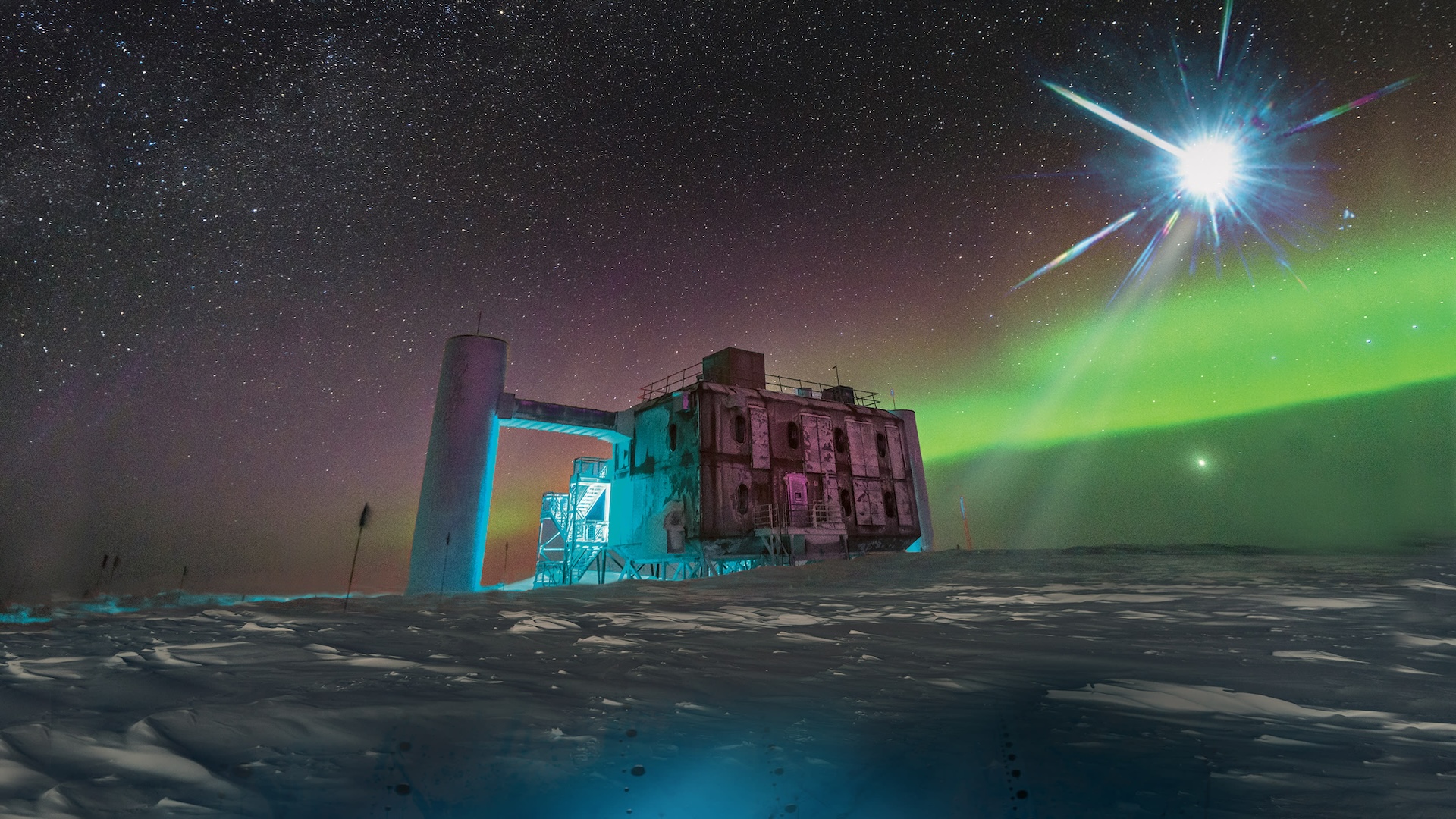
Neutrinos are among the most elusive known particles. They interact so rarely with matter that enormous numbers pass through Earth, and through people, with virtually no effect. The source article notes that a solar neutrino could travel through a slab of lead a light-year thick before interacting with a single atom.
Scientists have detected three neutrino flavors, and neutrinos can change between those flavors as they move. This behavior depends on a quantum effect that requires neutrinos to have mass. Yet the Standard Model of particle physics describes neutrinos as massless, leaving a mismatch between the framework and observation.
One proposed extension introduces right-handed neutrinos. In particle-physics terminology, handedness refers to a particle's spin in relation to its direction of travel. Detected neutrinos are left-handed. A right-handed neutrino would be different in a consequential way: it would not feel the weak nuclear force in the same manner as its known counterpart.

A short era with an outsized effect
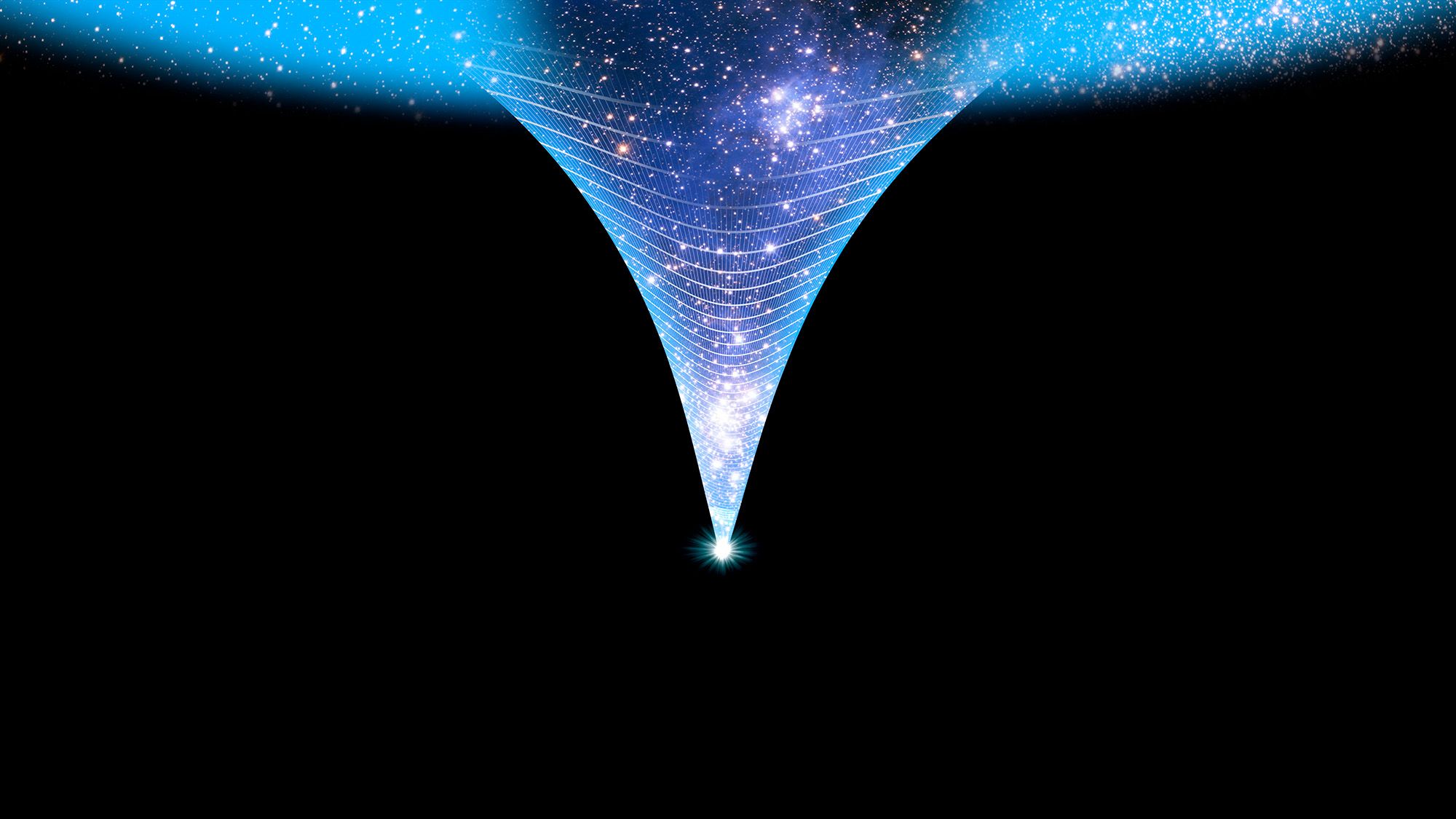
In the new proposal, right-handed neutrinos could have carried more energy than all other components of the early universe for a brief interval after the Big Bang. Such dominance would have sped up the universe's expansion.
Changing the expansion rate is not a minor adjustment. In the early cosmos, particle interactions and cosmic cooling were unfolding rapidly. The timing of those events determines which reactions remain active, when they fall out of equilibrium, and what ingredients survive into later eras.
The researchers argue that an early period dominated by right-handed neutrinos could have delayed key interactions. That delay, in turn, could alter the conditions under which the imbalance between matter and antimatter emerged or persisted. The result is a possible route toward explaining why matter was not completely erased.
The proposal connects two open problems: the origin of neutrino mass and the origin of the matter-dominated universe. This kind of connection is attractive because it asks whether one addition to the Standard Model might have consequences across radically different scales, from subatomic behavior to the evolution of the cosmos.
Hypothesis, not detection
The study should be read as a theoretical possibility rather than evidence that right-handed neutrinos exist. No right-handed neutrino has been detected, and the source article describes the particle as hypothetical.
That distinction is central. A successful explanation of the matter-antimatter imbalance must do more than tell a plausible story. It has to fit what is already known about neutrinos, the early universe and particle interactions, while yielding predictions that future observations or experiments can test.
The study's value lies in defining a specific cosmological role for particles that have long been considered in efforts to extend the Standard Model. If the scenario is refined, researchers can investigate whether its predicted consequences are compatible with measurements of the universe's history and with laboratory searches for new neutrino behavior.

Why the idea is scientifically important
Cosmology often reconstructs the universe's earliest moments indirectly. Scientists cannot observe the first instants after the Big Bang in the same way they observe a nearby galaxy. Instead, they compare theoretical models with the later traces left by cosmic evolution and with the behavior of particles measured today.
That makes early-universe proposals powerful but demanding. A model must link microscopic physics to large-scale consequences without contradicting established evidence. Right-handed neutrinos are especially compelling candidates for such work because neutrinos already point to physics beyond the Standard Model's simplest description.
- Known neutrinos change flavor, indicating they have mass.
- The Standard Model's massless-neutrino prediction is therefore incomplete.
- Right-handed neutrinos provide one possible extension of that framework.
- The new study explores how they might also affect the universe's matter-antimatter balance.
The scenario will remain speculative until it can be tested against a wider body of evidence. But it illustrates how unresolved questions about a nearly invisible particle can bear on the largest question of all: why the universe contains the material needed for anything to exist.
This article is based on reporting by Live Science. Read the original article.
Originally published on livescience.com