A developing battlefield incident with immediate strategic consequences
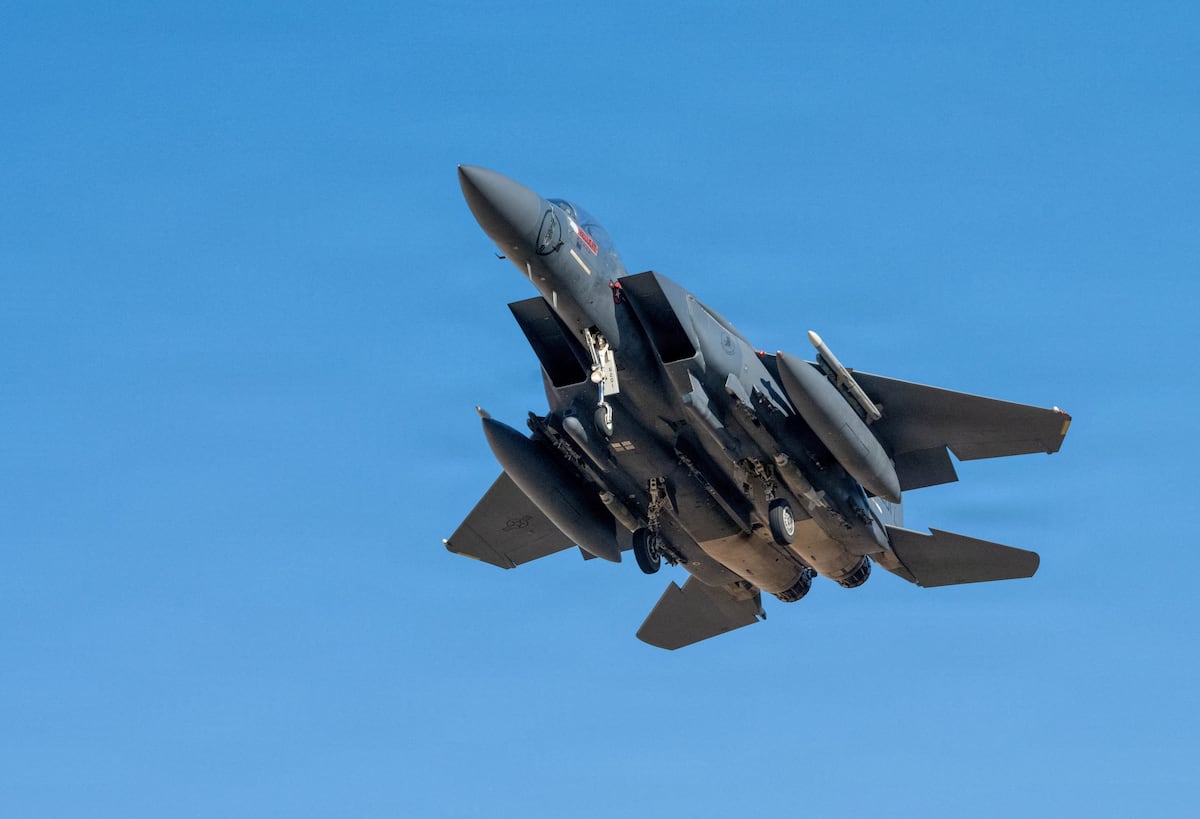
A United States fighter jet has reportedly been shot down over Iran, according to a U.S. official who spoke to Reuters on condition of anonymity, in what would mark a serious escalation in the ongoing conflict. A search-and-rescue operation involving numerous U.S. aircraft is underway for possible survivors, and Iranian officials have reportedly called for the search and capture of any surviving crew members.
The public details remain limited, and key facts, including the exact location of the aircraft, have not been confirmed. The Pentagon and U.S. Central Command did not immediately respond to requests for comment in the reporting. Even so, the incident is already consequential. If American aircrew are alive and evading capture inside Iran, the tactical situation becomes inseparable from a major political and military crisis.
Why the uncertainty matters
The report describes this as a developing story, and that caveat is crucial. In fast-moving combat situations, early accounts are often incomplete, and claims can be shaped by confusion, operational secrecy, or information warfare. Still, the fact that a U.S. official told Reuters a fighter jet had been shot down gives the report weight beyond unverified social media chatter.
Iranian media also circulated an image said to show an Advanced Concept Ejection Seat from the allegedly downed F-15E Strike Eagle. Video on social media appeared to show a U.S. Air Force HC-130 refueling HH-60G Pavehawks over Iran during apparent rescue efforts. None of that, on its own, resolves the core uncertainties, but together it paints a picture of a potentially serious air combat loss with live personnel recovery implications.
A notable threshold in the conflict
If confirmed, the shoot-down would be the first time during Operation Epic Fury that a manned U.S. aircraft was brought down by enemy fire. That alone would make it a threshold event. Modern air campaigns are designed around the assumption that advanced American aircraft, supported by electronic warfare, surveillance, and logistics, can reduce risk significantly. A successful shoot-down by Iranian forces would challenge that assumption and put pressure on force protection, mission planning, and escalation control.
The report places this incident in a broader sequence of recent losses and near-losses. A U.S. F-35 was reportedly hit by enemy fire during a combat mission over Iran on March 19 but managed an emergency landing at a U.S. base in the region. Six U.S. airmen were killed on March 12 when their KC-135 refueling aircraft crashed in western Iraq during combat operations. On March 1, three U.S. F-15E Strike Eagle fighters were shot down in a friendly-fire incident involving a Kuwaiti F/A-18, though all six crew members were safely recovered.
The rescue mission could define the next phase
The immediate issue is no longer only the aircraft. It is the crew. Search-and-rescue missions are among the most dangerous operations in wartime because they can force aircraft into predictable patterns, extended loiter times, or contested areas where opposing forces are already alert. The report says numerous U.S. aircraft are involved in the effort, which means the operational footprint is likely substantial.
That also means the consequences of this incident may unfold in stages. First comes confirmation of the loss. Then the status of the crew. After that comes the question of whether any rescue succeeded, failed, or led to additional engagements. Each step carries its own military and political costs. A recovered crew member would still represent a major escalation event. A captured one would represent something even more combustible.
Competing claims and the fog of war
The timing is complicated by prior denials. U.S. Central Command on Tuesday rejected Iranian claims that its Revolutionary Guard Corps had downed an enemy fighter jet over Qeshm Island in the Strait of Hormuz, stating that all U.S. fighter aircraft were accounted for and that Tehran had made similar false claims several times before. That earlier denial underscores how heavily contested the information environment has become.
Now, however, the new Reuters account points in a different direction. That does not automatically validate every Iranian claim or every circulating video, but it does suggest that the information landscape has shifted materially. Analysts and policymakers will be watching for official confirmation from Washington, evidence of the aircraft type and location, and any indication of whether the crew ejected.
A high-stakes test of military and political control
The larger significance of the report lies in how quickly a single aircraft loss can force strategic decisions. Air campaigns can absorb material losses. They are less able to absorb uncertainty around personnel deep inside enemy territory. If U.S. aviators are on the ground in Iran, commanders may face pressure to commit further resources to recovery. Political leaders may face pressure to retaliate, de-escalate, or both at once.
That is why this incident matters even before all the facts are known. It is not only a battlefield event. It is a test of command discipline, communications credibility, and crisis management under extreme pressure. Until official details become clearer, caution is warranted. But the available reporting already indicates that the conflict may have crossed into a more dangerous phase, one in which the fate of a single crew could shape the next military and diplomatic moves on both sides.
This article is based on reporting by Defense News. Read the original article.
Originally published on defensenews.com