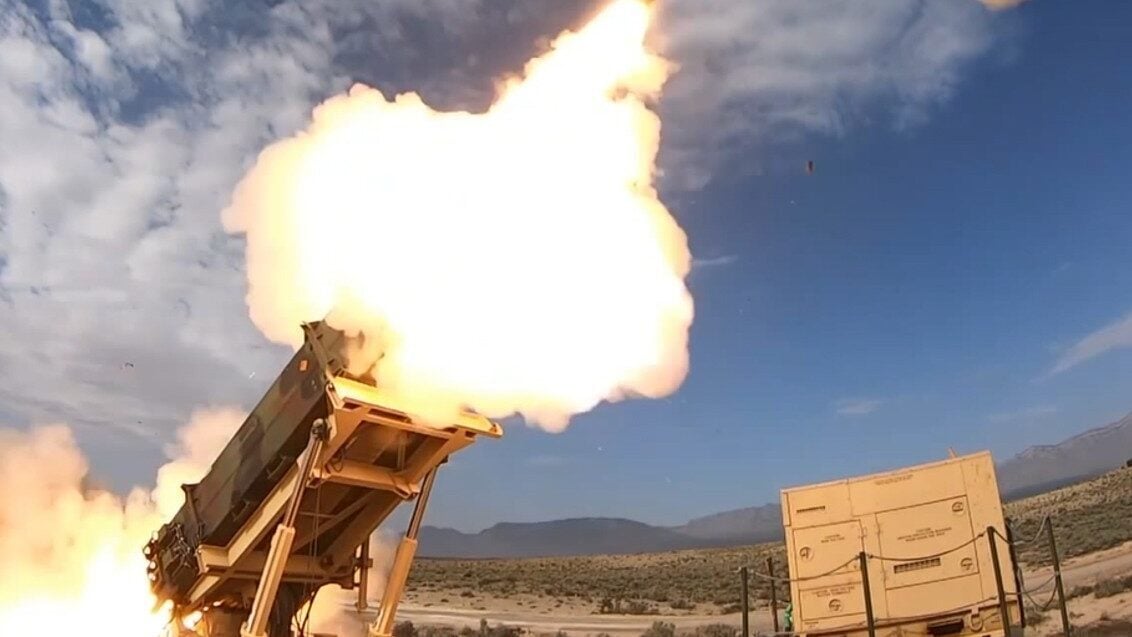
A bottleneck in missile production is getting direct attention
The Pentagon and Boeing have signed a framework agreement to triple production of seekers for the Patriot Advanced Capability-3 interceptor over the next seven years, marking another step in the Defense Department’s accelerating effort to rebuild munitions depth and harden its supplier base.
The agreement matters because the seeker has been identified as a production chokepoint for the PAC-3 interceptor, which Lockheed Martin manufactures as the prime contractor. Boeing supplies the seeker to Lockheed. If the Pentagon wants more finished interceptors, this component has to scale with them.
Breaking Defense reports that the new framework follows a January multiyear agreement with Lockheed Martin aimed at increasing PAC-3 interceptor production to 2,000 annually by 2030 and tripling it over seven years. The Boeing deal extends that logic deeper into the supply chain. Rather than negotiating only with the prime, the department is now moving directly with critical suppliers when it sees a constraint that could slow the entire system.
A supply-chain strategy, not just a contract announcement
That shift was made explicit by Pentagon acquisition chief Michael Duffey, who described the agreement as part of strengthening “every link in the chain.” The line is notable because it captures a broader defense-industrial policy change now visible across multiple weapons programs. The issue is no longer just how many systems primes can assemble, but whether the underlying industrial web can support sustained output.
The PAC-3 sits inside that wider strategic problem. Demand for air and missile defense has risen sharply as wars and long-duration conflicts force governments to think less about boutique procurement and more about volume, replenishment, and surge capacity. Production speed, factory space, and supplier resilience now matter as much as platform performance.
Under the new framework, Boeing can begin ramping up production immediately ahead of a final contract expected later this year. The company said the agreement paves the way for additional “cash-neutral” investments. It has already put more than $200 million into infrastructure since 2024, including a new 35,000-square-foot expansion at its Huntsville, Alabama, factory. That signals that some of the industrial groundwork is already in place and that the Pentagon is trying to convert those investments into long-run output.

Why the seeker matters
The seeker is the guidance element that helps the interceptor find and engage its target. In production terms, it is exactly the kind of high-value subsystem that can quietly cap total output if suppliers cannot scale. Defense manufacturing often runs into this problem: the visible bottleneck is not the missile body or final assembly line, but a smaller component with tighter technical and industrial constraints.
By going directly to Boeing, the Pentagon is acknowledging that reality. It is also signaling that future industrial policy may increasingly bypass the old assumption that working through the prime is enough. If the goal is to create resilient capacity across years rather than months, suppliers further down the chain become strategic actors in their own right.
This is the first such framework agreement for Boeing, according to the report. That fact makes the announcement more than a routine production adjustment. It is a test case for a more interventionist model of defense procurement, one focused on throughput and supply assurance.
What the agreement tells us
- The Pentagon sees PAC-3 seeker production as a key limiting factor in scaling interceptor output.
- It is willing to engage directly with major suppliers instead of relying solely on prime contractors.
- Industrial capacity is now being treated as part of deterrence, not just a support function.
If the plan works, the payoff will not be measured only in seeker counts. It will show whether the United States can move from episodic production surges to a steadier model of defense manufacturing built for prolonged demand. That is the real strategic question behind this agreement, and one that extends far beyond a single interceptor program.
This article is based on reporting by Breaking Defense. Read the original article.
Originally published on breakingdefense.com