Space tourism is back on sale, at a much higher price
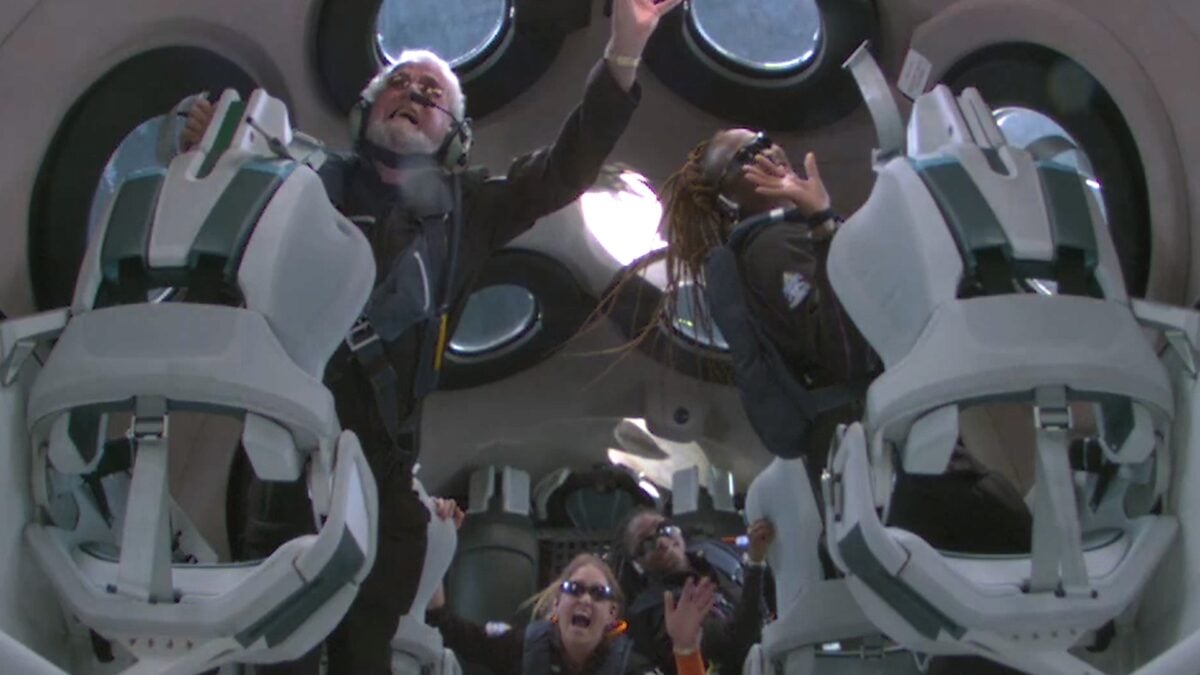
Virgin Galactic has reopened bookings for its suborbital flights, pricing a limited number of new tickets at $750,000 per seat. The move marks the company’s latest attempt to revive a space tourism business that has repeatedly struggled to become routine, profitable, or broadly persuasive.
According to Gizmodo, the company is resuming sales after a nearly two-year hiatus and says assembly of its next-generation vehicle, called SpaceShip, is nearly complete. Ground testing is set to begin in April, with operations expected to start in late 2026. That timing lines up with what CEO Michael Colglazier described as a planned increase in flight cadence.
The new ticket price is a major jump from 2021, when seats were offered at $450,000. Even at that earlier level, demand was limited to a narrow class of wealthy buyers. The higher price makes clear that Virgin Galactic is not trying to democratize access in any near-term sense. It is selling rarity, not scale.
The product remains highly constrained
Virgin Galactic’s flights are short. The experience lasts about 90 minutes and reaches roughly 50 to 56 miles, or 80 to 90 kilometers, above Earth. Passengers experience only a few minutes of microgravity before descending. The company’s vehicle does not cross the Kármán line, the internationally recognized boundary of space at 100 kilometers, though it still reaches suborbital altitudes long marketed as the edge of space.
That distinction has always sat awkwardly at the center of the company’s pitch. Virgin Galactic is not selling orbital travel, research utility, or transportation. It is selling a brief, high-cost experience wrapped in the symbolism of spaceflight. For some customers, that may be enough. For a mass market, it likely is not.
The company’s own history makes the challenge sharper. Virgin Galactic’s path has been marked by technical setbacks, delays, and a fatal 2014 crash caused by inadequate safety procedures, according to the report. The company eventually began commercial flights in 2023, carrying a government crew on Galactic 01 and then private passengers on later missions. It reached a near-monthly launch rhythm for seven consecutive commercial trips, but also acknowledged those flights would not generate much revenue.
What the return to sales actually signals
Reopening bookings is less a sign of solved demand than a sign of continued commitment. Virgin Galactic is still trying to prove that there is a durable premium market for short suborbital experiences if the vehicle can fly often enough and reliably enough. The business case depends not just on attracting wealthy customers, but on turning a historically fragile operation into something repeatable.
The next-generation SpaceShip is therefore the real story. If ground tests proceed on schedule and late-2026 operations begin as planned, Virgin Galactic will have another chance to show whether its model can move beyond novelty. If delays return, the new ticket sale may look more like a financing and signaling mechanism than a practical expansion.
There is also a cultural question embedded in the announcement. Space tourism once carried the aura of an imminent industry. Years later, it still looks more like a prestige niche. The basic proposition has not broadened much: a small number of wealthy customers paying a very large amount for a very short trip. Raising the ticket price suggests the company is leaning into that reality rather than trying to escape it.
The facts that define this phase
- Virgin Galactic is again selling seats, now at $750,000 each.
- Its next-generation SpaceShip is nearing completion and is due for ground testing in April.
- Commercial operations are targeted for late 2026 after a nearly two-year hiatus.
The company is not promising a new era of everyday space access. It is asking the market to believe, once again, that a difficult and expensive experience can become a dependable luxury business. That remains unproven. But for now, Virgin Galactic is betting that the dream still has buyers.
This article is based on reporting by Gizmodo. Read the original article.
Originally published on gizmodo.com