The airline industry’s 2026 outlook has deteriorated fast
Global airline profits are now expected to be roughly half of what the industry had previously hoped for in 2026, as war-related disruptions and higher fuel costs ripple through aviation. The revised projection from the International Air Transport Association puts expected net profit for the year at $23 billion, down from an earlier $41 billion forecast and also well below the $45 billion earned last year.
The downgrade illustrates how exposed commercial aviation remains to energy shocks. Airlines can hedge, raise fares, trim capacity, or chase higher-yield travelers, but fuel still sits close to the center of the business model. When that cost structure is hit hard and quickly, margins compress across the system.
What changed
According to the report, the deterioration is tied to war-related disruptions in the Middle East and rising fuel costs. After American and Israeli airstrikes on Iran began on February 28, Iran shut down virtually all traffic through the Strait of Hormuz, a critical oil chokepoint. That move disrupted global energy trade and helped create a jet fuel shortage severe enough that the head of the International Energy Agency described it as the largest energy crisis ever faced.
The cost impact shows up clearly in U.S. airline spending. In March 2026 alone, U.S. airlines spent $5.06 billion on jet fuel, up sharply from $3.88 billion in March 2025, according to the Department of Transportation figures cited in the report.
That kind of step change matters because airlines cannot absorb it indefinitely. Fuel is one of the few operating costs capable of altering the entire industry’s earnings outlook within a single season. A sudden jump forces difficult decisions about pricing, networks, hiring, and capital strategy.

The margin problem is now painfully visible
IATA’s director general Willie Walsh framed the problem in unusually blunt terms. Net profit per passenger is expected to fall to $4.50, about half of what it was last year. In practical terms, that means airlines are still projected to remain profitable overall, but with far less room for operational error.
That is a key distinction. This is not yet a uniform collapse. It is a compression event. The industry can still make money, but the safety margin has thinned dramatically. A sector running on a few dollars of profit per passenger becomes more vulnerable to any additional shock, whether that is another rise in fuel, softer demand, weather disruption, taxation, or supply chain stress.
Budget carriers look most exposed
The report suggests the pain will not be spread evenly. Walsh told Reuters that some carriers are likely to find high fuel prices very difficult to manage and that he expects some airlines to fail or be absorbed by larger competitors. That risk appears most acute for lower-cost carriers that compete heavily on fare price and depend on tight cost control.
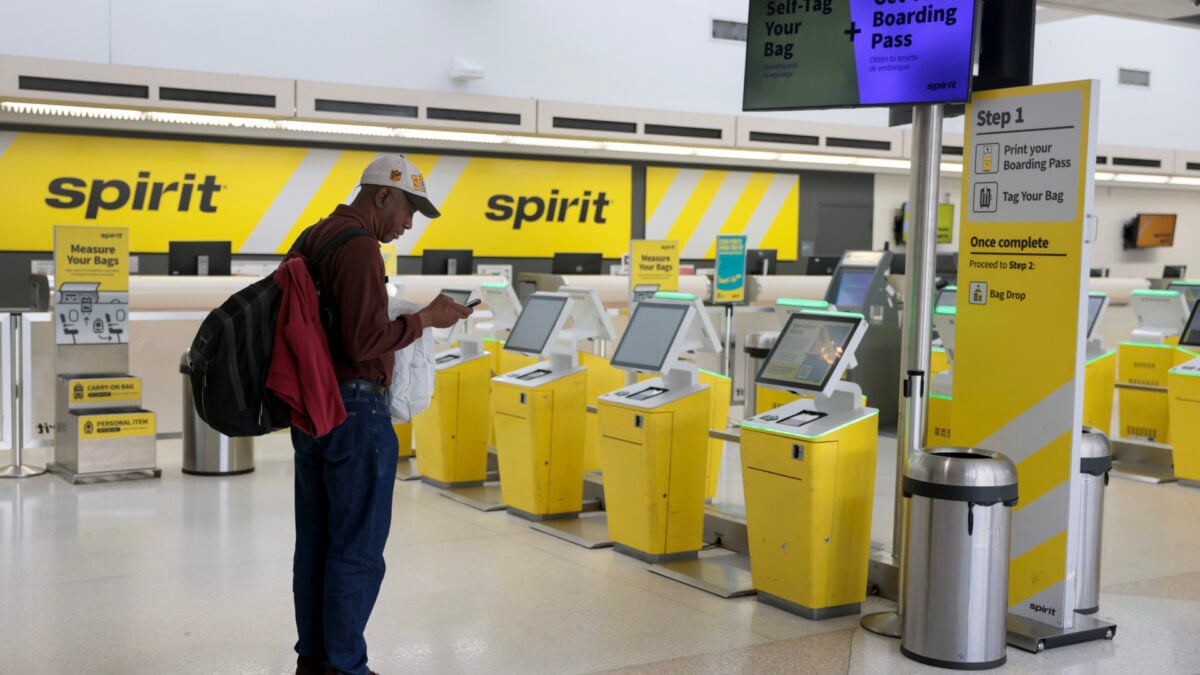
Spirit Airlines is cited as an early example. After 34 years in operation, the budget carrier ceased all operations last month. The report notes that Spirit had already been under financial pressure, but says high jet fuel prices were apparently the final blow.
European budget operators are also warning about the coming months. Ryanair Chief Financial Officer Neil Sorahan said some weaker carriers that were already struggling before the war could go bankrupt by winter because of fuel prices. The implication is that consolidation risk is no longer theoretical. It is becoming part of management planning.

Passengers are not insulated either
Higher fares are the other side of the equation. Some airlines serving relatively wealthier travelers have not yet seen demand evaporate as prices rise. That gives premium-oriented carriers more room to pass through cost increases. But it does not eliminate the broader affordability problem, especially for leisure travelers and price-sensitive markets.
For passengers, the consequence is simple: expensive fuel does not stay in the supply chain. It reaches the ticket. That helps explain why the current stress is so consequential culturally as well as economically. Air travel is not just an industry line item. It is infrastructure for work, tourism, migration, and family life. When fares stay high for a prolonged period, the effects spread far beyond airline balance sheets.
A harder winter may still be ahead
The revised outlook shows an industry that remains operational but significantly less resilient than it appeared only months ago. It also shows how geopolitical shocks can turn into consumer and corporate stress almost immediately when they strike energy supply.
The most important takeaway is that the industry’s profit story has changed from expansion to defense. Airlines are still flying, still pricing, and still posting earnings projections. But with the profit outlook cut in half, net profit per passenger reduced to a slim buffer, and weaker carriers openly identified as vulnerable, the sector is moving into a period where survival and consolidation may matter more than growth.
This article is based on reporting by Gizmodo. Read the original article.

Originally published on gizmodo.com