Introduction: A Vision for Nordic AI in Health
The Nordic countries have long been pioneers in public health and data collection, boasting some of the world's most comprehensive and longitudinal health registries. Now, a consortium of leading researchers has outlined a bold new initiative to harness these assets for artificial intelligence (AI) in medicine. The Nordic AI-Health Initiative, described in a recent Comment in Nature Medicine, aims to create a federated platform that enables secure, regulation-compliant access to large-scale, multimodal health data across the region. The goal is to deliver generalizable models that can accelerate discovery and improve patient care, while setting a global standard for responsible AI in healthcare.
The Unique Data Assets of the Nordics
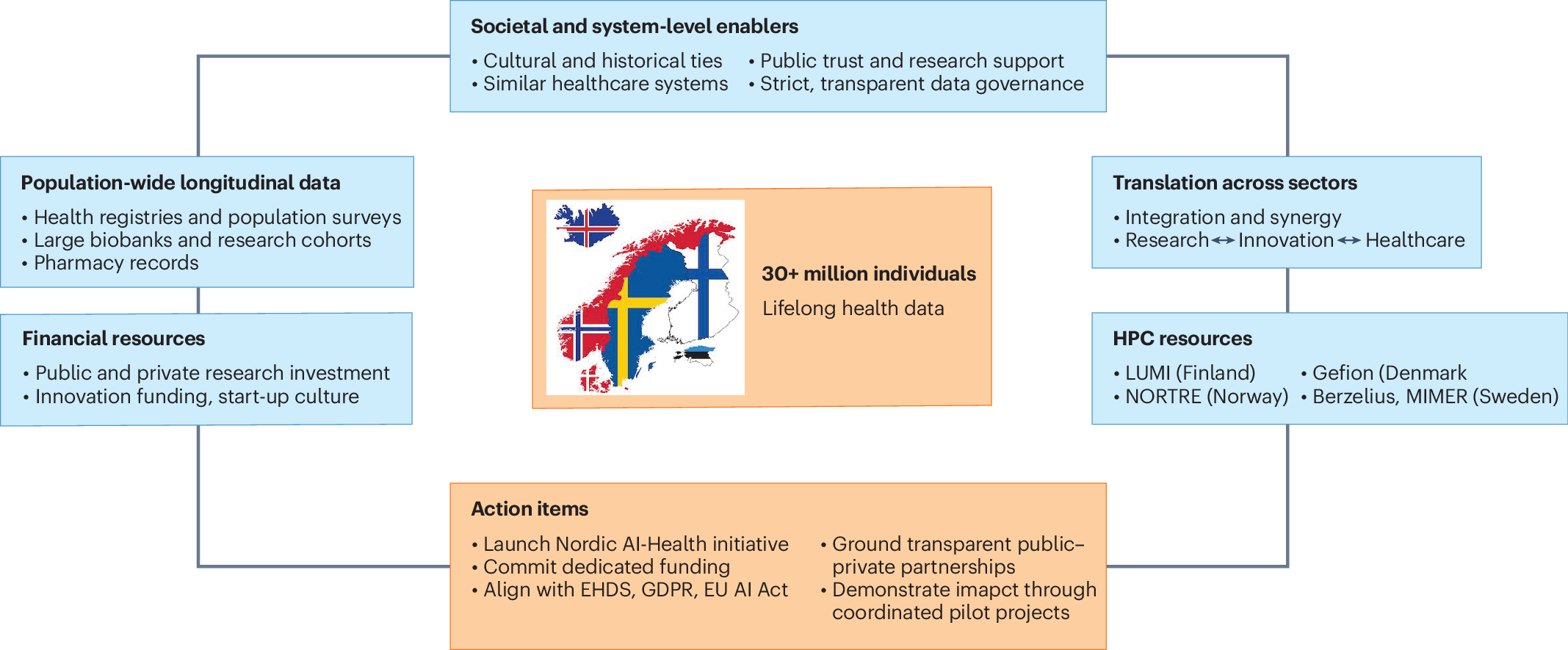
What makes the Nordic region particularly suited for AI-driven health research? The answer lies in its unique data infrastructure. Each Nordic country maintains extensive national registries that capture virtually every citizen's health encounters, from birth to death. These include electronic health records (EHRs), prescription databases, biobanks with genetic and biomarker data, and longitudinal cohort studies that track individuals over decades. For example, the Norwegian Mother, Father and Child Cohort Study (MoBa) and the Danish National Patient Registry provide deep, lifelong health trajectories. This richness is complemented by genetic data from large biobanks like the Icelandic deCODE genetics and the Finnish FinnGen project, which has already made significant strides in linking genotypes to phenotypes.
By combining these resources, the Nordic AI-Health Initiative can create a data ecosystem that is unmatched in its breadth and depth. The longitudinal nature of the data allows AI models to capture disease progression, treatment outcomes, and risk factors over time, enabling predictive and preventive medicine. The multimodal aspect—integrating genomics, imaging, clinical, and lifestyle data—offers a holistic view of health that can lead to novel insights into disease mechanisms and therapeutic targets.

Technical Foundations: Federated Learning and Secure Access
One of the biggest challenges in health AI is data privacy and security. Health data is sensitive, and regulations like the General Data Protection Regulation (GDPR) impose strict requirements on its use. The Nordic AI-Health Initiative addresses this through a federated approach. Instead of centralizing data in one location, the platform allows data to remain at its source institutions, and AI models are trained locally and only share aggregated, non-sensitive information. This federated learning paradigm ensures that raw patient data never leaves the secure environment of each participating site, significantly reducing privacy risks.
The platform is built on a technical infrastructure that supports secure data access and interoperability. It leverages common data models and standards to harmonize disparate datasets, enabling seamless analysis across borders. The initiative also emphasizes transparency and reproducibility, with rigorous protocols for model validation and deployment. By adhering to the FAIR principles (Findable, Accessible, Interoperable, Reusable), the platform aims to maximize the utility of the data while maintaining trust.
Regulation-Compliant and Ethically Sound
Regulatory compliance is a cornerstone of the initiative. The platform is designed to operate within the legal frameworks of each Nordic country, as well as EU-wide regulations. This includes obtaining necessary ethical approvals, ensuring patient consent is properly managed, and implementing robust data governance. The initiative also addresses the potential for bias in AI models by promoting diverse and representative datasets, and by developing methods to detect and mitigate algorithmic bias.
Moreover, the initiative is committed to responsible AI. This means not only technical robustness but also societal considerations. The researchers emphasize the importance of involving patients and the public in the design and governance of the platform. Transparency about how data is used and how models are developed is crucial for building and maintaining public trust. The initiative also aims to ensure that the benefits of AI in health are equitably distributed across the region, avoiding the creation of a 'digital divide'.

Roadmap for Deployment and Impact
The Comment outlines a phased roadmap for deploying the platform. The first phase involves establishing the technical infrastructure and data governance framework, which is currently underway. This includes creating a federated network of participating institutions, developing common data models, and piloting federated learning on a few use cases. The second phase will expand the network to include more data sources and clinical sites, and will focus on developing and validating AI models for specific diseases, such as cancer, cardiovascular disease, and mental health disorders. The final phase aims to integrate the platform into clinical practice, providing decision support tools for healthcare providers and enabling personalized medicine.
The potential impact is enormous. AI models trained on Nordic data could lead to earlier diagnosis, more accurate prognosis, and personalized treatment plans. For example, models could predict which patients are at high risk of developing type 2 diabetes, allowing for preventive interventions. In oncology, AI could help identify the most effective treatment based on a patient's genetic profile and medical history. The platform could also accelerate drug discovery by identifying new drug targets and repurposing existing drugs.
Beyond the Nordic region, the initiative could serve as a model for other countries and regions looking to harness health data for AI. The federated approach, combined with a strong emphasis on ethics and regulation, offers a blueprint for responsible AI in medicine. The researchers hope that by sharing their technical solutions and governance frameworks, they can contribute to a global ecosystem of health AI that benefits all.
Challenges and Future Directions
Despite its promise, the initiative faces several challenges. One is the heterogeneity of data across countries, which requires significant effort to harmonize. Differences in coding systems, clinical practices, and language can complicate data integration. Another challenge is the need for specialized talent and computational resources. Federated learning requires sophisticated infrastructure and expertise in both AI and data security. The initiative will need to invest in training and capacity building to ensure its success.
Looking ahead, the Nordic AI-Health Initiative is poised to make significant contributions to the field of medical AI. By leveraging the region's unique data assets and building a secure, federated platform, it aims to deliver models that are not only accurate but also generalizable and trustworthy. The initiative's commitment to responsible AI and regulatory compliance sets a high standard for others to follow. As the platform matures, it has the potential to transform healthcare in the Nordics and beyond, ushering in an era of data-driven, personalized medicine.
This article is based on reporting by Nature Medicine. Read the original article.

Originally published on nature.com