The Challenge of Health Data in Conflict Zones
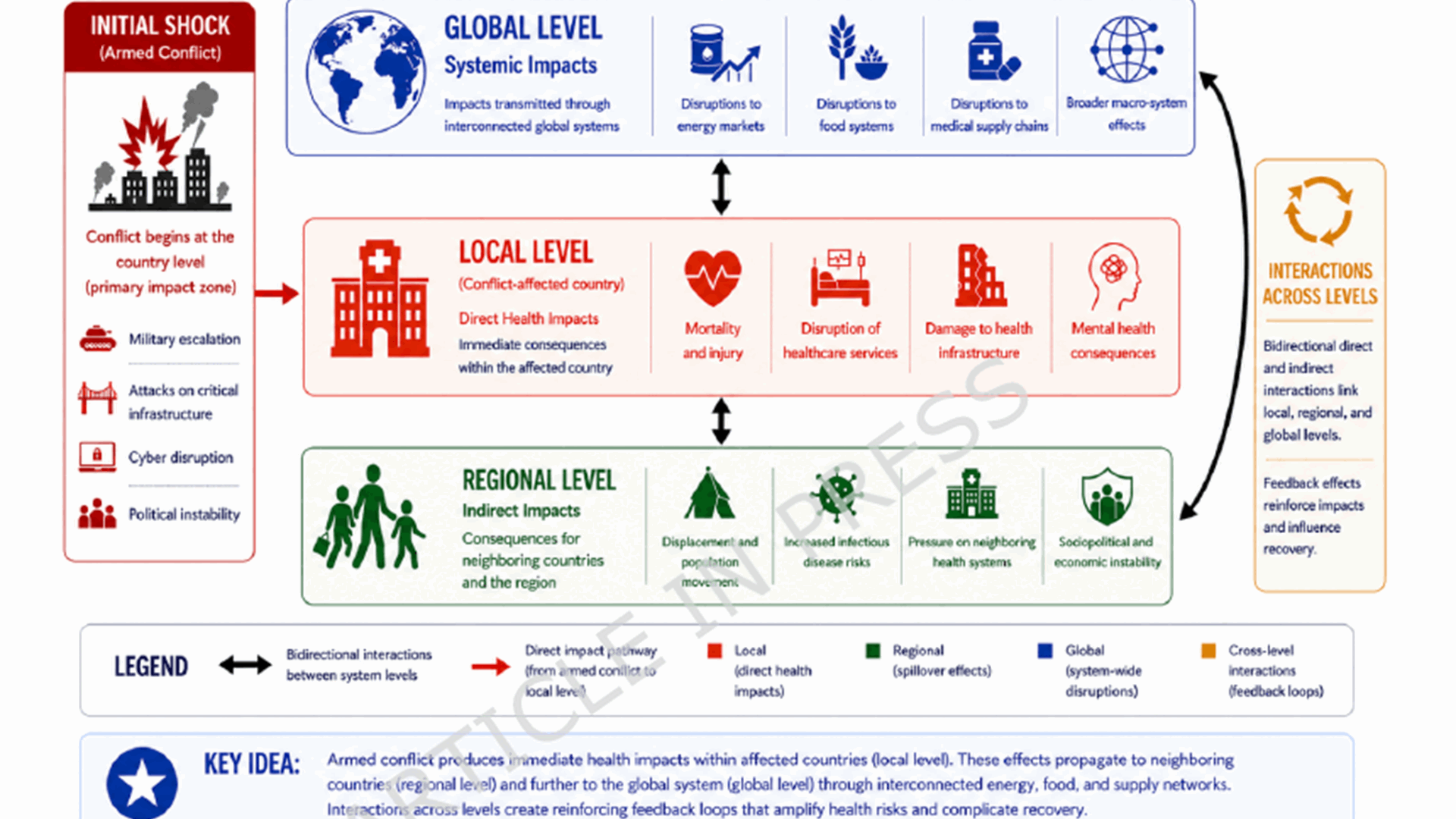
Armed conflicts create profound challenges for public health surveillance. Health systems are often damaged or destroyed, healthcare workers flee or are targeted, and supply chains for medicines and diagnostics are disrupted. In such environments, routine data collection—the backbone of disease burden estimation—frequently collapses. This leaves a critical gap: without reliable data, humanitarian organizations and policymakers cannot accurately assess the health needs of affected populations, allocate resources, or design effective interventions.
The consequences are severe. Outbreaks of infectious diseases may go undetected, chronic disease management falters, and maternal and child health services decline. The lack of data also hampers post-conflict reconstruction and long-term health system strengthening. Recognizing this, a new study published in Nature Medicine proposes a framework for reconstructing disease burden data in armed conflict settings, offering a methodological path forward.
Understanding the Reconstruction Framework
The study, titled "Reconstructing disease burden data in armed conflict," outlines a systematic approach to estimate disease burden when primary data are incomplete or missing. The framework integrates multiple data sources and statistical techniques to fill gaps and produce more accurate estimates. While the full details of the methodology are behind a paywall, the abstract and metadata indicate a focus on combining available health data with demographic and conflict-related information.
Key elements likely include the use of mathematical models to extrapolate trends from neighboring regions or pre-conflict baselines, adjustment for population displacement, and incorporation of data from non-traditional sources such as humanitarian reports, surveys, and remote sensing. The approach aims to provide a more complete picture of disease burden, even in the most challenging circumstances.

Why Accurate Data Matter in Conflict
Accurate disease burden data are essential for several reasons. First, they guide emergency response. Knowing which diseases are most prevalent and which populations are most vulnerable allows agencies to prioritize interventions such as vaccination campaigns, distribution of essential medicines, and establishment of treatment centers. Second, data inform resource allocation. Limited funds and supplies must be directed where they are needed most, and reliable estimates help ensure that resources are not wasted. Third, data support advocacy. Documenting the health impact of conflict can raise awareness and mobilize international support.
Moreover, disease burden data are critical for monitoring and evaluating the effectiveness of health programs. Without baseline and follow-up data, it is impossible to know whether interventions are working or need adjustment. The reconstruction framework offers a way to establish such baselines even when data collection is interrupted.
Potential Applications and Implications
The framework has broad potential applications. It could be used in ongoing conflicts, such as those in Syria, Yemen, and Ukraine, where health systems are under severe strain. It could also be applied to post-conflict settings to assess the long-term health impacts and plan recovery. Additionally, the methodology might be adapted for other crises, such as natural disasters or pandemics, where data systems are similarly overwhelmed.
For humanitarian organizations, this framework could improve needs assessments and program planning. For governments and international bodies, it could enhance reporting and accountability. For researchers, it opens new avenues for studying the health effects of conflict, which are often under-documented.

Limitations and Ethical Considerations
While the framework is promising, it is not without limitations. Reconstruction relies on assumptions and models that may introduce uncertainty. Data from conflict zones are often biased or incomplete, and the methods used to fill gaps may not fully capture the reality on the ground. It is crucial that estimates are presented with appropriate confidence intervals and caveats.
Ethical considerations also arise. The use of data from conflict-affected populations must respect privacy and confidentiality. Researchers and agencies must ensure that data collection and sharing do not put individuals at risk. Moreover, the reconstruction of data should not be used to justify inaction or to replace on-the-ground data collection where possible.
Looking Ahead
The publication of this framework marks an important step in addressing a persistent challenge in global health. As conflicts continue to affect millions of people worldwide, the need for reliable health data has never been greater. By providing a structured method for reconstructing disease burden, this study contributes to the toolkit available to health professionals and humanitarian responders.
Future research should validate the framework in different conflict settings and refine the methods based on real-world applications. Collaboration between statisticians, epidemiologists, and humanitarian organizations will be key to translating these methods into practice. Ultimately, the goal is to ensure that even in the midst of crisis, the health needs of vulnerable populations are not invisible.
This article is based on reporting by Nature Medicine. Read the original article.

Originally published on nature.com