Introduction
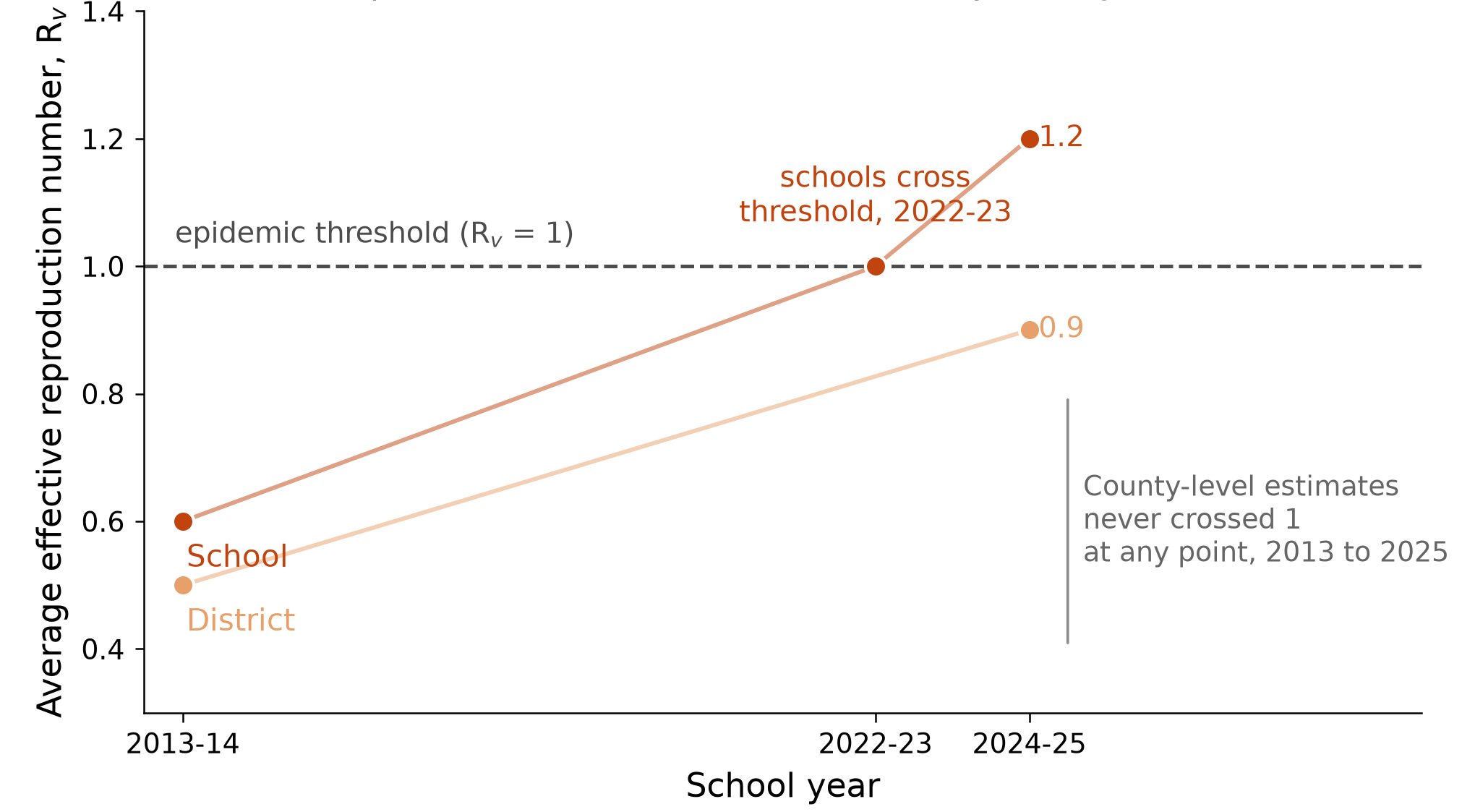
A new study published in Nature Medicine has shed light on the changing dynamics of measles transmission in the United States. The research, which analyzed data from 2013 to 2025, reveals that transmission at the school level has crossed the epidemic threshold, a development that could have profound implications for public health policy and outbreak response.
Understanding the Multiscale Model
The study employed a multiscale modeling approach, examining measles transmission across county, district, and community levels. This granular analysis allows researchers to identify where and how the virus is spreading, moving beyond national or state-level aggregates to pinpoint hotspots. The model integrates demographic data, vaccination coverage, and mobility patterns to simulate transmission dynamics.
Key Findings
The most striking finding is that school-level transmission has crossed the epidemic threshold, meaning that outbreaks can sustain themselves without continuous importation from outside. This is a significant shift from previous years when measles was largely contained to sporadic outbreaks linked to travel or unvaccinated clusters.
The study also highlights disparities in transmission risk. Certain counties and districts show higher transmission rates, often correlating with lower vaccination coverage and higher population density. The model identifies specific regions where the effective reproduction number (R) exceeds 1, indicating ongoing local transmission.

Implications for Public Health
These findings underscore the urgent need for targeted interventions. Schools are critical nodes in transmission networks, and outbreaks can spread rapidly once introduced. The study suggests that maintaining high vaccination coverage in schools is essential to prevent sustained transmission.
Vaccination Gaps
The research points to vaccination gaps as a primary driver of the increased transmission. Despite overall high vaccination rates nationally, pockets of under-vaccination create vulnerabilities. The model shows that even small declines in vaccination coverage can lead to significant increases in transmission risk.
Public health officials may need to consider enhanced surveillance and rapid response mechanisms in high-risk areas. The study emphasizes the importance of monitoring school-level vaccination data to identify potential outbreak hotspots before they escalate.
Historical Context
Measles was declared eliminated in the US in 2000, but recent years have seen a resurgence. The new modeling provides a detailed picture of how the virus is re-establishing itself. The study's time frame, 2013-2025, captures the period of increasing anti-vaccine sentiment and the subsequent rise in measles cases.
Changing Transmission Patterns
Earlier in the study period, transmission was often linked to international travel or specific communities with philosophical or religious exemptions. However, the recent data show a more diffuse pattern, with transmission occurring in diverse settings. The school-level threshold crossing suggests that measles is becoming endemic in certain areas, a worrying trend.
Future Directions
The authors call for continued investment in vaccination programs and public health infrastructure. They also recommend integrating multiscale modeling into routine surveillance to provide early warnings of potential outbreaks.
Policy Recommendations
Specific policy recommendations include strengthening school entry vaccination requirements, improving data collection on vaccination status, and developing targeted outreach programs for under-vaccinated communities. The study also highlights the need for rapid response teams to contain outbreaks once they are detected.
As measles continues to pose a threat, this research provides a critical tool for understanding and mitigating transmission. The findings are a call to action for public health officials, educators, and policymakers to work together to protect vulnerable populations.
This article is based on reporting by Nature Medicine. Read the original article.
Originally published on nature.com