
Beyond the First KRAS Breakthrough
For decades, RAS genes occupied a peculiar place in cancer research: universally acknowledged as central drivers of malignancy, and just as universally described as undruggable. The proteins they encode sit at the heart of signaling circuits that push cells into uncontrolled growth, and mutations in them appear across a wide range of tumors. Yet their shape and their biochemistry resisted the standard tools of drug discovery for so long that the skepticism became part of the field's folklore.
That skepticism has now given way to a more complicated mood. The Nature Medicine article titled "Beyond the breakthrough for RAS-driven cancers," published online on 15 September 2026, captures that shift. Its central observation is concrete: two early clinical studies of selective KRASG12D inhibitors show encouraging activity in advanced cancers that carry the G12D alteration. The framing around that observation is the real story. The field is no longer asking whether RAS can be hit directly. It is asking how far that capability extends, and what happens after the first generation of successes.
Why the G12D Variant Is a Distinct Problem
KRAS mutations are not interchangeable. Different amino-acid substitutions alter the protein in different ways, changing how readily it releases the signaling molecule it binds, how quickly it cycles between active and inactive states, and how accessible its vulnerable pockets are to a drug. The earliest direct success against KRAS focused on one particular substitution, and it worked in part because that variant offered a handle — a reactive surface that chemists could design selective inhibitors around. That achievement demonstrated a principle. It did not demonstrate that every KRAS allele would yield to the same approach.
G12D is a case in point. It is a different chemical problem bound up with a different set of tumor types and a different clinical population. A molecule that works against one variant is unlikely to translate directly to another, which is why the emergence of selective G12D inhibitors as clinical candidates carries weight beyond any single drug. It is evidence that the toolkit is expanding, and that the relatively narrow aperture opened by the first RAS-directed therapies may be widening.
Why early-stage results attract so much attention
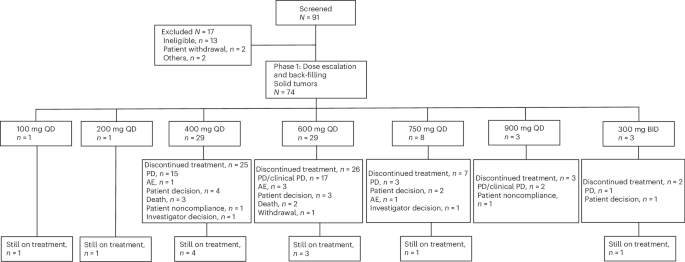
Early clinical studies are a strange kind of evidence. They are designed primarily to establish whether an experimental agent can be given safely and at what doses, and they involve limited numbers of patients. Signals of activity that emerge from them are inherently provisional — they can reflect favorable patient selection, unusual biology, or simply chance. Yet in an area where patients with these mutations have historically had few targeted options, even preliminary signs that a selective inhibitor is doing something meaningful in advanced disease command attention. That is the position the two G12D studies occupy: not proof, but a directional signal that justifies the next round of larger, more rigorous trials.

What "Encouraging Activity" Signals — and What It Does Not
The phrase is deliberately careful, and it is worth unpacking. Encouraging activity means there is something worth pursuing. It does not mean a treatment is ready, that benefit will hold up in randomized testing, or that the effect will be durable. The history of targeted oncology is full of agents that produced striking early responses only to see tumors find ways around them within months.
Resistance is the recurring theme. Tumors treated with a single selective inhibitor can acquire secondary changes in the target itself, activate parallel signaling routes, or shift their dependence onto other drivers. Each of those escape mechanisms demands its own countermeasure, whether a second drug, a combination regimen, or a different class of agent entirely. The transition from a promising early readout to a durable clinical option therefore involves far more than confirming the initial result.
The Questions That Now Define the Agenda
Framing the moment as "beyond the breakthrough" implies that the field's challenges have changed character rather than disappeared. The open questions now look like these:
- How durable are the responses seen with selective G12D inhibitors, and does the activity deepen or fade as follow-up lengthens?
- Which tumor types and which patient populations derive the clearest benefit, and how should those patients be identified before treatment?
- What resistance mechanisms emerge under selective pressure, and can they be anticipated rather than discovered after the fact?
- Can G12D-selective agents be combined safely with existing therapies to extend the window of benefit?
- Does progress against one KRAS variant create a template that accelerates development across the rest of the family?
None of these can be answered by early studies alone. They require larger trials, longer follow-up, and the kind of correlative science that explains why a drug works in some tumors and not others.

From a Single Mutation to an Entire Family of Targets
The editorial's title refers to RAS-driven cancers rather than to a single mutation, and that choice reflects the direction of travel. RAS is a gene family, and its altered forms collectively account for a substantial share of human cancer. Each variant presents its own structural puzzle and its own clinical context. Progress on any one of them is a data point about the broader feasibility of direct targeting, and each new selective inhibitor lowers the perceived risk for the programs behind it.
This is why the G12D results matter even to researchers working on entirely different alleles. A field that once struggled to produce a single credible direct inhibitor now has multiple development programs converging on clinical testing. The bottleneck is shifting from whether it can be done to how quickly the resulting agents can be evaluated, differentiated, and positioned.
What to Watch Next
The near-term signals that will indicate whether this phase delivers on its promise are relatively easy to name, even if they are hard to achieve:
- Larger trials reporting on durability of response, not just initial activity.
- Data on how selective G12D inhibitors behave across different tumor types.
- Evidence on combination strategies designed to blunt resistance.
- Biomarker work that clarifies which patients should receive these drugs first.
- Movement of additional KRAS-variant programs into human testing.
The breakthrough era for RAS produced a proof of principle. The era that follows is about turning that principle into something that changes outcomes at scale — and the early G12D studies, as reported in Nature Medicine, are among the first substantive signs that the transition is under way.
This article is based on reporting by Nature Medicine. Read the original article.

Originally published on nature.com


00059-7/asset/4cbe94fb-e0c0-468a-b4fb-2f4f4b6116b9/main.assets/gr3a_lrg.jpg)