A race measured in minutes
Out-of-hospital cardiac arrest (OHCA) leaves almost no room for delay. Survival depends heavily on two things happening in quick succession: a bystander starting cardiopulmonary resuscitation, and a defibrillator being applied to the chest. That is the central message of research presented at the European Emergency Medicine Congress, where investigators examined whether defibrillators could reach patients faster by air than by road.
"Out-of-hospital cardiac arrest is a major public health issue. Survival depends strongly on early cardiopulmonary resuscitation and timely defibrillation," said Dr. Hillary Minka, an emergency physician at Lariboisière Hospital in Paris, who presented the findings. She framed the stakes bluntly: every minute that passes before defibrillation lowers the odds that a patient survives.
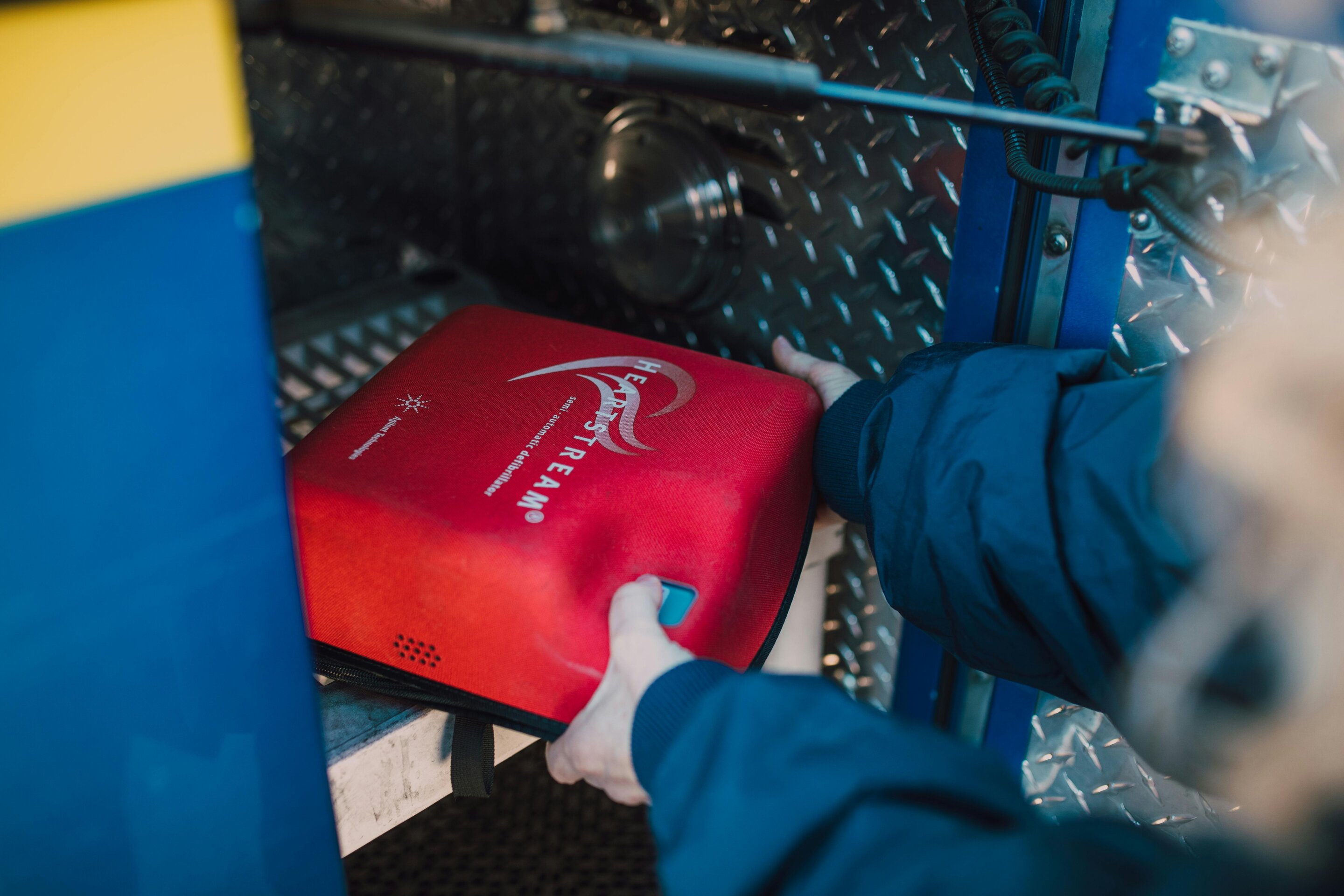
Automated external defibrillators, or AEDs, are the portable devices designed to be used by members of the public, not only by clinicians. Their usefulness, though, is only as good as their location. A device locked in a cabinet fifteen minutes away by road offers little to someone whose heart has just stopped beating. Dr. Minka and her colleagues set out to test whether drones could close that gap, and whether combining airborne delivery with a denser network of fixed devices would improve access across the Île-de-France region.
How the Île-de-France simulation was built
The study was not a field trial involving real aircraft and real patients. Instead, the team ran a computer simulation using data on out-of-hospital cardiac arrests recorded in seven departments that make up the Île-de-France region, with central Paris deliberately excluded from the analysis.
To make the comparison geographically precise, the researchers divided the territory into units known as Îlots Regroupés pour l'Information Statistique (IRIS) — the smallest census areas used by the French national statistics institute. For each of these units, they estimated how long it would take an AED to arrive at the centre of the area under each strategy being tested. That modelling choice allowed the team to compare approaches block by block rather than relying on regional averages, which can hide local shortages.

Three strategies put to the test
The analysis compared three distinct ways of getting a defibrillator to a patient:
- Strengthening the current network of fixed AEDs already installed across the region;
- Using drones to fly AEDs directly to the scene of a cardiac arrest;
- Combining a denser network of fixed AEDs with drone delivery.
Each approach was measured against the same benchmark: the interval between an out-of-hospital cardiac arrest being reported and the start of defibrillation. That interval is the practical target for any emergency system, because it captures both the dispatch decision and the physical journey of the device.
Where AED coverage falls short
Access to defibrillators turned out to be uneven. The researchers found wide variation across the region, with shortages concentrated in the countryside and on the outskirts of Paris — areas where distances are longer, populations are thinner, or road conditions slow a responder down.
To close the gap using fixed devices alone, the analysis concluded that 1,712 AEDs would have to be added to the 1,893 already in place, bringing the regional total to 3,605 units. That figure illustrates the scale of the infrastructure problem: reaching full coverage through cabinets and public buildings alone would mean roughly doubling the number of installed devices.

What drone delivery changed
Introducing drones altered the picture considerably. According to the research, delivering AEDs by drone significantly reduced the time spent waiting for a defibrillator compared with road-based retrieval of existing fixed devices.
The strongest result came from the combined strategy. When drone delivery was paired with additional fixed AEDs, the researchers reported a significant reduction in the time between an out-of-hospital cardiac arrest being reported and the beginning of defibrillation. In other words, the two approaches were not competitors so much as complements: fixed devices provide a baseline of coverage, while aircraft cover the gaps that cabinets cannot reach quickly.
Where drones could launch from
The study also examined practical questions about where a drone network would be based. The team evaluated several categories of potential deployment locations:
- Existing AED sites, which already sit within the communities being served;
- Mobile intensive care units (MICUs), the physician-staffed ambulances used in the French emergency system;
- Fire stations, which are distributed across the region and typically staffed around the clock.
Each option carries different implications for response time and logistics. A drone's advantage lies in travelling a direct route rather than following streets, which allows it to bypass congestion, one-way systems and river crossings. But an aircraft still has to launch from somewhere close enough to matter, and from a site that can support routine operations.

Questions the simulation cannot answer
Because the work is a modelling exercise rather than a live deployment, several practical issues remain outside its scope. Whether a bystander on scene could readily retrieve a drone-delivered AED and attach it to a patient is not addressed by travel-time estimates alone. Nor does the simulation resolve how emergency call handlers would fold drone launches into their existing dispatch workflows, or how such a service would be staffed and funded at regional scale.
Weather, airspace rules and the challenge of flying over densely populated districts also represent open questions for any city considering the approach. And as a study presented at a medical congress, the findings should be read as preliminary: congress abstracts typically describe earlier-stage work that has yet to pass through the full scrutiny of journal peer review.
What it means for emergency systems
Even with those caveats, the direction of the result is notable. In a region where fixed AEDs are unevenly spread and where adding enough of them would require a substantial investment, drones changed the arithmetic of access — at least inside a computer model.
The broader implication is organisational rather than technological. If further studies confirm the findings, the appeal of drone delivery lies in its ability to compress the single most consequential interval in a cardiac arrest response. A dispatcher could one day arrange for a defibrillator to arrive by air at the same moment an ambulance is fighting its way through traffic.
The researchers' conclusion is measured but clear: combining drone delivery with an expanded network of fixed AEDs improved access to defibrillation across the Île-de-France region in simulation. The next step would be testing whether that improvement holds when the aircraft are real, the weather is bad and the patient is waiting.
This article is based on reporting by Medical Xpress. Read the original article.
Originally published on medicalxpress.com