A rare complication with a substantial clinical burden
Researchers have assembled one of the clearest descriptions yet of immune effector cell-associated enterocolitis, a delayed gastrointestinal toxicity linked to ciltacabtagene autoleucel, a BCMA-directed CAR T-cell therapy. The multicenter study, published in Nature Medicine, examined suspected cases across eight institutions in the US Multiple Myeloma Immunotherapy Consortium.
The investigators retrospectively adjudicated 54 suspected cases and identified 41 as immune effector cell-associated enterocolitis, or IEC-EC. Thirty-one cases were confirmed with anti-camelid variable heavy-chain immunohistochemistry, while 10 were considered probable. The findings put numbers and clinical detail around an uncommon complication that can arrive well after a patient has received treatment.
Among 1,308 recipients of ciltacabtagene autoleucel through September 2025, 39 developed IEC-EC. That corresponds to a cumulative incidence of 3.0%, with a 95% confidence interval of 2.1% to 4.1%. The study's 12-month competing-risk incidence was also 3.0%.
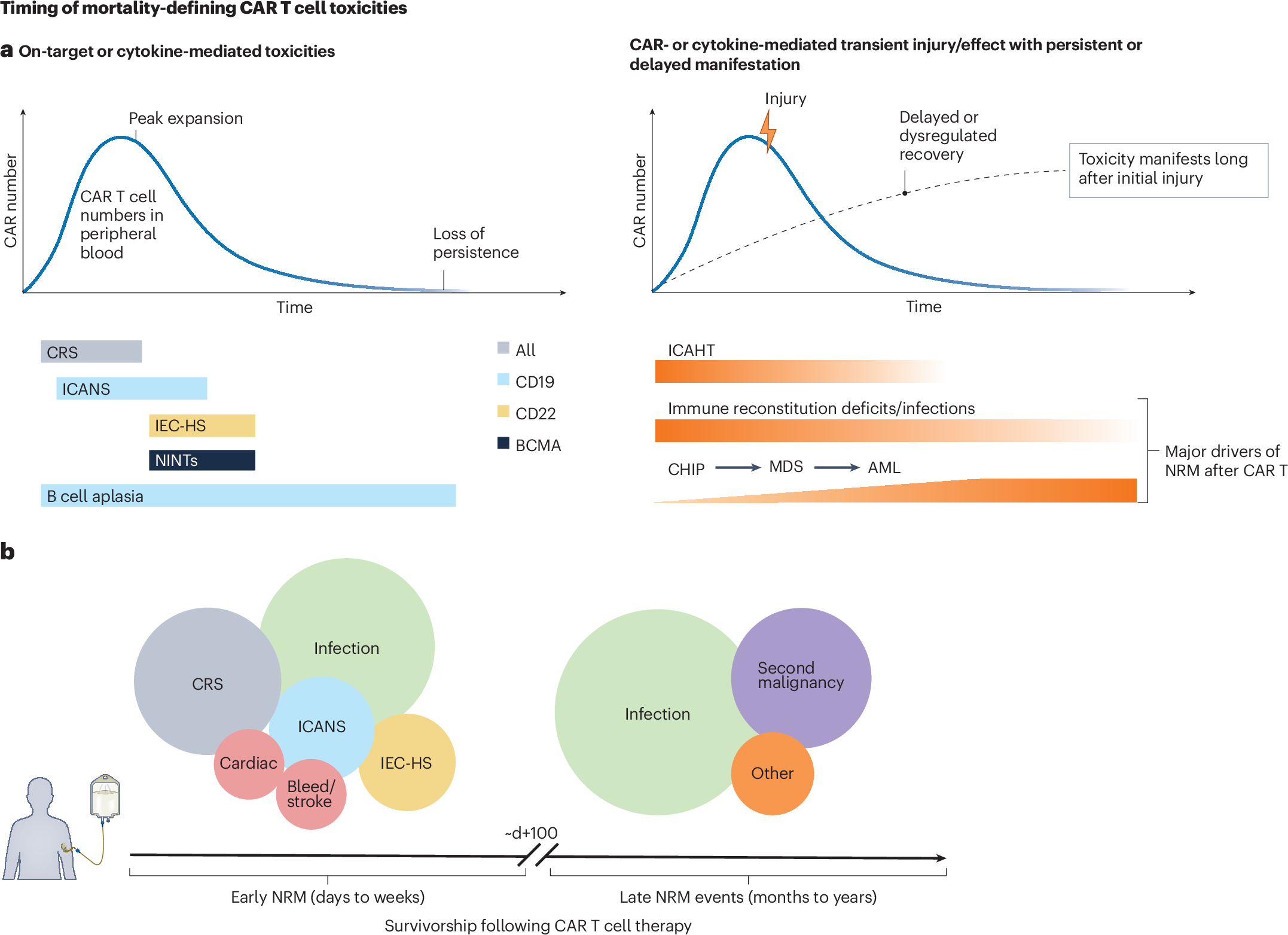
Symptoms often begin weeks after infusion
The median onset of symptoms was 75 days after infusion, emphasizing that the complication is delayed rather than an immediate infusion-related event. The cases reported in the series were frequently severe: grade 3 or higher diarrhea occurred in 34 of 40 patients with diarrhea, or 85%.
The nutritional impact was also substantial. Thirty of the 41 patients with IEC-EC, or 73%, required parenteral nutrition. These figures underscore the intensity of supportive care that may be needed when the condition develops.
CAR T-cell therapies use a patient's own T cells after they have been engineered to recognize a target. In this case, the target is BCMA, a protein associated with multiple myeloma treatment. The study does not suggest that all recipients face this complication; rather, it provides a multicenter estimate of an event observed in a small proportion of recipients and documents its serious consequences in those affected.

Biopsies provided evidence even when endoscopy appeared normal
A notable finding concerns diagnosis. In 9 of 22 patients who underwent upper endoscopy, or 41%, the upper endoscopy was normal. Yet duodenal biopsies in the series showed abnormalities including villous blunting, apoptotic bodies and a dense cytotoxic T-cell infiltrate.
That mismatch between an apparently normal upper endoscopic examination and abnormal tissue findings is important in the context of the reported cases. It indicates that visible findings alone did not always capture the pathology identified through biopsy.
The infiltrate was predominantly CD4-positive in 19 of 31 evaluated cases, or 61%. It was CD8-positive in 8 cases, or 26%, and mixed in 4 cases, or 13%. In 13 of 17 tested cases, or 76%, investigators detected a dominant T-cell clone.
Why the characterization matters
The report is a case series rather than a population-wide trial, but it offers a shared framework for a toxicity identified across multiple institutions. The authors' adjudication process separated confirmed and probable cases, while the incidence calculation was based on a defined group of ciltacabtagene autoleucel recipients.
Its central message is practical: although IEC-EC was uncommon in the cohort, it was associated with delayed onset, high-grade diarrhea and frequent need for parenteral nutrition. The pathology findings further show why evaluation can require more than a visually normal upper endoscopy.
As BCMA-directed CAR T-cell therapy continues to be used in multiple myeloma, a detailed account of this toxicity gives clinicians and treatment centers a reference point for recognizing and characterizing severe gastrointestinal symptoms that emerge months after infusion. The study also demonstrates the value of pooling cases across centers when adverse events are too uncommon for a single institution to define on its own.
This article is based on reporting by Nature Medicine. Read the original article.

Originally published on nature.com