Doctors treating acute myeloid leukemia still lack a reliable way to know, before treatment begins, whether a patient's cancer will give way to chemotherapy. A new study from King's College London points to an unexpected source of clues: fragments of ancient viruses that became permanent residents of the human genome millions of years ago. According to the research, published in Blood Neoplasia, feeding information about those viral remnants into machine-learning models made the models noticeably better at predicting who would respond to treatment.
A Blood Cancer That Resists Easy Answers
Acute myeloid leukemia, or AML, begins in the bone marrow, where the body manufactures blood cells. It is an aggressive cancer, and chemotherapy remains a central part of standard care. Yet the clinical picture is frustratingly uncertain. Even after running multiple tests, physicians cannot say with confidence which patients will achieve remission and which will not.
A significant share of patients develop what is known as refractory AML. These individuals go through chemotherapy but never reach full remission, meaning the disease persists despite treatment. Identifying those patients in advance would allow care teams to consider different strategies earlier, spare people the side effects of therapy unlikely to work, and direct them toward alternatives sooner. That gap between what doctors can measure and what they can predict is precisely what the King's College London team set out to close.

Building Models That Learn From Many Kinds of Data
The researchers turned to machine learning, constructing three multilayer models and training each one on progressively richer sets of information. Rather than relying on a single measurement or a single test result, the approach allowed the team to test whether adding new categories of data improved predictive performance.
The study drew on records from 271 patients with AML who received standard chemotherapy. The data spanned several domains:
- Clinical information gathered in the course of routine care
- Biological and molecular measurements describing the patients' disease
- Data describing the activity of endogenous retroviruses, or ERVs, the inherited viral sequences embedded in the genome
By layering these sources together, the team could observe what each addition contributed. The version that incorporated ERV behavior outperformed the earlier iterations, suggesting that the activity of these ancient sequences carries information about treatment response that conventional data alone does not capture.
What Are Endogenous Retroviruses?
Fossils of Infections Long Past
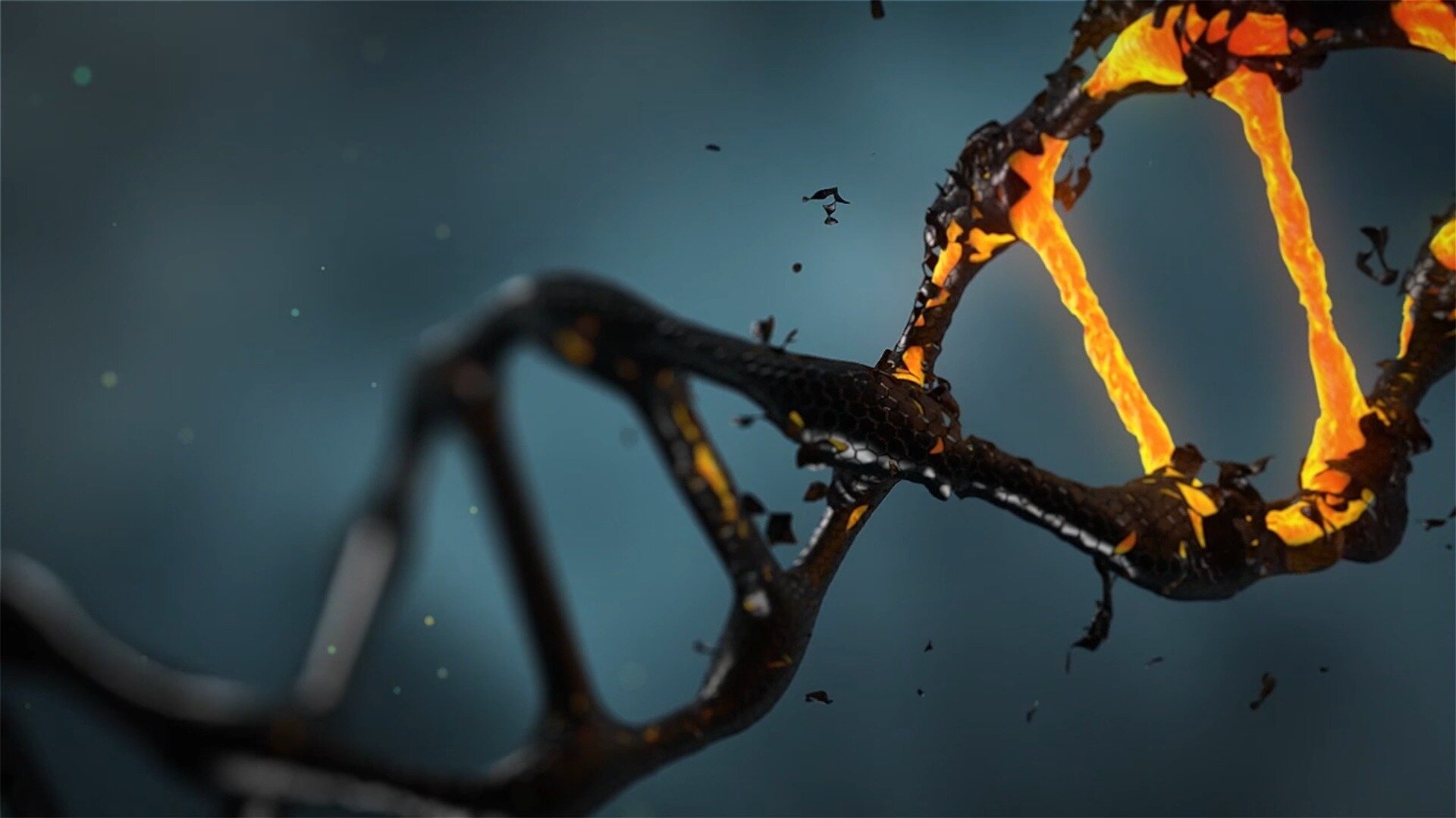
ERVs are the genetic residue of viruses that infected our evolutionary ancestors millions of years ago. Over time, those viral sequences were copied into the germline and passed down through generations, becoming a permanent part of human DNA. They sit within the noncoding regions of the genome — sections that do not directly instruct the building of proteins. Some of this territory remains poorly understood and is sometimes informally called the "dark genome."
These sequences are not merely inert debris. ERVs can influence a range of biological processes, including which genes are switched on and how immune signaling is conducted. Their presence in the genome means they retain the potential to affect how a cell behaves, even if they no longer produce a functioning virus.

Viral Mimicry and the Roots of Resistance
The team's findings point toward a mechanism researchers call "viral mimicry." In this scenario, a cell behaves as though a viral infection were underway, even when none exists. The misdirected response can set off immune and inflammatory signaling, and the researchers suggest this activity may help sustain the treatment-resistant state seen in some AML cells.
In other words, the very sequences that once marked ancient infections may contribute to a contemporary problem: leukemia cells that survive chemotherapy. The association the team observed between ERV-related behavior and poor treatment response fits with that idea, though the study establishes a relationship rather than a cause.
What Improved — and What It Means
Two results stand out from the modeling work. First, the behavior of ancient viral sequences in the genome was associated with a poor response to chemotherapy. Second, when that ERV information was combined with the other clinical and biological data, the model's ability to identify who would respond to treatment improved.
The final model also produced fewer false positives than the alternatives. A false positive in this context means the model predicted a patient would have refractory AML when that person might actually have responded to treatment. Reducing those errors matters, because a prediction that wrongly writes off chemotherapy could push a patient away from a treatment that would have helped.

Questions That Remain Open
The researchers are careful about the limits of their results. A key unresolved question is whether ERV activity directly causes chemotherapy resistance or simply travels alongside it as a marker of some deeper process. Answering that requires further research. If the relationship is causal, the viral remnants could eventually become a target for new interventions. If it is a marker, the sequences might still serve as a useful predictive signal.
The study also involved a defined group of 271 patients receiving standard chemotherapy, and machine-learning models are only as robust as the data used to train and validate them. Broader validation across larger and more varied patient populations would be needed before any of this reaches routine clinical use.
Why the Finding Matters
AML is a disease where timing and treatment choice carry real consequences. A tool that helps clinicians anticipate refractory disease — even imperfectly — could eventually change how care is planned, shifting patients toward alternatives sooner and sparing others unnecessary exposure to therapies that are unlikely to bring remission.
Perhaps the most striking aspect of the work is where the signal was found. The genome's viral inheritance, long dismissed as evolutionary clutter tucked into noncoding stretches of DNA, appears to hold information relevant to how a blood cancer answers treatment. That reframes the "dark genome" as something closer to a readable archive — one that machine learning may finally be equipped to interpret.
This article is based on reporting by Medical Xpress. Read the original article.
Originally published on medicalxpress.com