A New Standard for Medical Artificial Intelligence
For years, the field of medical artificial intelligence (AI) has been defined by a singular question: can algorithms match the performance of expert clinicians? Dozens of studies have pitted deep learning models against radiologists, pathologists, and dermatologists, often with impressive results on retrospective datasets. But a recent commentary in Nature Medicine argues that this first generation of medical AI set the wrong benchmark. The next generation, it contends, should be judged not on whether machines can replicate human expertise, but on whether carefully designed human–AI systems can improve patient outcomes.
Written by Dr. Kristina Lång of Lund University’s Department of Diagnostic Radiology, the commentary draws on lessons from one of the first randomized trials of AI in medicine to make the case for a profound shift in how we evaluate and implement clinical AI. It is a call to move beyond accuracy metrics and toward measures that truly matter: morbidity, mortality, quality of life, and the efficiency and equity of care delivery.
The First Generation: Algorithms That Mimic Clinicians
Early medical AI research was dominated by the idea that a model’s value could be established by comparing its output directly with that of human experts. Studies reported sensitivity, specificity, and area under the receiver operating characteristic curve, often concluding that the AI system was “equivalent” or “superior” to clinicians. These findings generated enormous enthusiasm and led to regulatory clearances for hundreds of AI tools across radiology, cardiology, and other specialties.
Yet algorithmic equivalence is not the same as clinical benefit. A model that matches a radiologist in interpreting an image may still fail to improve the overall diagnostic process once integrated into a busy hospital workflow. It might generate alerts that are ignored, increase workload, or introduce new errors in patient management. The controlled environment of a retrospective study cannot capture these real-world complexities. As Lång writes, the first generation judged AI on whether it could match clinicians; the next generation should judge it on whether it can help patients.

The Rise of Randomized Trials in AI
Randomized controlled trials (RCTs) are the gold standard for evaluating medical interventions. They eliminate confounding, account for human behavior, and provide the level of evidence needed to change clinical practice. In the world of AI, however, RCTs have been rare. Most of the evidence for AI tools has come from retrospective or prospective single-arm studies with limited external validity. This is beginning to change, and Lång highlights the emergence of RCTs as a pivotal development.
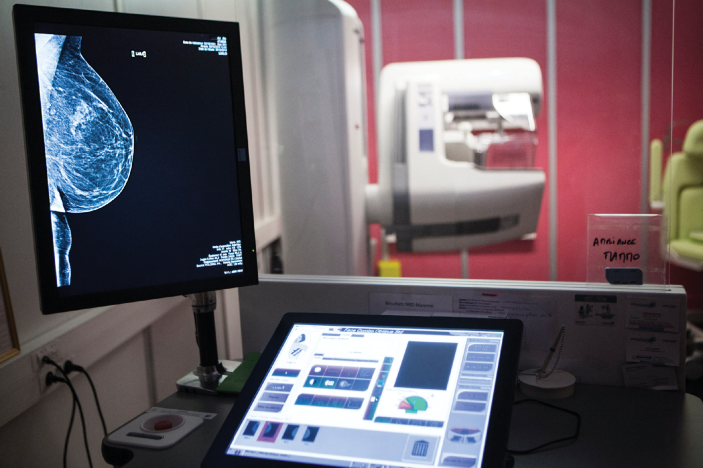
One of the most notable examples is the MASAI trial, a randomized study conducted in Sweden that investigated the use of AI-supported mammography screening. That trial, published in The Lancet Oncology in 2023, is among the first to randomize patients to receive either AI-supported screening or standard double reading. The trial did more than measure the algorithm’s cancer detection rate; it measured outcomes such as screen-detected cancers, interval cancers, recall rates, and workload. The results suggested that AI could reduce the workload for radiologists while maintaining or potentially improving cancer detection, but the real lesson was broader: only a randomized design could provide credible answers about the human–AI system as a whole.
Lång’s commentary cites additional recent RCTs, including a 2025 study in The Lancet Digital Health and a 2026 study in The Lancet, as part of an emerging evidence base. These trials represent a new wave of research that treats AI not as a standalone technology but as an intervention embedded in a clinical pathway, evaluated against patient-oriented endpoints.
Lessons from the Front Line
From her perspective as both a radiologist and a lead investigator in AI screening trials, Lång identifies key lessons that go beyond statistical significance. First, patient outcomes are paramount. It is not enough to show that an AI system can classify images faster or more accurately; it must be shown to improve the patient’s journey, from early detection to treatment and survival.
Second, the design of human–AI interaction is critical. An algorithm is only as good as the system around it. How alerts are presented, how clinicians are trained to respond, and how accountability is distributed all affect the final outcome. Lång’s emphasis on “carefully designed human–AI systems” points to a shift in focus from the model itself to the sociotechnical environment in which it operates.
Third, implementation science matters. A successful trial does not guarantee successful deployment. The challenges of integrating AI into existing clinical workflows, securing reimbursement, and maintaining trust among clinicians and patients are as important as any algorithmic advancement. Lång, who chairs the Swedish National Breast Cancer Screening guidelines and has served on advisory boards for companies such as Siemens Healthineers, understands these translational hurdles firsthand.

Rethinking Evaluation for a New Era
The commentary argues that the evaluation of medical AI must adopt the same rigorous standards applied to drugs and devices. That means more RCTs, but also the use of appropriate comparators, clinically meaningful endpoints, and pragmatic trial designs that reflect everyday practice. Regulatory bodies and professional societies are starting to demand such evidence, but the gap between the pace of technological innovation and the pace of evaluation remains wide.
Lång suggests that the field should move away from asking “Is the AI better than a clinician?” and instead ask “Does this AI–clinician team improve outcomes, reduce harms, and use resources wisely?” This reframing has profound implications for study design, funding priorities, and publication standards. It also places greater responsibility on developers to build tools that are transparent, interpretable, and aligned with clinical needs.
Building Better Human-AI Systems
One of the most compelling calls in the commentary is for the co-design of AI systems with frontline clinicians. If the goal is to improve patient outcomes, then the user interface, the decision-support logic, and the feedback mechanisms must be shaped by the realities of clinical practice. This is especially important in high-stakes fields like cancer screening, where AI is being used to triage cases, flag suspicious findings, and potentially reduce the number of images a radiologist must review.
Lång’s own research has explored how human perception and expertise interact with machine diagnosis. Early work, including publications in European Radiology and Radiology, examined the “satisfaction of search” effect and how radiologists miss findings when other abnormalities are present. These cognitive psychology insights are now being applied to understand how radiologists’ trust in AI affects their decision-making. A system that is accurate but poorly calibrated to human reliance could lead to overconfidence or underutilization, both of which can harm patients.

The Road Ahead: Evidence, Ethics, and Equity
As AI becomes more widespread in medicine, the need for robust evidence becomes urgent. Lång’s commentary is a reminder that RCTs are not merely a formality; they are essential for understanding which AI applications provide genuine value and which might introduce new forms of bias or harm. This is particularly relevant for underserved populations that may be underrepresented in the datasets used to train AI models.
The author also notes that the development of medical AI is intertwined with commercial incentives. As a co-founder of N23 Health and an advisor to major companies, she is not anti-industry but advocates for evidence-based innovation. The goal should be to align market incentives with rigorous evaluation so that the tools that reach patients have been proven to help them.
Conclusion: A New Benchmark for Clinical AI
The commentary in Nature Medicine delivers a timely message. The era of simply comparing algorithms to clinicians is over. What matters now is whether AI, when integrated into thoughtfully designed clinical systems, tangibly improves the lives of patients. Randomized trials, like the one Lång helped lead, are the bridge between technical promise and real-world benefit. They provide the evidence needed to ensure that the next generation of medical AI is held to the highest standard: improving patient outcomes.
As the field matures, researchers, regulators, clinicians, and developers must work together to make randomized evaluation the norm rather than the exception. Only then can medical AI fulfill its potential as a force for healthier lives. The lessons are clear, and they begin with a simple shift: judge success not by what the algorithm does, but by what the patient experiences.
This article is based on reporting by Nature Medicine. Read the original article.
Originally published on nature.com