Major depressive disorder (MDD) is one of the most pressing public health challenges of our time, affecting hundreds of millions of people worldwide. Yet despite its prevalence, the molecular mechanisms that give rise to the disorder remain frustratingly opaque. A newly published study in the journal Nature Medicine brings us closer to clarity. By performing a large-scale, multimodal molecular characterization of the adult human hippocampus, the researchers found compelling evidence that both genetic and epigenetic alterations in this critical brain region contribute to the pathogenesis of major depression. The findings not only deepen our understanding of depression's biological roots but also highlight the potential for sustained neurogenesis as a therapeutic target.
A Deep Dive into the Hippocampus
The hippocampus has long been implicated in mood regulation and cognitive function. It is one of the few brain regions that retains the capacity to generate new neurons throughout life, a process known as neurogenesis, which is believed to play a role in learning, memory, and emotional resilience. In patients with major depression, imaging and post-mortem studies have frequently reported reduced hippocampal volume and impaired function, but the underlying molecular events have remained enigmatic.
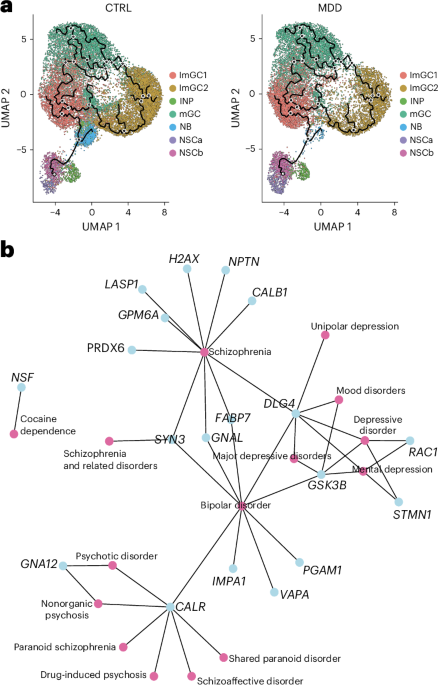
To address this gap, the research team conducted a comprehensive, multimodal molecular analysis—integrating genomics, epigenomics, and transcriptomics—on hippocampal tissue from a large cohort of individuals with and without major depression. The "multimodal" approach is key: rather than looking a single layer of biological information, the study captures the interplay between DNA sequence, chemical modifications to DNA (epigenetics), and the resulting expression of genes. This holistic view offers a far more nuanced picture of disease mechanisms than previous studies that focused on a single data type.
The study's scale is noteworthy. By analyzing thousands of molecular features from a large number of post-mortem brains, the researchers were able to identify statistically robust alterations associated with depression. The results confirm that the hippocampus is not merely a passive bystander in depression but an active, molecularly distinct tissue whose genomic landscape is markedly different in affected individuals.

Genetic Roots and Epigenetic Marks
One of the most striking findings is that major depression appears to arise from a blend of fixed genetic variants and dynamic epigenetic changes. The study identifies specific genes within the hippocampus whose expression is significantly altered in depressed individuals. Some of these alterations are linked to inherited DNA sequence variations—polymorphisms that predispose a person to depression. Others, however, are driven by epigenetic modifications, such as DNA methylation and histone acetylation, which are influenced by environmental factors like chronic stress, trauma, and even lifestyle.
These epigenetic marks provide a molecular memory of life experiences. They can turn genes on or off without changing the underlying DNA code, effectively acting as a biological interface between the environment and the genome. The study's multimodal design allowed the researchers to distinguish between genetic and epigenetic contributions, showing that both axes converge on common biological pathways—particularly those involved in synaptic plasticity, neuroinflammation, and neuronal survival.
The finding has profound implications for how we conceptualize depression. Rather than viewing the disorder as purely "genetic" or purely "environmental," the study suggests that a predisposing genetic background can be exacerbated by environmentally induced epigenetic alterations, all within the hippocampus. This gene-by-environment interaction model has long been theorized, but rarely has it been demonstrated so directly in human brain tissue.
Sustained Neurogenesis and Its Discontents
Among the most tantalizing results is the evidence for sustained neurogenesis in the adult human hippocampus. For decades, the existence of adult neurogenesis in humans has been hotly debated. Some studies have suggested that new neurons continue to be born in the dentate gyrus of the hippocampus throughout life, while others have questioned whether this process occurs on a significant scale in adult humans.
The current molecular characterization provides what the authors describe as evidence for sustained neurogenesis in the adult brain. The investigators detected expression of key neurogenic markers and regulatory networks indicating that the hippocampus retains the capacity to generate new neurons—even in adulthood. However, in individuals with major depression, these neurogenic pathways appear to be dysregulated. Genes that promote neuronal birth and integration are down-regulated, while those associated with cell death and inflammation are up-regulated.
This observation offers a unifying hypothesis: a reduction in hippocampal neurogenesis may underpin the structural and functional deficits seen in depression. If the brain cannot generate sufficient new neurons to adapt to stress and regulate mood, that could lead to a persistent depressive state. The new data suggest that this process is not irreversible—rather, it is governed by molecular circuits that might be amenable to therapeutic manipulation.
Implications for Treatment and Future Research
The clinical implications of these findings are substantial. If specific genetic and epigenetic alterations in the hippocampus drive major depression, then those molecular changes represent potential biomarkers for diagnosis and targets for novel therapies. Ultimately, clinicians may be able to use a patient's "molecular profile" in the hippocampus to tailor treatment choices. For example, individuals with a strong epigenetic signature of chronic stress might benefit more from interventions that specifically reverse those marks, such as certain lifestyle modifications or pharmaceuticals that modify epigenetic enzymes.
Moreover, the evidence for sustained neurogenesis in the adult human hippocampus strengthens the rationale for treatments that stimulate the birth of new neurons. Current antidepressants, such as SSRIs, are thought to exert some of their effects through promoting neurogenesis, but their efficacy is limited and delayed. With a clearer molecular map of the neurogenic niche, researchers can design more targeted and faster-acting interventions.
This study also underscores the importance of large, multimodal data sets in psychiatric research. Depression is a heterogeneous disorder, and it is unlikely that a single gene or pathway will explain all cases. By integrating multiple levels of molecular information, researchers can begin to stratify patients into biologically meaningful subtypes. This paves the way for precision psychiatry, where treatment is matched to an individual's unique molecular pathology.
Of course, much work remains. The current findings stem from post-mortem brain tissue, which provides a snapshot at the end of life. Longitudinal studies using living brain imaging or peripheral biomarkers will be needed to track these molecular changes over time. Animal models will also be essential to test causality and to develop therapeutic compounds that target the identified pathways.
Nonetheless, the study marks a significant step forward in unraveling the biological underpinnings of major depression. By pinpointing the interplay of genetic and epigenetic factors in the hippocampus, it moves us closer to a future where depression can be diagnosed and treated based on its molecular drivers, rather than through trial-and-error. The etiological roots of this devastating illness are being uncovered, and with them, the promise of more effective, personalized care.
This article is based on reporting by Nature Medicine. Read the original article.

Originally published on nature.com