A routine Starlink flight with an unusual payload
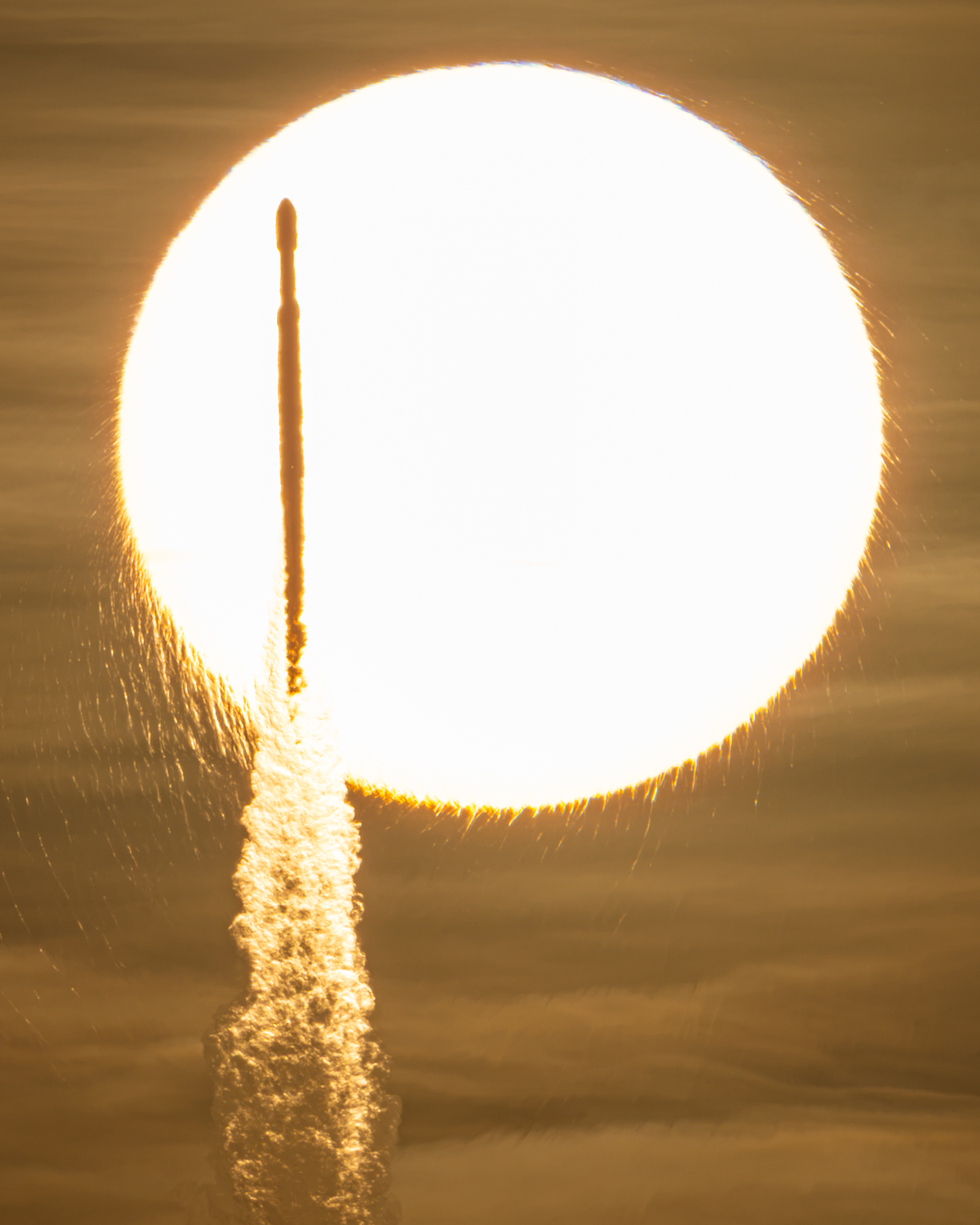
SpaceX is preparing to launch a Falcon 9 mission carrying 21 Starlink satellites and two Starshield satellites from Vandenberg Space Force Base, adding an uncommon layer of visibility to a spacecraft line usually associated with government work. The mission, designated Starlink 17-43, is scheduled to lift off from Space Launch Complex 4 East on the night of June 6 local time in California, or early June 7 in UTC.
What makes the launch notable is not the Starlink portion of the payload. SpaceX sends up batches of Starlink satellites routinely. The unusual element is the inclusion of two Starshield satellites and the fact that their presence was publicly identified ahead of launch.
Starshield is described as an alternate version of the Starlink satellite architecture for government use. SpaceX has not announced which US government agency ordered the pair for this mission, and it has not said whether the satellites are intended for a foreign government customer instead. That silence preserves the program’s ambiguity even as the launch itself becomes more visible.
Why Starshield draws attention
Starshield matters because it sits at the intersection of commercial launch cadence and national security demand. It uses the same broader industrial base and launch system that powers Starlink, but it serves a different customer set and potentially a different strategic purpose. The result is a model in which highly frequent commercial missions can also support government space architecture with less fanfare than traditional bespoke national security launches.
That arrangement has already attracted close interest. While not publicly declared by the National Reconnaissance Office, 13 launches supporting its so-called multi-phenomenology proliferated architecture are widely believed to involve Starshield satellites. Reuters also reported in April 2024 that Northrop Grumman was providing sensors for some SpaceX satellites, suggesting a more layered industrial partnership behind at least part of the government-linked constellation effort.
The upcoming mission therefore fits a pattern that has become more visible over time: small public clues, minimal formal attribution, and steady indications that Starshield is becoming part of a broader government space buildup.

Past missions offer context
Spaceflight Now notes that SpaceX launched two missions in 2025, Starlink 13-1 and Starlink 13-4, that reportedly included two Starshield satellites each. Those spacecraft were logged by the US Space Force as USA 485, 486, 549, and 550, but were not publicly tied to a specific government organization. The current mission mirrors that same formula, combining a standard commercial broadband deployment with a small number of government-oriented satellites.
That pattern is revealing in itself. Rather than separating all such spacecraft into standalone government missions, SpaceX appears able to insert them into regular Starlink operations. This approach preserves launch tempo and may help reduce marginal deployment complexity while still serving specialized national security needs.
It also underlines the extent to which SpaceX has turned launch repetition into strategic capacity. A vehicle and ground system designed for frequent broadband constellation flights can also provide a flexible pathway for missions that carry a different policy or defense significance.
The launch vehicle and recovery attempt
The mission will use Falcon 9 first-stage booster B1097 on its tenth flight. According to the mission profile, the booster has previously launched NROL-172, the Twilight rideshare mission, and seven batches of Starlink satellites. After stage separation, it is expected to land on the droneship Of Course I Still Love You a little more than eight minutes after liftoff.
If successful, that would mark the 201st landing on that vessel and the 620th Falcon booster landing overall. Those statistics are more than ceremonial. They are a reminder that reuse is not only a cost story anymore. It is also a capacity story. The same recovery system that makes Starlink deployment economical also makes it easier to support additional government-related missions without treating each one as an exceptional event.

What this mission says about SpaceX’s role
The broader significance of Starlink 17-43 is that it compresses several realities of the current space sector into a single flight. SpaceX remains a mass launcher of commercial communications satellites. At the same time, it is increasingly a platform provider for government-linked orbital systems whose details remain only partly public.
The two Starshield satellites on this mission do not answer the central questions about who exactly is behind them or what mission they will perform. But their announced presence confirms something important on its own: Starshield is no longer merely an inferred program discussed around opaque national security payloads. It is now, at least in part, visible within SpaceX’s public launch cadence.
Key points
- SpaceX plans to launch 21 Starlink satellites and two Starshield satellites on Starlink 17-43.
- Starshield is a government-focused variant of the Starlink architecture.
- The customer for the two Starshield satellites has not been publicly identified.
- The mission will fly on Falcon 9 booster B1097, which is set for its tenth flight.
This article is based on reporting by Spaceflight Now. Read the original article.
Originally published on spaceflightnow.com