A New Federal Release Pushes UAP Transparency Back Into the Spotlight
The Pentagon has released a fresh batch of files related to unidentified anomalous phenomena, or UAP, opening a new phase in the U.S. government’s long-running effort to make more records on the subject public. The release includes images, reports, videos, and transcripts spanning decades, with some material tied to NASA’s Apollo moon missions and even a Gemini-era transcript from 1965.
The documents were posted through what the source describes as the Trump administration’s Presidential Unsealing and Reporting System for UAP Encounters, or PURSUE. The Department of Defense said additional files would follow on a rolling basis, suggesting that this is not a one-off disclosure but the beginning of a broader archival effort.
That matters because the politics of UAP disclosure have shifted from fringe fascination to a more formal question of government transparency. The newest release does not prove extraordinary explanations for reported sightings. What it does show is that Washington now sees continued disclosure itself as politically valuable and institutionally necessary.
What Is in the Release
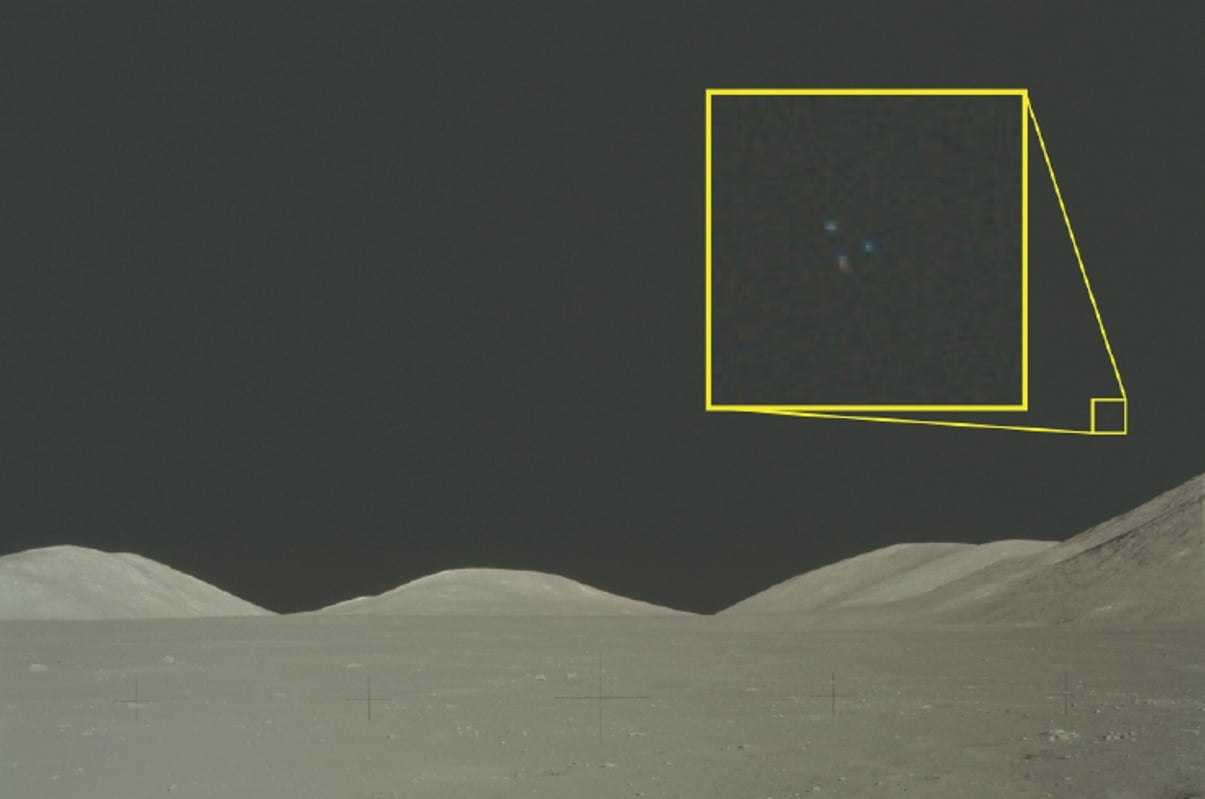
According to the supplied source text, the batch contains 161 files. Most are reports, photos, and videos tied to military missions, with cases stretching back to the 1940s. Among the most attention-grabbing items are pictures from Apollo 12 in 1969 and Apollo 17 in 1972, with enlarged sections highlighting bright spots or streaks visible in the sky.
The release also includes a transcript from the Gemini 7 mission in 1965 in which astronaut Frank Borman describes a “bogey” and a debris field made up of “hundreds of little particles.” Other materials reportedly include State Department cables as well as FBI photos and case files, broadening the collection beyond strictly military reporting.
One 2020 report cited in the source describes a military operator observing “a line of dots followed by a trailing dot.” On their own, those records do not settle what was seen. But they do illustrate the mix of historical artifacts and contemporary operational reports that the archive is beginning to assemble in one place.