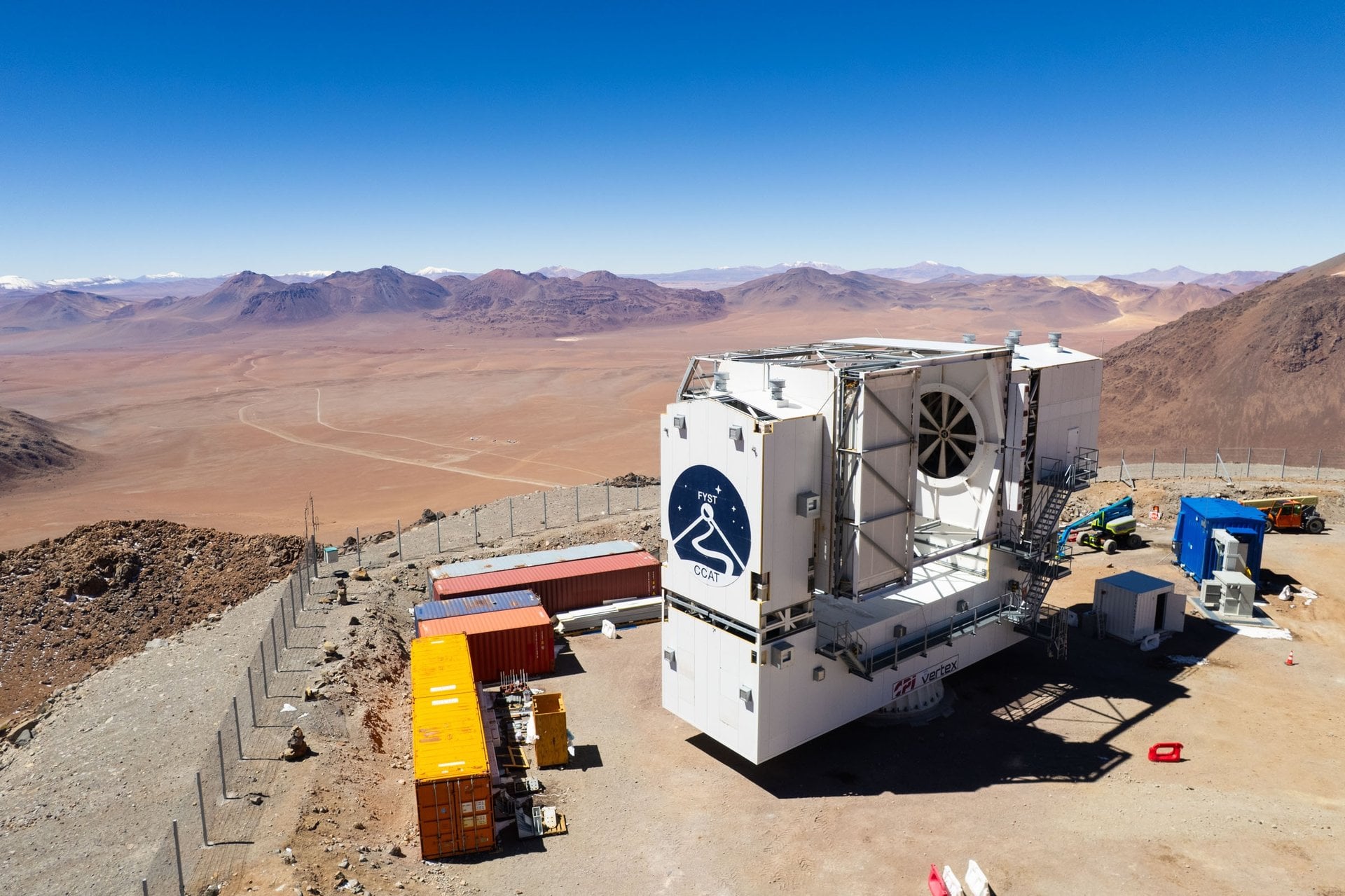
Un telescopio construido para uno de los lugares más difíciles de la Tierra
El Fred Young Submillimeter Telescope, o FYST, se ha inaugurado oficialmente en la cima de Cerro Chajnantor, en el desierto de Atacama de Chile, marcando la llegada de un observatorio largamente esperado a uno de los emplazamientos astronómicos más exigentes del mundo. Según el texto fuente proporcionado, la inauguración del 9 de abril reunió a más de 100 científicos, ingenieros y dignatarios en un lugar situado a 18.400 pies sobre el nivel del mar, donde el aire es tan tenue que los visitantes deben llevar oxígeno suplementario y pasar un examen médico.
El entorno brutal es precisamente el objetivo. FYST es un telescopio submilimétrico, diseñado para observar longitudes de onda entre el infrarrojo y la radio que son absorbidas en gran medida por el vapor de agua atmosférico. Cerro Chajnantor ofrece una combinación inusualmente favorable de altitud y sequedad, lo que lo convierte en uno de los mejores emplazamientos terrestres del mundo para este tipo de trabajo.
La elección del lugar cuenta la historia del propio instrumento. FYST no es un observatorio de uso general que busque una montaña conveniente. Es una máquina concebida en torno a una parte estrecha pero científicamente rica del espectro, que exige condiciones de observación extraordinarias.
Diseñado para la velocidad, no solo para la sensibilidad
El artículo fuente describe FYST como un telescopio de 6 metros con un innovador diseño óptico Crossed-Dragone. En términos prácticos, esa configuración utiliza espejos inclinados para evitar obstrucciones y producir imágenes excepcionalmente limpias en un amplio campo de visión. El resultado es un instrumento optimizado para escanear rápidamente grandes áreas del cielo.
Su instrumento principal, Prime Cam, está diseñado para alojar hasta siete módulos de detectores intercambiables y contará con más de 100.000 detectores superconductores. La fuente indica que eso otorga a FYST una velocidad de mapeo más de diez veces superior a la de cualquier observatorio submilimétrico anterior.
Esa comparación es crucial. FYST no se limita a añadir otro telescopio a una flota ya existente. Está pensado para cambiar el ritmo de observación en una parte del espectro electromagnético que hasta ahora no se había sondeado tan rápidamente a gran escala. El artículo compara el observatorio menos con un telescopio tradicional apuntado a objetivos individuales y más con una cámara cinematográfica celeste, que va construyendo de forma constante mapas profundos y extensos del cielo.
Una agenda científica vinculada a la cosmología de la primera luz
Las ambiciones de FYST son correspondientemente grandes. El texto fuente afirma que el telescopio estudiará el fondo cósmico de microondas en busca de la huella de ondas gravitacionales primordiales. Eso sitúa la nueva instalación en una de las búsquedas más trascendentes de la cosmología: evidencia de los momentos más tempranos del universo.
Las observaciones submilimétricas también abren ventanas a regiones polvorientas y de otro modo ocultas del espacio que son difíciles de estudiar en longitudes de onda visibles. Aunque el artículo sitúa al fondo cósmico de microondas como el objetivo principal, la velocidad de su amplio campo de visión significa que puede contribuir a la ciencia de sondeos de maneras que las instalaciones más estrechas y lentas no pueden.
En ese sentido, FYST refleja una tendencia más amplia en la astronomía. En lugar de perseguir solo instrumentos cada vez más grandes para objetivos individuales, los observatorios se diseñan cada vez más en torno a la capacidad de mapeo, la escala de detectores y la capacidad de generar grandes conjuntos de datos científicos con rapidez. FYST encaja plenamente en ese modelo.
Tres décadas de gestación
La fuente señala que el proyecto se remonta a hace 34 años, cuando un grupo de científicos de Cornell imaginó lo que algún día podría construirse en esa remota cumbre chilena. Por tanto, la inauguración representa no solo un hito de hardware, sino la culminación de una larga visión científica.
Esa larga cronología también recuerda cómo se desarrolla la infraestructura astronómica. Los trabajos en el emplazamiento, el diseño del instrumento, la financiación, la logística y las limitaciones ambientales prolongan el desarrollo durante décadas. La apertura de FYST es el final visible de un período mucho más largo de planificación e iteración técnica.
La dureza del lugar no hace más que reforzarlo. Todo en el observatorio, desde el acceso hasta las operaciones, debe enfrentarse a la altitud, el clima y el aire enrarecido. Construir allí fue una decisión para priorizar la ventaja científica por encima de la comodidad.
Por qué importa la inauguración
La llegada de FYST importa porque combina un sitio de observación de élite, un diseño óptico de amplio campo y un número inusualmente grande de detectores en un sistema creado para sondeos rápidos. En conjunto, esas características podrían ampliar lo que los astrónomos pueden hacer en el régimen submilimétrico, especialmente en el mapeo de grandes áreas y en los estudios del universo temprano.
El énfasis del artículo en la velocidad es especialmente notable. La capacidad de mapeo determina con qué rapidez puede generarse nueva cobertura del cielo, con qué velocidad pueden acumularse estadísticamente las señales débiles y con qué eficacia un observatorio puede construir los amplios conjuntos de datos de los que depende cada vez más la astronomía moderna. Si FYST funciona como se describe, podría convertirse en una herramienta de trabajo fundamental para la cosmología submilimétrica y la ciencia de sondeos.
También hay un peso simbólico aquí. Una cumbre que científicos imaginaron hace más de tres décadas alberga ahora un telescopio operativo diseñado para adentrarse en algunas de las preguntas más profundas de la física. Eso no garantiza un descubrimiento. Pero sí significa que ya están en su lugar las herramientas para una nueva campaña observacional.
En un campo en el que el progreso suele depender de infraestructuras pacientes, la inauguración de FYST recuerda que la astronomía sigue avanzando mediante compromisos físicos audaces: emplazamientos hostiles, diseños especializados e instrumentos construidos para revelar partes del universo que los telescopios corrientes no pueden ver con facilidad.
Este artículo se basa en la cobertura de Universe Today. Leer el artículo original.
Originally published on universetoday.com