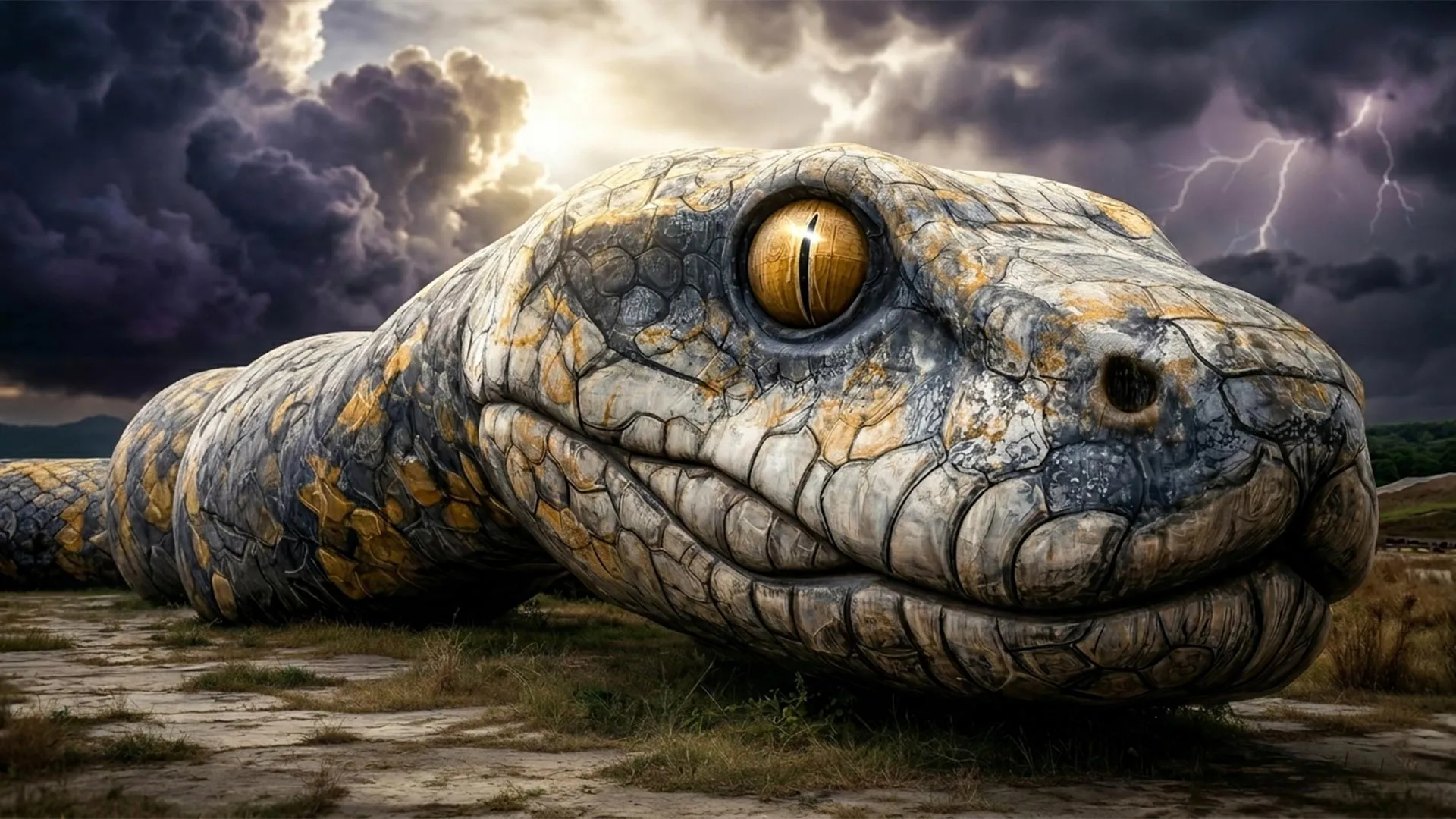
Una serpiente gigante entra en el registro fósil
Una serpiente prehistórica recientemente descrita de la India podría entrar en la misma conversación sobre tamaño que Titanoboa, la serpiente gigante más famosa jamás descubierta. Según la investigación resumida en el texto fuente proporcionado, la especie, llamada Vasuki indicus, vivió hace unos 47 millones de años y pudo haber alcanzado entre 11 y 15 metros de longitud, es decir, entre unos 36 y 50 pies.
Si esas estimaciones se mantienen, el animal se situaría entre las serpientes más grandes conocidas por la ciencia. El hallazgo procede de fósiles recuperados en Gujarat y descritos por los investigadores Debajit Datta y Sunil Bajpai en un estudio publicado en Scientific Reports. Los restos datan del Eoceno medio y añaden un importante nuevo dato a la historia evolutiva de los reptiles gigantes en el subcontinente indio.
Lo que muestran los fósiles
El espécimen incluye 27 vértebras en su mayoría bien conservadas, algunas de ellas todavía articuladas, lo que indica que pertenecían a una serpiente adulta. Esos huesos son la base de la estimación de tamaño que ha hecho tan llamativo el descubrimiento. Según el texto fuente, las vértebras miden entre 37,5 y 62,7 milímetros de longitud y entre 62,4 y 111,4 milímetros de anchura.
Los investigadores interpretan esas dimensiones como evidencia de un cuerpo grueso y cilíndrico. Esa morfología importa porque sugiere no solo una serpiente muy grande, sino una construida de una forma particular. No se trataba necesariamente de un depredador de persecución rápido y esbelto. Parece haber sido un animal de cuerpo pesado, cuya forma encaja más con la fuerza y el sigilo que con la velocidad.
A partir de esas pistas esqueléticas, el informe dice que la serpiente probablemente se movía lentamente y dependía de tácticas de emboscada, de manera comparable a las anacondas modernas. Esa es una información ecológica importante, porque el mero tamaño no dice mucho sobre el comportamiento. La forma del cuerpo ayuda a reconstruir cómo pudo haber vivido ese animal.
Por qué importa su origen en la India
El hallazgo también es significativo desde el punto de vista biogeográfico. Los investigadores clasifican a Vasuki indicus dentro de la extinta familia Madtsoiidae, pero señalan que representa un linaje único originado en el subcontinente indio. Eso le da al fósil una importancia más amplia que su estimación de tamaño en los titulares.
Las serpientes gigantes antiguas suelen atraer atención por su escala, pero su verdadero valor científico suele residir en lo que revelan sobre dónde evolucionaron los linajes y cómo se распростrieron. En este caso, el texto fuente sugiere que la India no fue simplemente un lugar donde casualmente aparecieron serpientes madtsoiidas. Puede haber sido el centro de origen de este linaje concreto.
El propio nombre refleja ese contexto. Vasuki hace referencia a la serpiente de la mitología hindú asociada con Shiva, mientras que indicus señala directamente a la India. El resultado es un nombre de especie que vincula el fósil tanto con su contexto científico como con la geografía cultural de su hallazgo.
¿Qué tan grande es grande?
La estimación de tamaño invita naturalmente a comparar con Titanoboa, la colosal serpiente del Paleoceno de Sudamérica que se ha convertido en el referente de la gigantismo prehistórico entre las serpientes. El texto fuente dice que Vasuki indicus entra en el mismo rango general de tamaño, aunque también señala que persiste incertidumbre en las estimaciones.
Ese matiz es esencial. La reconstrucción de la longitud a partir de vértebras es una estimación científica, no una medición directa. Aun así, el extremo inferior del rango proyectado ya sitúa al animal entre las serpientes extraordinariamente grandes. El extremo superior lo lleva a un territorio realmente excepcional.
Eso hace que el fósil sea importante incluso si futuros análisis ajustan las cifras. Tanto si finalmente resulta algo más pequeño como casi idéntico en escala a Titanoboa, el espécimen amplía el registro conocido de serpientes gigantes y demuestra que tales tamaños corporales no se limitaron a un único linaje famoso en una sola región.

Lo que esto dice sobre los ecosistemas antiguos
Una serpiente de este tamaño implica un ecosistema capaz de sostener a un gran depredador de emboscada. El texto fuente no ofrece una reconstrucción completa del entorno circundante, pero el cuerpo robusto de la serpiente y su supuesto estilo de caza sugieren un hábitat en el que el ocultamiento y la fuerza a corta distancia eran decisivos.
Esa es una de las razones por las que los grandes depredadores fósiles son científicamente valiosos. Funcionan como indicadores indirectos de la estructura ecológica. Un reptil enorme no puede existir aislado del clima, el hábitat y las presas disponibles. Incluso cuando el registro fósil es fragmentario, estos animales sugieren la energía y la estabilidad de los sistemas que habitaron.
El hallazgo de Vasuki indicus opera, por tanto, en varios niveles a la vez:
- Introduce una especie recién descrita
- Añade evidencia de serpientes gigantes en el Eoceno de la India
- Sugiere una ecología de emboscada con cuerpo robusto
- Refuerza la importancia paleontológica del subcontinente indio para la evolución de los reptiles antiguos
Un nuevo gigante con valor científico duradero
La gran conclusión para el público será simple: una serpiente antigua de 50 pies pudo haber vivido alguna vez en la India. Pero la importancia científica va más allá del tamaño. Los fósiles aportan evidencia anatómica de una serpiente madtsoiida gigante y de cuerpo grueso del Eoceno medio, y respaldan la idea de un linaje indio distintivo dentro de esa familia extinta.
Esa combinación de tamaño, conservación e importancia geográfica es lo que hace que el hallazgo destaque. No es solo un titular espectacular sobre un fósil. Es una incorporación significativa a la historia de cómo se diversificaron las serpientes, cómo evolucionaron las formas gigantes y cómo los ecosistemas prehistóricos del subcontinente indio están siendo reconstruidos mediante nuevas pruebas de campo.
Vasuki indicus puede llegar a ser ampliamente conocida por su comparación con Titanoboa. Sin embargo, su valor a largo plazo probablemente provenga del trabajo científico más discreto que permite: refinar estimaciones, probar relaciones de linaje y construir una imagen más clara de un mundo en el que las serpientes gigantes no eran un mito, sino biología.
Este artículo se basa en una información de Science Daily. Leer el artículo original.

Originally published on sciencedaily.com