Ending an Era of Nuclear Prohibition
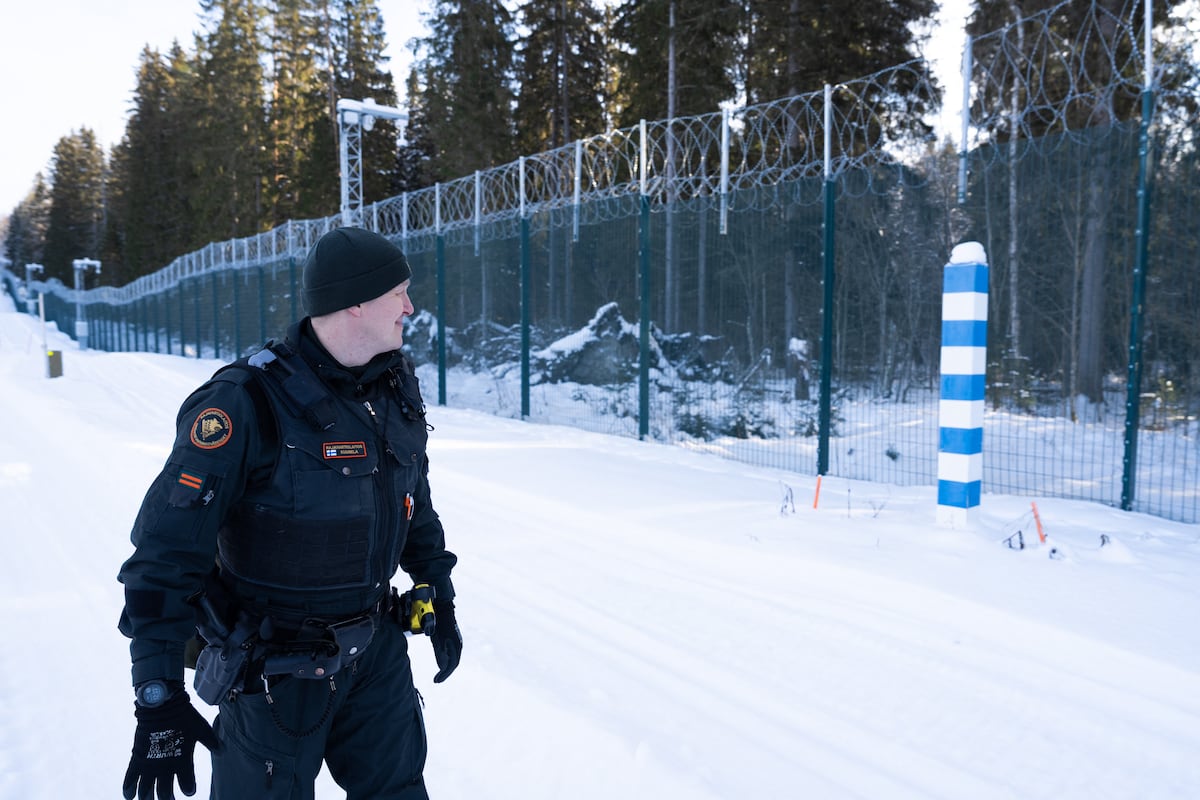
Finland's government has proposed sweeping amendments to its Nuclear Energy Act and Criminal Code that would allow nuclear weapons to be brought onto Finnish soil for the first time since the country's independence. The proposal, circulated for public comment on March 5, would dismantle a blanket ban enacted in 1987 during Finland's era of Cold War neutrality.
Under current law, the import, transport, possession, manufacture, and detonation of nuclear devices on Finnish territory is categorically prohibited. The proposed amendments would permit nuclear weapons in the context of Finland's homeland defense, NATO's collective defense operations, or defense cooperation with allied nations. Manufacturing or detonating nuclear weapons would remain criminal offenses, consistent with Finland's international treaty obligations.
"The amendment is essential to strengthen Finland's military defense within the alliance and to fully leverage NATO's deterrence and collective defense capabilities," Defense Minister Antti Hakkanen said at a press briefing in Helsinki.
From Neutrality to NATO
Finland's journey from Nordic neutrality to nuclear hosting capability has been remarkably swift. The country maintained a careful balance between East and West throughout the Cold War, and its nuclear prohibition reflected a deliberate policy of avoiding any action that could be perceived as provocative by its neighbor Russia. Finland shares an 830-mile border with Russia, the longest of any EU member state.
Russia's full-scale invasion of Ukraine in February 2022 shattered the assumptions underlying Finnish neutrality. Within months, public support for NATO membership surged from roughly 25 percent to over 75 percent, and Finland formally joined the alliance in April 2023. The speed of the transformation reflected a national consensus that neutrality could no longer guarantee security in a Europe where Russia was willing to wage territorial war.
The nuclear weapons proposal represents the next logical step in this transformation. Most NATO members carry no equivalent legislative restrictions on nuclear weapons, and Finland's blanket ban has made it an outlier within the alliance. The government of Prime Minister Petteri Orpo has framed the change as part of a broader package of legal reforms needed to align Finnish law with alliance obligations.
Nordic Divergence
Finland's approach differs notably from its Nordic neighbors. Sweden, Denmark, and Norway maintain peacetime political policies against nuclear weapons on their territory, but these are policy positions rather than legal prohibitions. They can be changed by government decision without legislative action, providing flexibility that Finland's statutory ban does not.
Opposition figures, including Social Democratic Party lawmaker Tytti Tuppurainen, have argued that Finland's proposed amendment goes further than necessary. By removing all restrictions rather than preserving a peacetime prohibition, the amendment would make Finland one of the most permissive NATO members regarding nuclear weapons on its territory.
The distinction matters because it affects the speed with which nuclear weapons could be deployed to Finland in a crisis. A legal ban requires legislative repeal, which takes time. A political policy can be reversed by executive decision. Finland's current legal framework would prevent nuclear deployment even in an emergency until the law was changed, potentially creating a dangerous delay in a fast-moving military scenario.
Strategic Implications
The proposal carries significant strategic implications for NATO's northern flank. Finland's accession to NATO already doubled the alliance's border with Russia and fundamentally altered the security calculus in the Baltic and Arctic regions. The ability to host nuclear weapons would add a deterrence dimension that makes any Russian military planning against Finland or the Baltic states considerably more complex.
Russia has predictably condemned the proposal. The Kremlin has previously warned that NATO expansion toward Russia's borders and the deployment of nuclear infrastructure in new member states would require a Russian military response, though the specifics of such a response have remained vague.
Military analysts note that Finland's capability to host nuclear weapons does not mean deployment would occur immediately or even be planned. NATO's nuclear sharing arrangements have historically been limited to a small number of countries, and the alliance's nuclear posture is determined collectively rather than by individual members. The legal change creates an option, not an obligation.
Parliamentary Passage Expected
The proposal appears likely to pass. The ruling right-wing coalition commands a parliamentary majority and has the backing of the full government. The public comment period is a procedural requirement rather than a political obstacle, and no major parliamentary faction has signaled that it will attempt to block the legislation.
The speed and decisiveness of Finland's security policy transformation since 2022 reflects a society that has internalized the lessons of the Ukraine war and concluded that maximum integration into Western defense structures is the surest guarantee of national survival. For a country that fought two wars against the Soviet Union within living memory, the calculation is deeply personal as well as strategic.
This article is based on reporting by Defense News. Read the original article.
Originally published on defensenews.com