NASA is using Artemis III to rehearse a more complex lunar architecture
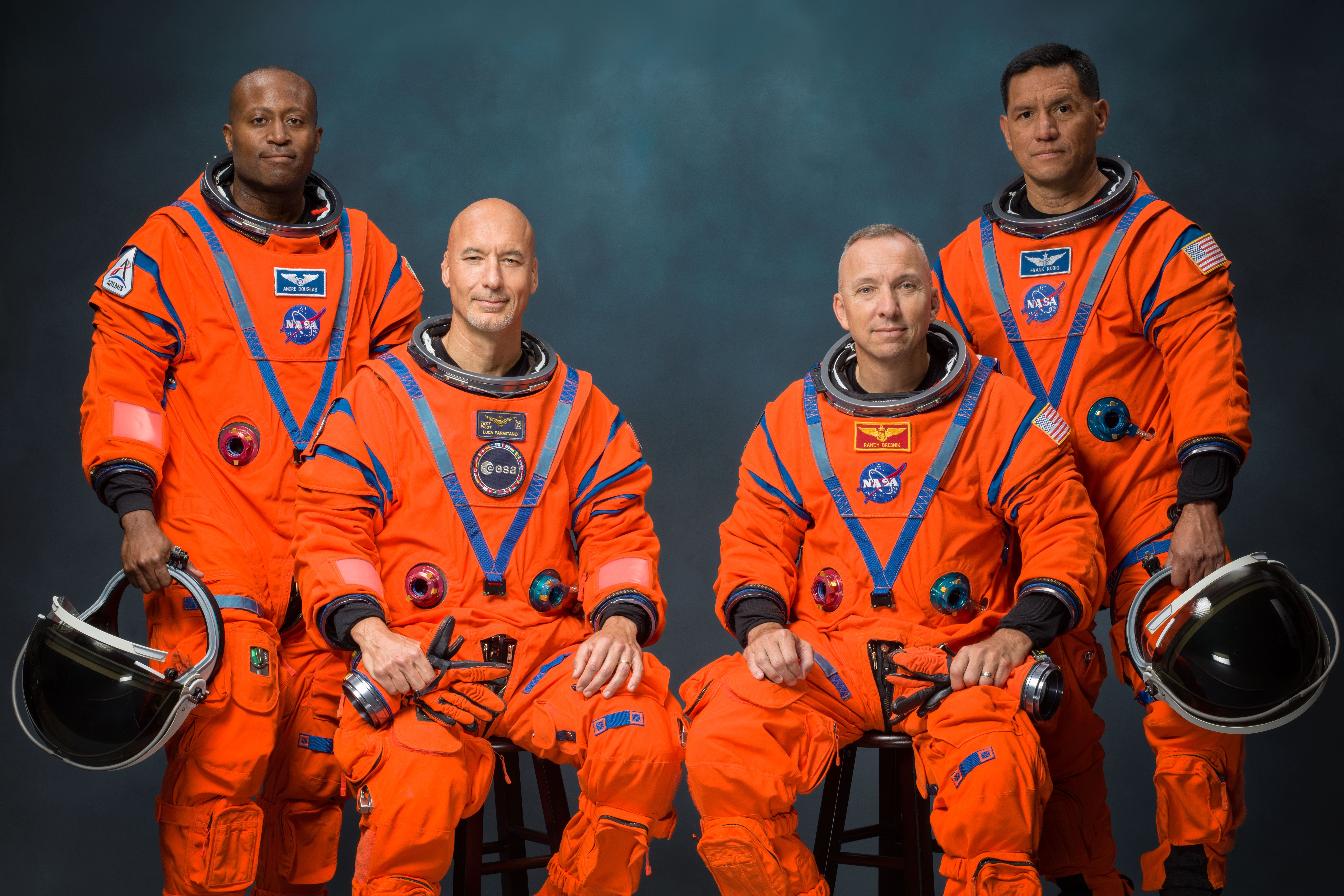
NASA has announced the Artemis III crew and outlined a mission that is less about symbolic milestone-setting than about systems integration. According to the supplied source material, astronauts Randy Bresnik, Andre Douglas, and Frank Rubio, joined by European Space Agency astronaut Luca Parmitano, will spend two weeks in orbit next year testing rendezvous, docking, and compatibility between Orion and two competing lunar lander systems. The exercise is intended to support Artemis IV, which the source describes as the first crewed mission to the lunar south pole in 2028.
That structure matters because it shows how much the lunar return plan has changed from older Apollo-style assumptions. The Artemis architecture now depends on multiple launch systems, multiple spacecraft, and commercial partners whose hardware must interoperate under mission conditions. NASA Administrator Jared Isaacman described Artemis III in the source as a multi-launch campaign that will bring together the most powerful rockets in the world to test rendezvous, docking, and interoperability across multiple systems close to Earth before astronauts return to the lunar surface.
The mission profile described in the source begins with NASA's Space Launch System sending Orion from Kennedy Space Center to low Earth orbit. There, the crew will conduct docking exercises with test versions of Blue Origin's Blue Moon and SpaceX's Starship landers, both of which are competing to carry humans from lunar orbit to the surface and back during Artemis IV. Orion is expected to remain docked for several days with each vehicle while the crew evaluates life support, hatch operations, communications, propulsion systems, and Axiom Space's new spacesuits.
That is a much more demanding prelude than a simple demonstration flight. It turns Artemis III into a proving ground for commercial integration, mission choreography, and hardware compatibility across organizations that historically would have operated inside clearer program boundaries. Artemis program manager Jeremy Parsons said in the supplied account that NASA wants to prove it can carry out highly choreographed operations with partners across systems and launch pads in Earth orbit before returning to the Moon and trying to establish an enduring presence there.
The timing is also notable. The source links the announcement to a recent Blue Origin setback, describing it as coming nearly two weeks after the catastrophic explosion of New Glenn. Rather than slowing the broader Artemis effort, NASA appears to be pressing ahead with a framework that distributes capability across more than one commercial lander provider. That redundancy may help the agency manage technical risk, but it also increases integration risk, which is precisely what Artemis III is designed to address.
The public baton-passing from the Artemis II crew to the newly named team added ceremonial continuity, but the more important message was operational. NASA is no longer just selecting astronauts for a destination mission. It is staffing an orbital test campaign whose main job is to validate that a multi-provider lunar system can function coherently before it is asked to support a landing architecture. In program terms, that is a mature step. It accepts that the bottleneck to lunar return is no longer only launch power. It is coordination.
What Artemis III is meant to prove
- Orion can rendezvous and dock with multiple commercial lander systems in Earth orbit.
- NASA and its partners can test life support, propulsion, communications, and interface procedures before lunar operations.
- A multi-launch campaign can be coordinated across separate vehicles and providers.
- Commercial partnerships are central to the path toward a 2028 crewed return to the lunar south pole.
NASA's new lunar plan is therefore becoming clearer. Artemis III is not simply another stepping stone on a countdown clock. It is the mission where the agency tries to prove that its commercial-heavy architecture can work as an integrated whole. If that succeeds, Artemis IV becomes more credible. If it does not, the schedule will matter less than the lesson that lunar exploration in the late 2020s depends on orchestration as much as on rocketry.
This article is based on reporting by Fast Company. Read the original article.
Originally published on fastcompany.com