New Rules for Farming Under Solar Panels
The Japanese government has defined new national standards for agrivoltaics, the practice of generating solar electricity and growing crops on the same land, as the sector faces its first serious regulatory reckoning. The benchmarks arrive after government audits revealed that nearly one-quarter of existing agrivoltaic projects were reporting reduced crop yields or failing to meet agricultural production standards.
The new standards establish clear metrics for crop yield, land use efficiency, and agricultural activity that projects must meet to maintain their permits. They represent the most comprehensive regulatory framework for agrivoltaics in any country and could serve as a model for other nations grappling with how to balance solar energy expansion with food production.
The Promise and Problem of Agrivoltaics
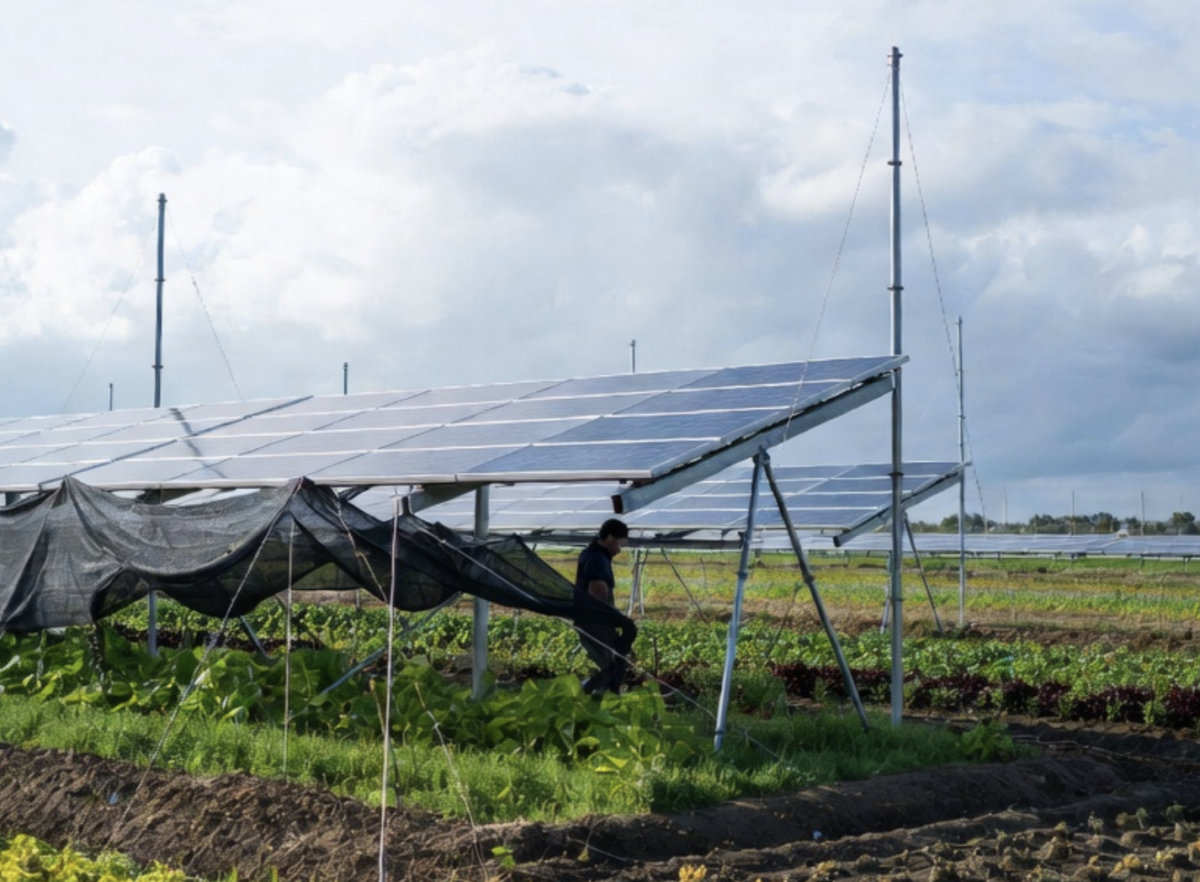
Agrivoltaics has been touted as an elegant solution to one of the energy transition's most persistent tensions: the competition between solar development and agricultural land use. By elevating solar panels above crops, both electricity generation and food production can theoretically share the same land.
In Japan, where arable land is scarce and expensive, agrivoltaics has particular appeal. The country is a densely populated island nation that imports roughly 60 percent of its food and has ambitious renewable energy targets following the Fukushima nuclear disaster. The number of agrivoltaic installations has grown rapidly, from fewer than 100 in 2015 to several thousand today.

What the Audits Found
Government inspections revealed troubling patterns. Approximately 23 percent of projects were producing crop yields significantly below pre-installation levels, in some cases falling below minimum thresholds required by their permits. Some sites had reduced farming to token efforts, a few rows of low-maintenance crops grown primarily for regulatory compliance.
In the worst cases, inspectors found sites where farming had been effectively abandoned, with solar panels covering land that was nominally classified as agricultural but producing no meaningful food output. These installations had exploited a loophole in Japan's strict farmland conversion rules, using agrivoltaic permits as a back door for pure energy production on protected agricultural land.
The New Benchmarks
The newly established standards address these concerns through several mechanisms. Projects must now maintain crop yields at a minimum of 80 percent of the regional average for the same crops grown without solar panels. This threshold acknowledges that some yield reduction is inherent while ensuring agriculture remains a genuine activity.
The standards also establish requirements for panel height, spacing, and ground coverage ratio calibrated to specific crop types. Rice paddies have different light requirements than leafy vegetables or fruit trees, and the rules reflect these differences rather than applying a one-size-fits-all approach.
Project operators must submit annual reports documenting crop yields, farming activities, and land use. Projects failing to meet standards for two consecutive years face permit revocation and a requirement to remove solar installations and restore the land to full agricultural use.
Industry Response
Companies that invested in genuinely integrated systems largely welcome the standards as a way to differentiate legitimate operations from bad actors. Some developers worry that the 80 percent yield threshold may be too stringent for certain crop-panel combinations, particularly in northern regions where lower sun angles make adequate light harder to maintain. Industry groups have requested regionalized thresholds.
The financial implications are significant. Projects that invested primarily in energy production may need expensive retrofits, adjusting panel heights and spacing to meet crop yield requirements. Some may find continued operation economically unfeasible.
A Model for the World
Japan's experience offers valuable lessons for the global agrivoltaics sector, which is expanding rapidly in Europe, the United States, and other Asian countries. The core tension between maximizing solar output and maintaining meaningful agricultural production is universal, and Japan's audits demonstrate that without rigorous standards, the agricultural component risks becoming an afterthought.
France, Germany, and Italy have established agrivoltaic regulations, but none are as comprehensive as Japan's new framework. The United States has no federal standards, with oversight varying widely by state. As the global installed base grows, Japan's experience suggests that proactive regulation is essential to maintaining the technology's dual-use promise and public legitimacy. The technology remains one of the most compelling solutions to the land-use challenge facing renewable energy expansion, but only if the farming is as real as the solar panels.
This article is based on reporting by PV Magazine. Read the original article.

Originally published on pv-magazine.com