The Great Data Center Gamble
America's electric utilities are making their biggest infrastructure bets in decades, pouring billions of dollars into grid expansions designed to feed the insatiable power appetite of artificial intelligence data centers. But a growing chorus of energy analysts and financial experts is sounding the alarm: the data center boom may not deliver on its promises, and the consequences of a bust could ripple through electricity markets for years.
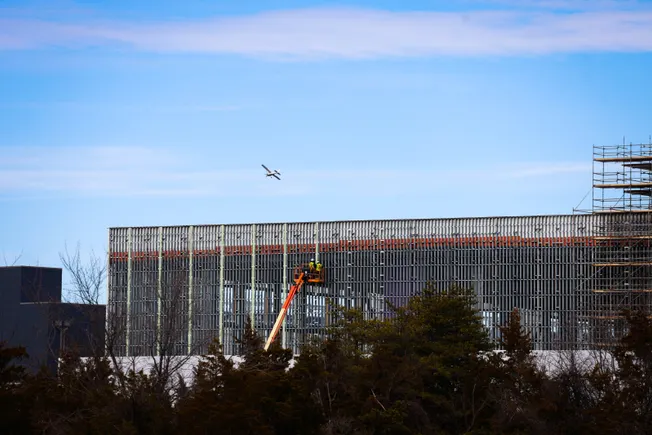
The scale of investment is staggering. Utilities across the country are racing to build new transmission lines, substations, and generation capacity specifically to serve hyperscale data center campuses. These facilities can consume as much electricity as small cities, and their operators — including Microsoft, Amazon, Google, and Meta — have been signing long-term power purchase agreements that have fundamentally reshaped utility planning.
The Projection Problem
At the heart of the risk lies a fundamental uncertainty: nobody knows exactly how much electricity AI will actually need in the coming years. Advait Arun of the Center for Public Enterprise put it bluntly: "Data center demand is hard to project over the next few years. In a market correction, it's very possible that data centers will end up crashing out of their tariff arrangements."
The concern is not hypothetical. Technology investment cycles have historically been characterized by boom-and-bust dynamics, from the dot-com bubble to the cryptocurrency mining surge. Each wave brought promises of exponential growth that justified massive infrastructure spending, only for reality to deliver something more modest than projections suggested.
Key Risk Factors
- AI efficiency improvements could reduce power consumption faster than expected
- Economic downturns may force tech companies to scale back data center plans
- Tariff arrangements may not survive if data centers consolidate or relocate
- Grid upgrades built for data centers may be difficult to repurpose
- Ratepayer protections may be insufficient if utilities are left holding stranded assets

Who Bears the Risk?
The question of who pays when things go wrong is central to the debate. In most regulated utility markets, infrastructure costs are passed through to ratepayers — ordinary residential and commercial customers who have no direct benefit from data center operations. If a utility builds billions of dollars in grid infrastructure to serve data centers that never fully materialize or that abandon their agreements, those costs do not simply disappear.
Some states have begun implementing protective measures. Virginia, which hosts the largest concentration of data centers in the world, has debated legislation to ensure that data center operators bear a fair share of infrastructure costs. Other jurisdictions are exploring dedicated rate classes for hyperscale customers to insulate residential ratepayers from demand volatility.
The Grid Capacity Crunch
Beyond financial risk, the rush to serve data centers is creating real operational challenges for grid operators. Interconnection queues are backlogged by years in many regions, and the competition for limited grid capacity is crowding out other projects — including the renewable energy installations needed to meet climate targets.
Utilities find themselves caught between competing pressures: the lucrative promise of data center load growth, the regulatory obligation to maintain reliability for existing customers, and the long-term imperative to decarbonize. Balancing these priorities requires careful planning, but the speed at which data center demand has materialized leaves little room for the methodical approach that utility regulation traditionally demands.
The coming years will determine whether the current wave of utility investment in data center infrastructure proves visionary or reckless. For an industry built on predictable, slow-moving demand patterns, the data center boom represents both the greatest growth opportunity and the greatest financial risk in a generation.
This article is based on reporting by Utility Dive. Read the original article.
Originally published on utilitydive.com




