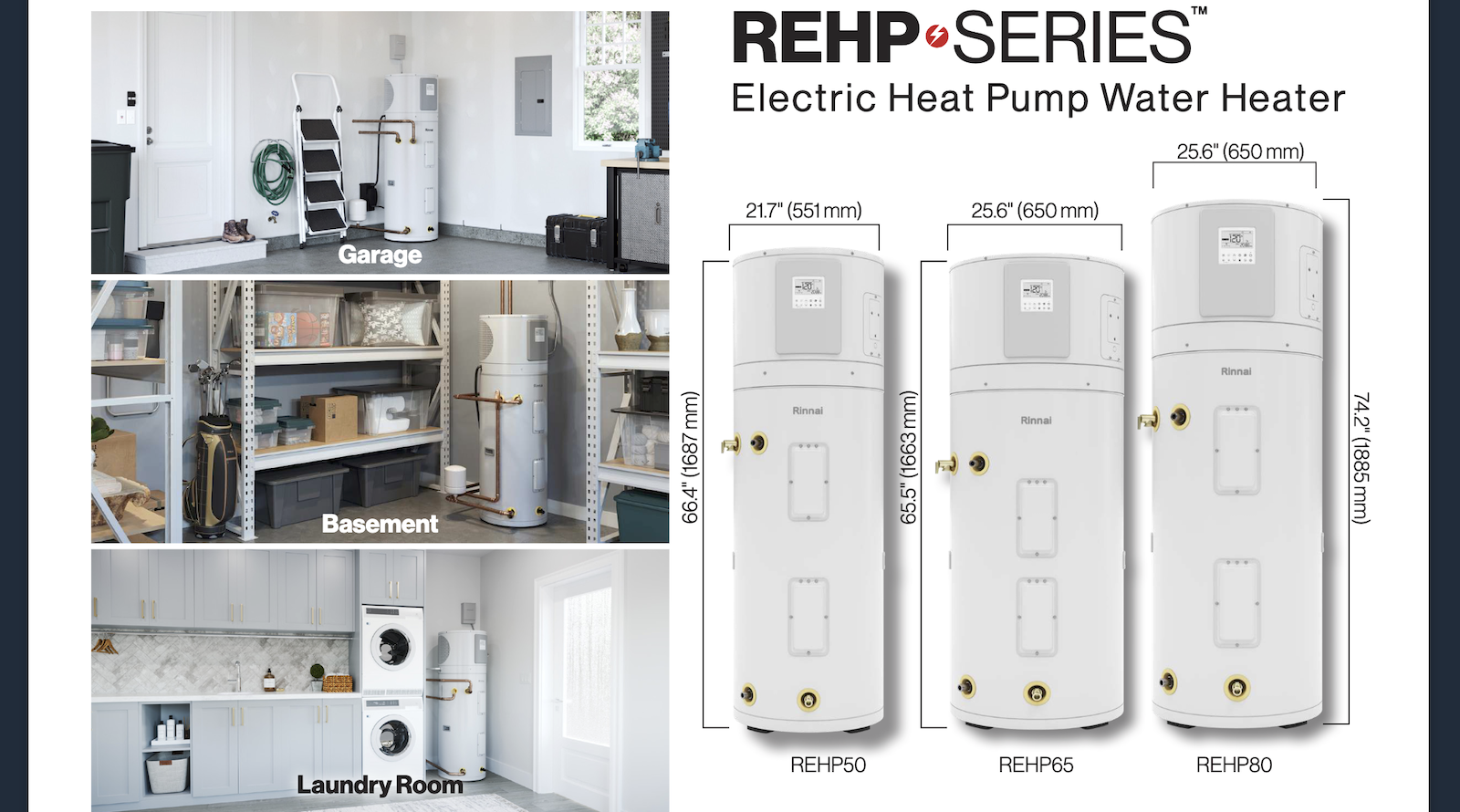
Rinnai’s latest recognition is really a signal about where home electrification is heading
Rinnai America’s REHP Series Electric Heat Pump Water Heater has won a 2026 Green GOOD DESIGN Award, according to the supplied source material from CleanTechnica. On its face, the story is about industrial design recognition. In practice, it is also about the growing importance of one of the most consequential appliances in the effort to cut household energy consumption and emissions: the water heater.
The Green GOOD DESIGN program, presented by The European Centre for Architecture Art Design and Urban Studies and The Chicago Athenaeum: Museum of Architecture and Design, recognizes sustainable product design. Rinnai says its REHP Series was selected from hundreds of submissions spanning more than 30 countries. That matters because heat pump water heaters have increasingly moved from niche efficiency products toward mainstream electrification tools, especially as households and utilities look for ways to reduce fossil fuel use without sacrificing comfort.
Why water heating matters more than many consumers realize
Water heating is one of the largest energy uses in many homes. That makes it a high-impact target for efficiency gains. The supplied source text positions the REHP Series as a product built to save money, maintain comfort and reduce greenhouse gas emissions and air pollution. Those claims align with the central appeal of heat pump water heaters generally: instead of generating heat directly in the same way as conventional electric resistance systems, they move heat more efficiently.
In that context, product recognition is not just about aesthetics or branding. It is a sign that appliance makers are competing on efficiency, controls, installation flexibility and broader grid readiness. Those factors increasingly shape whether electrification products can move beyond early adopters into broad household use.

The listed specifications show what the market now expects
The source text includes several concrete features that help explain why this model stood out. Rinnai says the REHP Series reaches up to 4.0 UEF, is NEEA Tier 4 compliant, offers up to 91 gallons first-hour rating and includes five operating modes. It also lists a variable speed fan for quieter operation, an operating range of 37F to 109F, optional duct and leak sensor accessories, and demand response capability via a CTA-2045 port.
Taken together, those details point to how the category is evolving. Efficiency remains the headline feature, but it is no longer enough on its own. A competitive heat pump water heater now also has to fit into more homes, handle varying climates, respond to different usage patterns and, increasingly, interact with the broader electrical system.
Demand response support is especially notable because it links an appliance choice to grid management. As more electricity systems integrate variable renewable energy, equipment that can shift when it draws power becomes more valuable. A water heater that can participate in demand response is not just an efficient appliance. It becomes a small piece of flexible energy infrastructure inside the home.
Recognition reflects a market shift, not just one company’s product cycle
Rinnai has long been associated with tankless water heaters, and the award gives the company another way to position itself in an electrifying market. But the broader story is that heat pump water heaters are now being judged as sophisticated consumer products rather than niche efficiency upgrades. That includes performance, installation constraints, acoustics, operating modes and compatibility with rebates and utility programs.
The source text explicitly says the REHP Series meets the highest level of efficiency standards and rebate requirements. That is important because rebates often determine whether a highly efficient appliance is financially attractive at the moment of replacement. In real markets, a product’s success often depends not just on engineering quality but on whether it fits the incentive structures households actually face.
The mention of flexible installation clearances also points to another barrier the industry is trying to solve. Heat pump water heaters can offer compelling savings, but physical space, airflow and noise concerns can deter adoption. Manufacturers that reduce those frictions may help move the category into a much larger set of homes.
Design awards can influence adoption when products feel more usable
There is a tendency to treat sustainability awards as peripheral to actual market outcomes. In appliances, that can be a mistake. Households rarely choose equipment on efficiency alone. They also care about noise, fit, controls, reliability and the sense that a product has been designed thoughtfully rather than merely engineered for compliance. Awards that emphasize sustainable design can help legitimate that broader standard.
The REHP Series may not transform the sector on its own, but its recognition shows where the industry is competing: not simply on lower energy use, but on making efficient electrified appliances easier to live with. That is how categories mature. Products stop being sold only as virtuous purchases and start being sold as practical, desirable ones.
A small appliance story with larger energy implications
Viewed narrowly, this is a product-award announcement. Viewed more broadly, it captures a meaningful shift in residential energy technology. Hot water is becoming part of the larger electrification and grid-flexibility conversation, and product features that once seemed specialized are becoming central selling points.
Rinnai’s award does not, by itself, prove market leadership across the category. What it does show is that heat pump water heaters are increasingly being recognized as important climate and energy devices, not just plumbing equipment. As utilities, policymakers and homeowners push for lower-emissions homes, that distinction will matter more.
This article is based on reporting by CleanTechnica. Read the original article.
Originally published on cleantechnica.com




