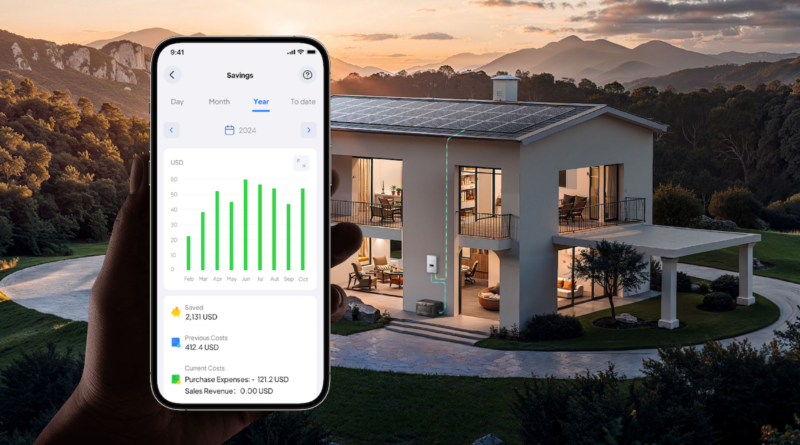
Portable batteries are being marketed as more than emergency gadgets
Portable power stations have spent years occupying a narrow corner of the energy market, associated mainly with camping, backup use, and off-grid convenience. The supplied source material around BLUETTI’s event appearances in Hawaii and at RE+ Mexico suggests that the category is now being framed more broadly: as a practical tool for resilience, fossil-fuel displacement, and household energy management.
The immediate news is modest. BLUETTI is showcasing products at RE+ Mexico and the Hawaii Electric Home Show, including the Apex 300 portable power station, the B500K expansion battery, and PV350 solar panels. But the larger significance lies in the sales pitch behind those appearances. These systems are no longer being presented only as recreational accessories. They are being marketed as flexible energy assets that can help households navigate expensive power, unreliable service, and time-of-use pricing.
That is an important shift in language because it mirrors broader changes in the electricity landscape. As utility pricing becomes more dynamic and outage concerns remain a recurring issue in many regions, smaller battery systems are starting to compete for a role somewhere between consumer electronics and home energy infrastructure.
Why Hawaii and Mexico matter
The locations named in the supplied text are revealing. Hawaii is a natural market for this category because electricity costs are high and time-of-use programs create a clearer economic case for shifting consumption into lower-price periods. The source specifically references Hawaii’s “Shift and Save” time-of-use program, arguing that portable systems can be charged when electricity is cheaper and then used later when rates are higher.
That idea is not the same as whole-home battery storage, but it reflects the same core principle: move energy across time to reduce cost or stress on the grid. For consumers who do not want a fixed installation, or who cannot justify the cost of a larger home battery, portable units offer a lighter version of that functionality.
Mexico presents a different but related opportunity. The supplied text positions portable power as useful in places where electricity can be patchy or inconvenient, and where backup needs do not always justify traditional generators or larger installations. The underlying market logic is straightforward. A product that can provide backup, run appliances selectively, and pair with portable solar becomes more attractive when grid reliability is inconsistent or refueling fossil equipment is burdensome.
These are exactly the kinds of conditions that can expand demand beyond outdoor recreation and into mainstream household use.

The anti-generator pitch is central
One of the clearest themes in the supplied source material is displacement of fossil-fueled generators. BLUETTI’s positioning, as described there, is that portable battery systems can replace or reduce use of generators that are noisy, polluting, and often inefficient. That framing matters because it turns the product category into part of a broader electrification story.
Portable batteries are not a complete substitute in every scenario. Their storage capacity is finite, and their usefulness depends heavily on what loads a user is trying to support. But for short outages, selective backup, light mobility, and load shifting, they can cover use cases that would otherwise default to gasoline or diesel equipment.
This is where the category begins to intersect with energy transition policy and consumer behavior. Not every energy innovation arrives as utility-scale infrastructure or rooftop solar. Some emerge as modular consumer products that change how people manage outages, mobility, and daily electricity costs. Portable power stations fit that mold.
The source material also notes the role of paired solar panels. That combination matters because it extends the system beyond stored grid electricity. Even if portable solar is less powerful or predictable than a fixed rooftop setup, it reinforces the promise of a more self-sufficient power package.
From outdoor gear to distributed energy tool
The supplied text repeatedly broadens the use case: camping, backup during frequent but short outages, convenient power access around town, and shifting energy use to lower-cost hours. Taken together, those examples point to a category transition already underway. These devices are being sold less as niche gadgets and more as general-purpose distributed energy tools.
That positioning could help explain why companies are putting more effort into event visibility and wider regional marketing. A product line built for one-off emergencies has limited growth. A product line tied to resilience, cost control, and flexible electrification speaks to a much larger audience.
It also reflects a practical truth about the current power system. Many households do not need a full home battery, an electrician-led installation, or a large generator. They need a portable system that can keep key devices running, absorb some solar input, and reduce bills around the margin. That is not a headline-grabbing transformation, but it can still be commercially meaningful.
A small but telling energy-market signal
BLUETTI’s event schedule alone does not prove a market breakout, and the supplied source text has the tone of a product-forward showcase rather than an independent market report. Even so, it highlights a real trend: portable storage is increasingly being woven into conversations about grid strain, energy costs, and cleaner backup power.
The category’s appeal comes from its flexibility. These systems can serve as backup power, mobile energy supply, basic solar companion, or simple arbitrage tool under time-of-use pricing. That versatility is useful in a market where energy problems vary widely by region.
Hawaii, with high power costs and time-sensitive pricing, and Mexico, with practical resilience needs, are sensible places to test that message. If the category continues to grow, it will likely be because companies convince consumers that portable power is not just something to buy for a camping trip or keep in a closet for storms. It is something that can participate, in a small but tangible way, in everyday energy management.
That is the broader significance of the latest showcase push. Portable power stations are being marketed less as backup accessories and more as adaptable energy devices for a grid that is becoming more expensive, more dynamic, and, in some places, less dependable.
This article is based on reporting by CleanTechnica. Read the original article.
Originally published on cleantechnica.com




