Clean Energy Milestone: 370 GW Installed
The United States has achieved a significant clean energy milestone: cumulative clean power capacity has reached 370 gigawatts (GW), enough to power nearly 80 million American homes, according to the American Clean Power Association's Q1 2026 Clean Power Market Report. This growth comes despite a challenging policy environment, particularly for wind energy.
Solar and Battery Storage Lead Pipeline Growth
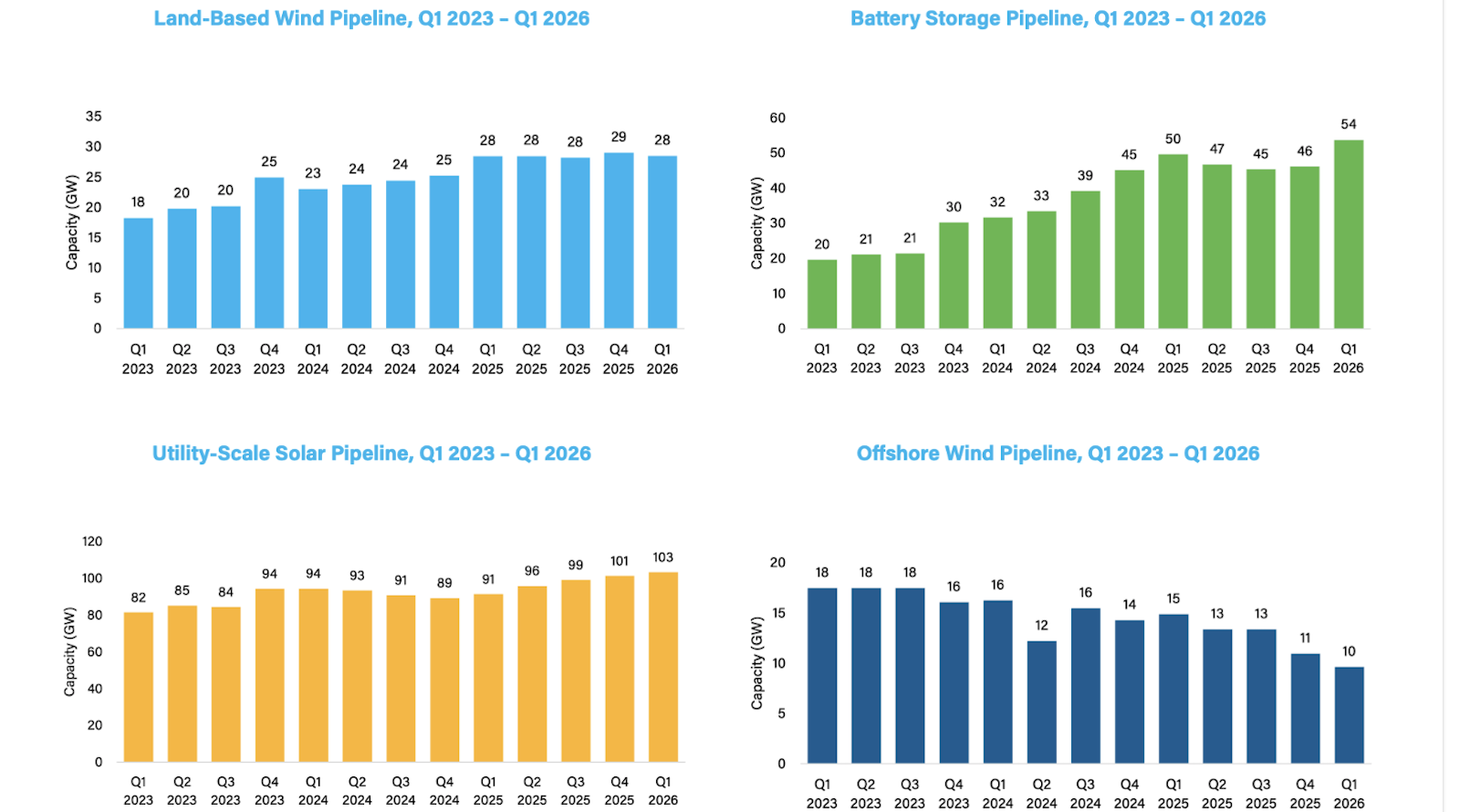
The overall clean power project pipeline grew by 6% in Q1 2026 compared to the same period in 2025. Solar power led the way with a 13% increase in its pipeline, while battery storage saw an 8% rise. These technologies continue to benefit from low costs and strong grid integration characteristics, even as federal and state-level support for solar has waned.
In terms of installed capacity, solar power surpassed onshore wind for the first time, reaching 161.1 GW versus onshore wind's 160.9 GW. However, a significant amount of wind capacity is expected to come online later in 2026, so solar's lead may be temporary.

Wind Power Faces Headwinds
Not all clean energy technologies are thriving. Offshore wind power experienced a dramatic 35% drop in its pipeline during Q1 2026, a direct result of the current administration's aggressive anti-wind policies. Onshore wind held steady, but early- and mid-stage land-based wind projects have struggled to secure federal approvals, creating uncertainty for future development.
Installation Numbers Decline
Despite the growing pipeline, actual installations declined sharply. Overall clean energy capacity installations in Q1 2026 were down 17% year-over-year, totaling 6,388 MW compared to 7,695 MW in Q1 2025. Quarter-over-quarter, installations fell 66% from Q4 2025, though first quarters are typically slower due to seasonal factors.
Solar alone added more than 3.6 GW in Q1 2026, bringing its cumulative total to 161.1 GW—enough to power nearly 600,000 homes. Battery storage deployment also remained robust, supported by its declining costs and ability to stabilize the grid.
Policy and Market Outlook
The report highlights the resilience of solar and storage in a policy environment that has become less favorable. While federal support for solar has dropped, the technology's hyper-competitive costs continue to drive adoption. For wind, the outlook is more cautious, with offshore wind facing permitting roadblocks and onshore wind awaiting clearer regulatory signals.
Industry analysts expect clean energy installations to pick up later in 2026 as project timelines advance. The growing pipeline—especially in solar and storage—suggests that the sector remains on a growth trajectory, even if near-term headwinds persist.
This article is based on reporting by CleanTechnica. Read the original article.
Originally published on cleantechnica.com