Putting the Solar Array on the Vehicle Itself
Electric vehicles are usually discussed as loads on the power grid. A research project led by Germany’s Fraunhofer Institute for Solar Energy Systems ISE argues they can also become a meaningful source of generation. The concept, known as vehicle-integrated photovoltaics, or VIPV, places solar modules directly on the roofs, hoods, and side panels of vehicles so that part of their energy demand is met where it is used.
According to the project described by pv magazine, passenger cars in Central Europe could generate up to 55% of their annual electricity demand through onboard solar power, assuming relatively low annual mileage and large roof surfaces such as those found on SUVs. In Southern Europe, where sunlight is stronger, the share could climb to 80%.
Those are ambitious figures, but the significance of the project goes beyond consumer range anxiety. If a meaningful share of charging demand can be offset directly on the vehicle, solar-equipped EVs could reduce strain on local power systems, cut charging costs, and lower the amount of electricity that must be delivered from external infrastructure.
Why the Logistics Sector Stands Out
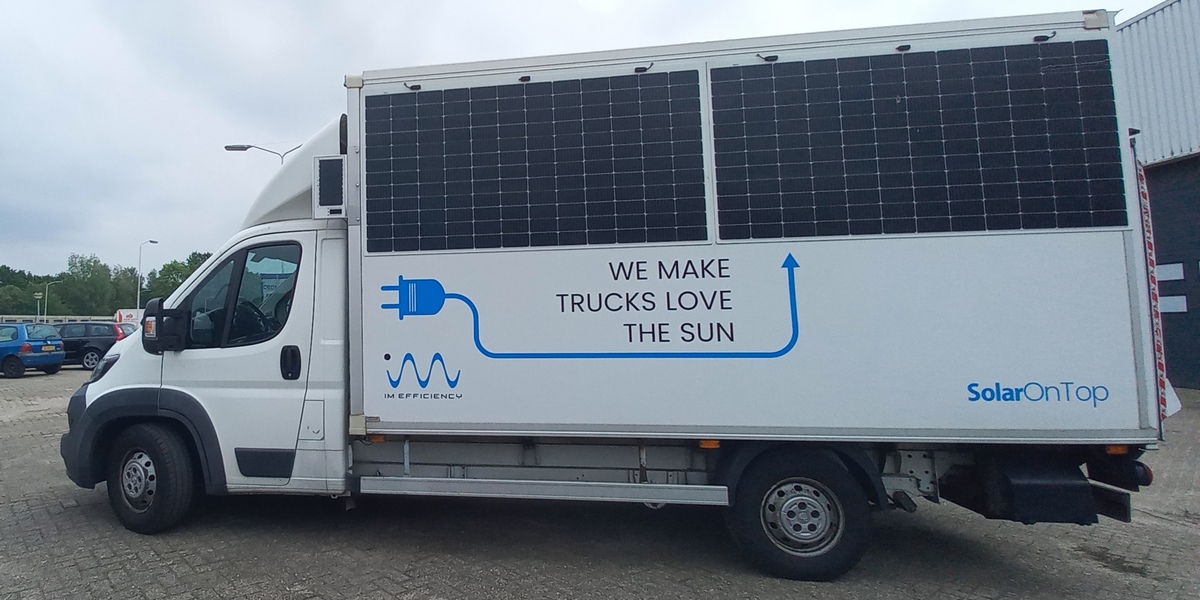
The project’s implications may be especially important for logistics fleets. Trucks and other commercial vehicles often carry auxiliary loads for cooling, heating, and onboard systems that consume substantial electricity even when the vehicle is not driving. At the same time, many of these vehicles offer large, flat roof areas that are well suited for photovoltaic integration.
That pairing makes fleet applications more than a design curiosity. For delivery companies, refrigerated transport operators, and other commercial users, onboard solar generation could offset a portion of operational energy demand without waiting for major grid upgrades. It also offers a way to shift some power production closer to the point of use, potentially smoothing charging patterns in depots and along routes.
The appeal is not that solar panels will eliminate charging infrastructure, but that they could reduce how often vehicles draw from it and how much power they require when they do. In grid-constrained areas, that distinction matters.

What the Numbers Suggest
The source text provides a clear geographic split. Under favorable assumptions, passenger cars in Central Europe could cover up to 55% of annual electricity demand through integrated PV. In Southern Europe, the same concept could reach 80%.
Those estimates depend on vehicle design and usage. The article notes relatively low annual mileage and large roof surfaces as key assumptions, which means the highest percentages are not universal. A small car driven long distances every day will not produce the same balance as a large SUV that spends more time parked in sunlight. Even so, the stated ranges suggest that solar integration may be meaningful enough to affect real-world economics rather than merely extend range by a small margin.
That is an important distinction because vehicle-integrated solar has often been treated as a niche feature, useful for trickle charging or powering minor accessories. The Fraunhofer-led project, at least as summarized in the source text, presents a broader vision in which onboard generation materially changes how much electricity some EVs need from the grid over the course of a year.
A Potential Pressure Valve for the Grid
Europe’s transport electrification push is colliding with a familiar infrastructure question: how quickly can the grid and charging network scale? Public charging buildout, local transformer limits, and peak demand management are all becoming more important as EV adoption rises.
VIPV does not solve those challenges on its own, but it may help relieve some pressure. If vehicles generate part of their energy independently, total charging demand can fall. That could reduce energy costs for operators and households while lowering the need for external charging in some use cases. The effect may be particularly useful in regions where distribution grids are already under stress or where charging stations serve dense clusters of commercial traffic.
There is also a timing advantage. Solar-equipped vehicles can produce energy throughout the day while parked outdoors, potentially reducing the amount of power that must be pulled later in concentrated evening charging windows. The source text explicitly frames VIPV as a way to reduce strain on power grids, and that claim aligns with the broader system logic behind distributed generation.
Design Challenges Still Matter
Integrating photovoltaic modules into a vehicle body is more complex than mounting panels on a stationary roof. Surfaces curve, vehicles move through changing light conditions, and weight, durability, repairability, and cost all affect commercial viability. The source text does not dive into these engineering tradeoffs in detail, so any broader conclusions should be cautious.
Still, the project’s framing suggests that the technical case has advanced enough to shift the discussion from possibility to deployment strategy. Rather than asking whether solar panels can be put on a vehicle, the more relevant question may now be where the concept works best: passenger vehicles with large surface areas, delivery fleets with predictable parking patterns, or trucks whose auxiliary loads make incremental power especially valuable.
That segmentation could determine whether VIPV becomes a mainstream design feature or a specialized technology adopted first in commercial niches.
What It Means for EV Economics
For drivers and fleet operators, the most immediate attraction is simple: lower charging costs. If part of a vehicle’s annual energy demand is covered by integrated solar, the total electricity purchased from the grid goes down. In high-price power markets, that could have a noticeable effect on total cost of ownership, especially over a vehicle’s lifetime.
The economics may be strongest where sunlight is abundant and vehicles spend long stretches outdoors. Southern Europe appears especially promising under the project’s assumptions. But even in Central Europe, a potential 55% share is large enough to attract attention from manufacturers, fleet planners, and utilities.
More broadly, VIPV offers a reminder that the future of transport electrification is not only about bigger batteries and more chargers. It may also involve redesigning vehicles as energy platforms that both consume and produce electricity. That is a meaningful conceptual shift, especially in sectors where large vehicles already provide the surface area needed to make the math work.

From Niche Concept to Strategic Tool
For years, onboard vehicle solar has hovered at the edge of the EV conversation, often presented as a clever add-on rather than infrastructure strategy. The Fraunhofer ISE-led research project gives the concept a more concrete role. By tying solar integration to measurable shares of annual electricity demand and explicitly linking it to grid relief, the project reframes VIPV as a systems-level technology.
Whether that promise translates into mass adoption will depend on cost, manufacturing integration, and the performance of real vehicles in daily use. But the central message is clear: for some EVs, especially those with generous surface area and favorable operating patterns, the vehicle itself may become a substantial part of the charging solution.
This article is based on reporting by PV Magazine. Read the original article.
Originally published on pv-magazine.com