A larger-format flow battery for a market that wants duration, not just power
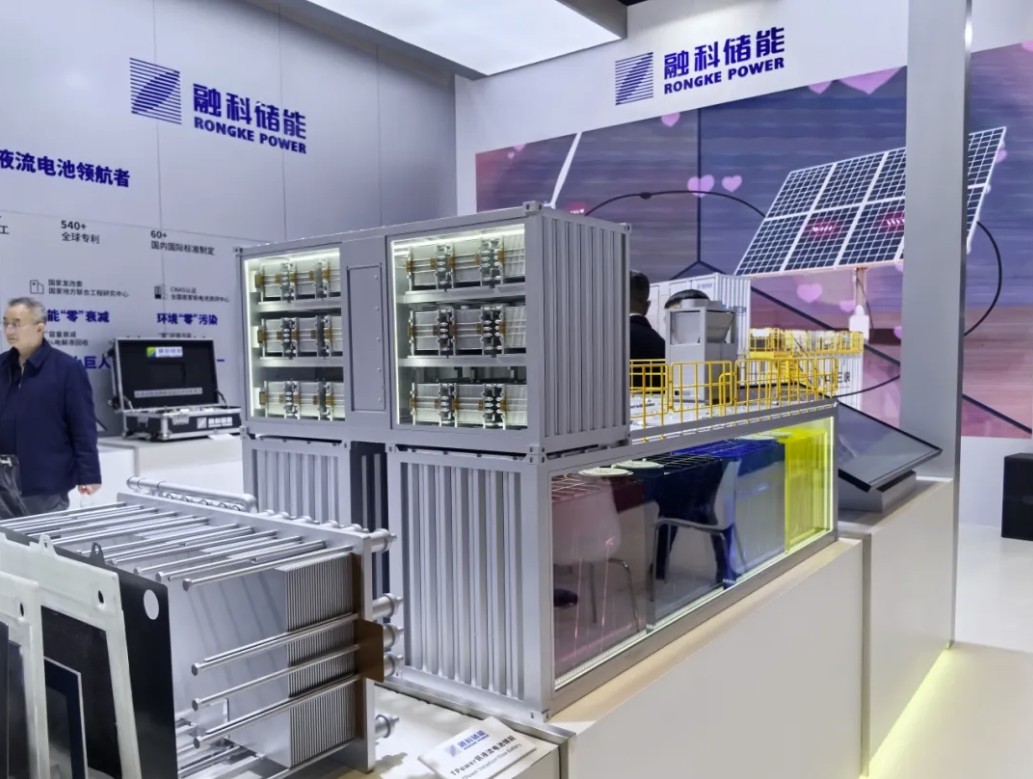
Rongke Power has introduced a new vanadium flow battery energy storage product rated at 2 MW/8 MWh, positioning it for long-duration applications such as grid-side peak shaving, renewable energy bases, and microgrids. The company describes the system, called TPower2000, as the world’s highest-power single vanadium flow battery storage system. Whether or not that claim holds up under broader market comparison, the product launch clearly reflects a wider industry push: long-duration storage providers are trying to move beyond niche demonstrations and into more standardized, scalable project delivery.
The timing is notable. Energy storage markets have expanded rapidly, but much of that growth has been dominated by lithium-ion systems optimized for shorter discharge durations. Vanadium flow batteries occupy a different corner of the market. They are often discussed as candidates for applications where long duration, cycling resilience, and grid support matter more than compactness or lowest upfront capital cost. Rongke’s latest product is a signal that suppliers in that segment are trying to narrow the practical barriers that have limited broader adoption.
What Rongke announced
According to the source text, the new system is built around 62.5 kW stacks and offers single-unit power several times higher than the company’s previous generation. Rongke says the product maintains DC-side efficiency above 81% even at high current density. It also supports modular expansion from 2 MW to more than 10 MW, which suggests the company is designing not just for one-off installations but for larger project configurations that can be scaled with repeatable building blocks.
Another figure singled out in the report is footprint. Rongke says the system requires about 35 square meters per MWh, around 28% below the industry average cited in the article. Space use is an important issue for flow batteries because their size can be a disadvantage compared with lithium-based alternatives. If the company’s design meaningfully improves density while preserving operational strengths, that could make the technology easier to place in more commercial and utility contexts.

Why vanadium flow batteries still matter
Flow batteries have long been appealing in theory for stationary storage. Because energy is stored in liquid electrolytes held in external tanks, power and energy capacity can be scaled somewhat independently. That can make the chemistry attractive for applications needing longer discharge times, frequent cycling, and lower degradation concerns over extended use.
The challenge has been turning those theoretical advantages into repeatable market success. Costs, system complexity, supply chain questions, and deployment pace have all constrained adoption. In practice, developers and utilities often default to lithium-ion because it is familiar, bankable, and supported by large-scale manufacturing. Flow battery vendors therefore need to show not just technical adequacy, but deployment models that reduce friction for project developers.
That is why Rongke’s framing around standardization and GWh-scale delivery is important. The company is not merely unveiling a bigger product. It is arguing that the next step for vanadium flow systems is industrialization: more uniform modules, clearer pathways to multi-megawatt projects, and product architectures that can be expanded without extensive redesign.
The use cases Rongke is targeting
The applications cited in the report point to the kinds of markets where flow batteries may be most competitive. Renewable energy bases often need storage that can absorb variable output and release it across longer windows. Grid-side peak shaving requires systems that can shift energy in ways that stabilize networks rather than just respond in fast, short bursts. Microgrids value resilience and flexibility, especially where renewable penetration is high or diesel displacement is a goal.
In all of those settings, duration matters. A 2 MW/8 MWh rating implies a four-hour discharge profile at nominal power, placing the system in a range relevant to many utility and commercial storage use cases. The ability to scale above 10 MW suggests Rongke is also aiming beyond pilot deployments toward utility-relevant portfolios.
The product’s emphasis on lower barriers is also telling. For flow batteries to grow, vendors need to persuade buyers that the technology is not an exotic exception requiring custom treatment. Standardized modules, claimed efficiency at higher current density, and reduced footprint all speak to the same commercial message: this is becoming easier to procure and deploy.

What the announcement does and does not prove
As with any product launch, the claims should be read as company assertions rather than fully validated market outcomes. The source text attributes the technical and performance figures to Rongke Power. It does not provide independent project data, long-term field performance, or cost comparisons against competitors. Those details will matter if the product is to shift purchasing decisions at scale.
Even so, launches like this are useful because they show where the competitive pressure in storage is moving. The industry is no longer only asking whether long-duration storage is needed. It is asking which technologies can be productized convincingly enough to win deployment. Rongke’s answer is to push vanadium flow batteries toward higher-power single systems, modular multi-megawatt expansion, and more compact layouts.
A test case for the next phase of storage competition
The broader storage market is entering a phase where chemistry diversity matters more. Short-duration lithium-ion remains dominant, but grids with rising renewable penetration increasingly need systems that can handle different operating patterns. That opens the door for alternatives that were once viewed mainly as promising but marginal.
Rongke Power’s TPower2000 is part of that transition. It is a concrete attempt to move vanadium flow storage from specialized deployments toward repeatable, larger-scale projects. If the company can back its launch claims with field performance and competitive economics, the system could strengthen the case that flow batteries belong in the mainstream long-duration toolkit.
If not, it will still serve as evidence of how the sector is evolving. Storage vendors now understand that winning the next stage of the market requires more than novel chemistry. It requires standardized products, scalable delivery, and a design logic that aligns with how utilities and developers actually buy infrastructure. On that front, Rongke’s latest launch is a meaningful marker in the ongoing contest to define long-duration storage at commercial scale.
This article is based on reporting by PV Magazine. Read the original article.
Originally published on pv-magazine.com




