Two new plants come online in Mandalay region
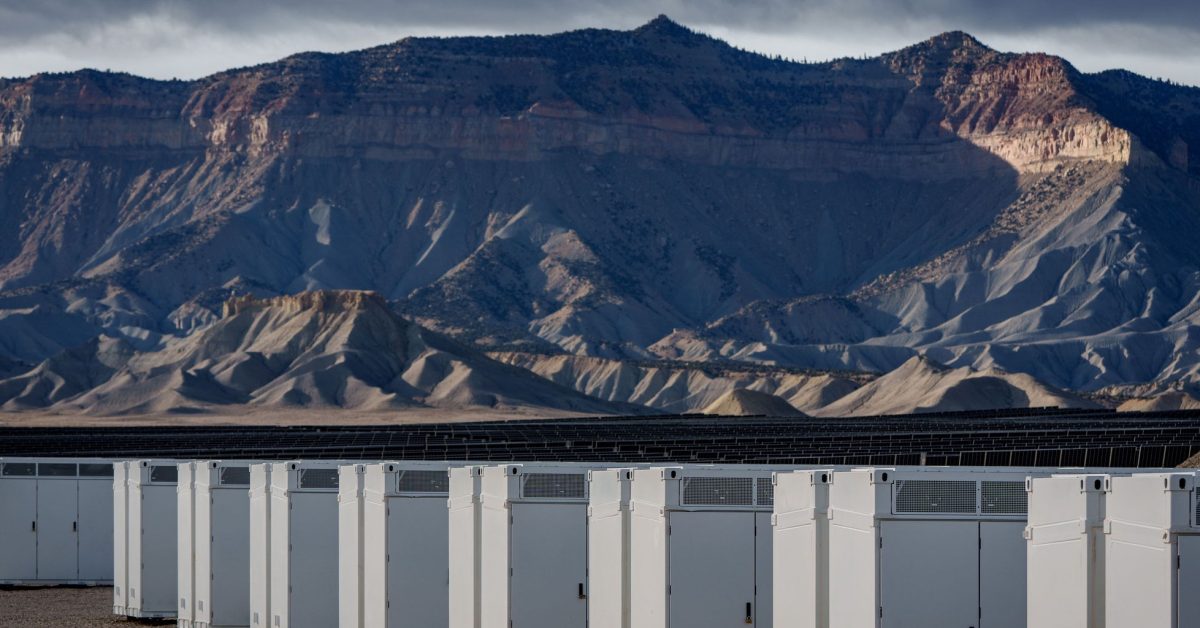
Myanmar has commissioned two new utility-scale solar facilities in the Mandalay region, adding 80 megawatts of capacity at a time when the country is dealing with deepening grid constraints and widespread power rationing. According to pv magazine, the newly opened sites are the 40 MW Thazi Solar Power Plant in Thazi Township, Meiktila District, and the 40 MW Thabyaywa Solar Power Plant in Meiktila Township.
The projects were built by different developers. Leader Power Co. Ltd. constructed the Thazi plant, while Hanzar Solar Energy Co. Ltd. built the Thabyaywa facility. Myanmar’s Ministry of Electricity and Energy marked the openings this week, signaling that the installations are intended not just as isolated energy assets but as part of a broader effort to stabilize electricity supply.
For a country facing persistent supply limitations, the timing matters. New generation capacity alone does not solve structural power system issues, but it can provide immediate relief where shortages are already affecting daily life and economic activity.
Expected output and household impact
Union Minister U Ko Ko Lwin said the two plants are expected to generate approximately 202 million kilowatt-hours per year. He also said the output would supply electricity to around 130,000 households. Those figures frame the importance of the projects in practical rather than purely installed-capacity terms: the plants are meant to increase usable supply at a moment when available power has not kept pace with demand and system stress.
Solar’s appeal in this context is straightforward. Utility-scale photovoltaic plants can be developed comparatively quickly, and in constrained grids they can offer a direct way to add daytime generation without requiring fuel imports. For countries under supply pressure, that speed can make solar one of the most accessible options for near-term capacity additions.
The Myanmar announcement therefore stands out less as a headline about scale and more as a sign of system triage. Eighty megawatts is not transformational on its own, but it is significant when the objective is to restore some measure of reliability and reduce the intensity of rationing.
Part of a larger pipeline
The two Mandalay-region projects are not the only solar additions in view. The minister also said a 210 MW solar project being developed by Shwe Swan Inn Company Limited is under construction and expected to be completed soon. If finished on schedule, that project would represent a much larger single step in Myanmar’s solar buildout.
Taken together, the newly commissioned plants and the 210 MW facility under construction suggest that Myanmar is trying to expand renewable generation through multiple projects rather than relying on one flagship asset. That can be a practical approach in a stressed system, where incremental additions may be easier to execute and integrate than a slower, all-or-nothing strategy.
It also suggests that policymakers and developers see solar as one of the more deployable answers to the country’s current electricity shortfalls. The article does not claim that solar alone will resolve those deficits, but the sequence of projects shows where current investment and official attention are concentrated.
The background problem: damaged and delayed generation
The official statements accompanying the openings were unusually clear about the pressures facing the power system. The minister acknowledged that ongoing generation projects have been delayed and that some operating plants have suffered damage, reducing overall output. That context is essential to understanding why relatively modest solar additions are being treated as important news.
In a stable system with ample reserve margins, 80 MW might register as a routine commissioning. In Myanmar’s present conditions, it carries more weight. The country is not simply trying to meet future growth; it is also trying to recover generation that has been lost, delayed, or disrupted.
This is what makes the Mandalay projects strategically relevant. They are arriving into a grid where the central challenge is not abstract decarbonization policy but the urgent problem of keeping electricity available. In that environment, every new source of generation has immediate operational value.

Why this matters for Myanmar’s energy direction
The opening of the two plants highlights a broader truth about energy transitions in constrained systems: new clean energy assets are often deployed first as reliability tools. Rather than replacing abundant legacy supply, they are used to patch shortfalls, diversify generation, and reduce exposure to delays or damage elsewhere in the fleet.
Myanmar’s case reflects that pattern closely. The country’s current solar expansion is being framed around basic service provision, not just climate or technology messaging. The announced household impact and annual output estimates underscore that point. The government is presenting these projects as concrete support for communities and for a strained electricity network.
Whether the new plants materially ease rationing across the system will depend on factors beyond installed capacity alone, including transmission conditions and how quickly additional projects reach completion. But the commissioning does establish that solar is moving from pipeline to operation in Myanmar, and that each completed project is being counted on to help close a real supply gap.
What comes next
- The immediate test is whether the two 40 MW plants deliver the expected annual generation of around 202 million kWh.
- The next major milestone is completion of the 210 MW solar project now under construction.
- Myanmar’s power outlook will also depend on whether delayed projects can move forward and whether damaged plants can be restored.
- For now, the new solar capacity represents a practical response to rationing rather than a complete solution to the country’s grid challenges.
This article is based on reporting by PV Magazine. Read the original article.
Originally published on pv-magazine.com