Growatt targets commercial storage with a new modular platform
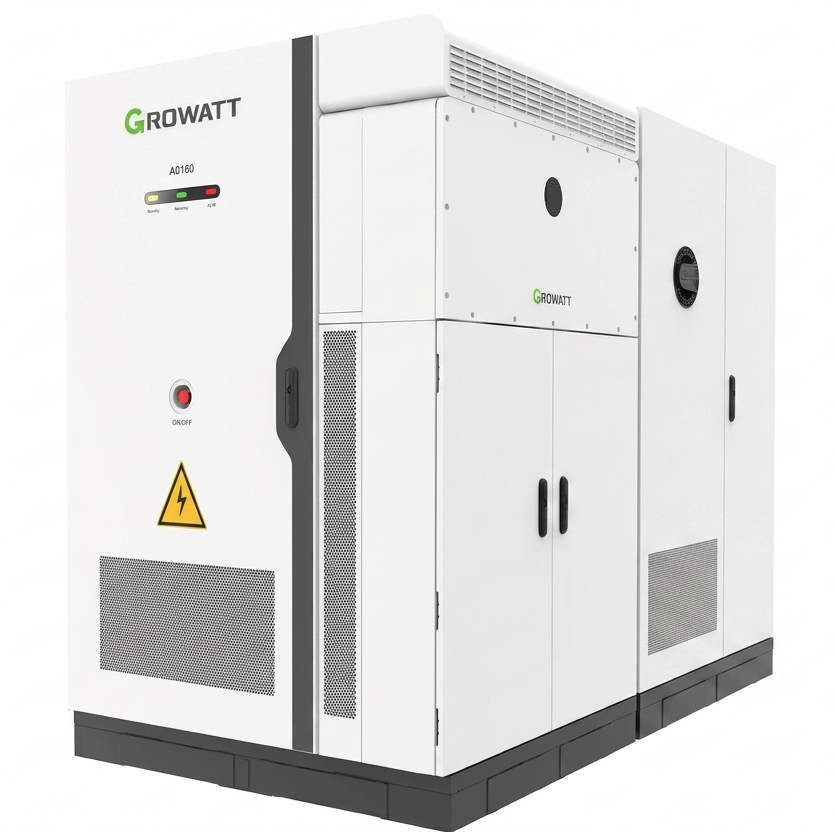
Growatt has launched a new all-in-one hybrid energy storage system aimed at commercial and industrial deployments, adding another option to a market that is moving quickly toward more standardized, modular battery products. The new system, called the RISE 261H-XH, was presented as a storage platform for commercial and industrial use as well as larger-scale energy applications.
According to the source material, the product is offered in four output configurations: 50 kW, 63 kW, 85 kW, and 125 kW. All four versions are built around the same 261 kWh storage platform, a design choice that points to a familiar industry strategy: keeping the energy block constant while offering different power ratings to suit different load profiles, backup needs, and project economics.
A single platform, several deployment sizes
The system’s base architecture centers on a 261 kWh lithium iron phosphate battery using 3.2 V and 314 Ah cells. Growatt says the battery supports a 95% depth of discharge, a figure that matters because it speaks to how much of the stored energy can be used in regular operation. For site operators, higher usable capacity can improve the value proposition of a battery system, especially where self-consumption, peak shaving, backup, or time-of-use optimization are involved.
The company is also positioning the system as a modular building block rather than a one-off cabinet. For larger projects, up to 10 units can be combined, bringing the total system size to as much as 1.25 MW and 2.61 MWh. That makes the product relevant not just for smaller business installations but for sites that need a more substantial storage footprint, including facilities with larger electrical loads or more demanding resilience requirements.
That expandability is increasingly important in the C&I market. Buyers often want to start with a system sized for current demand, then add capacity later if tariffs change, on-site generation grows, or electrification increases load. A modular system can reduce redesign work and shorten the path from pilot deployment to broader rollout.

Backup and thermal management features stand out
Growatt highlights several operational features in the launch description. In backup mode, the system supports 100% three-phase unbalanced load, a capability that can matter in real-world commercial settings where loads are not always evenly distributed across phases. The company also says the system can deliver 160% rated AC overload capacity for 10 seconds, suggesting it is designed to handle short-duration surges that may occur when certain equipment starts up.
Thermal design is another point of emphasis. The battery uses liquid cooling, while the power conversion system uses smart air cooling. Growatt says the design keeps cell temperature differences within 3 degrees Celsius, a specification intended to support more stable battery performance. Temperature control is a practical issue in battery storage because uneven thermal conditions can affect performance consistency and long-term operation.
Even in a crowded storage market, those details matter. Commercial users are generally less interested in battery branding than in whether a system can operate reliably, integrate with existing loads, and manage the stresses of daily use. Claims around cooling, overload tolerance, and backup behavior are therefore not cosmetic; they speak directly to how a product may perform in the field.
Why this launch matters
The announcement reflects a broader shift in energy storage. Commercial batteries are no longer niche equipment reserved for only a narrow set of energy users. As solar deployment spreads, electricity pricing becomes more dynamic, and resilience concerns stay high, storage products are being designed to work as flexible infrastructure. Vendors are responding with platforms that combine standardized battery blocks, configurable power electronics, and easier scaling paths.
Growatt’s launch fits neatly into that trend. A common energy platform with multiple inverter power options can simplify manufacturing and project planning while giving installers a wider range of use cases. It also allows the same product family to serve customers with different priorities, from maximizing on-site solar use to securing backup power.
The source does not provide pricing, deployment timelines, or regional availability details beyond identifying Growatt as a Chinese inverter and battery maker. It also does not include independent performance validation. Still, the launch is notable because it shows how rapidly the C&I storage segment is standardizing around modular, LFP-based systems with a mix of operational flexibility and resilience features.
For energy buyers, the significance is straightforward: storage offerings are becoming more configurable, more scalable, and more explicitly designed around the demands of commercial operations. The RISE 261H-XH is the latest example of that direction.
This article is based on reporting by PV Magazine. Read the original article.
Originally published on pv-magazine.com