Anker pushes residential storage further into the plug-in solar market
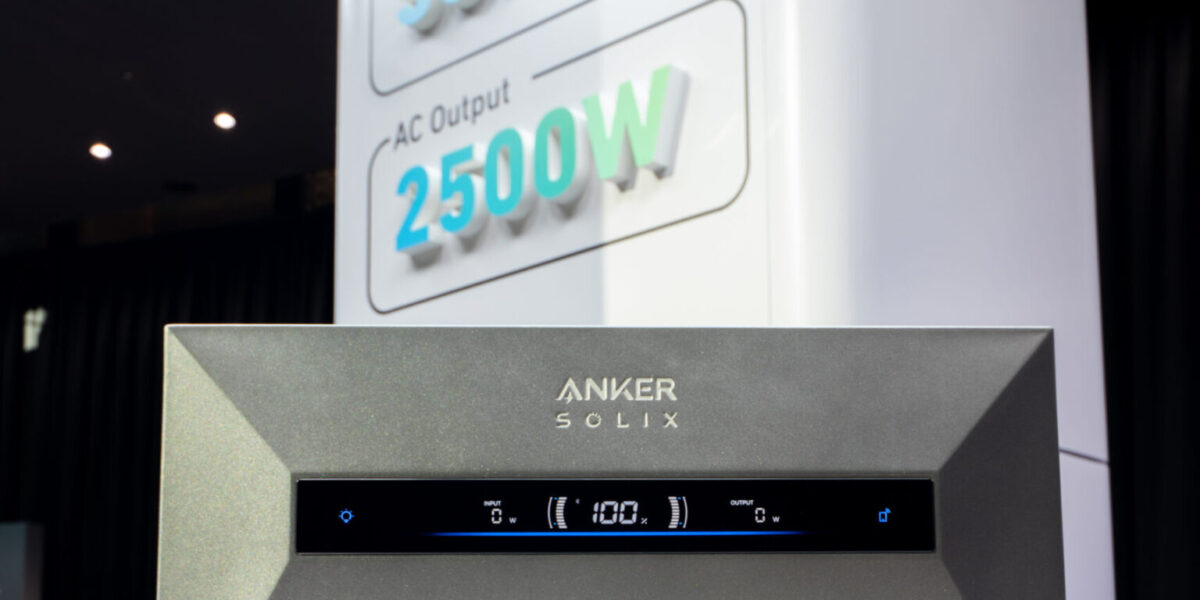
Anker Solix used a product launch in Berlin to introduce the Solarbank 4 E5000 Pro, a residential battery system designed for households that want to pair small-scale solar with more flexible storage. Based on the details released at launch, the unit combines 5 kilowatt-hours of storage with up to 5 kilowatts of photovoltaic input, putting it above the simpler balcony-solar accessories that helped define the early plug-in market in Europe.
The product is built around a familiar industry idea: make entry easier, then let customers scale later. Anker says the system includes four integrated maximum power point trackers, allowing it to manage multiple solar inputs and connect to as many as 12 modules. That matters because residential customers increasingly want systems that can start small but still absorb more generation as rooftop, patio, or garden installations expand.
The company is also aiming squarely at a practical constraint in the home-solar segment: how to add storage without forcing homeowners or renters into a major electrical retrofit. Under an 800-watt grid feed-in limit, Anker says the Solarbank can connect directly to an existing household circuit using a Schuko plug. In that configuration, the system is intended to help cover a home’s base-load consumption while avoiding changes to existing wiring.
A bridge between balcony solar and larger home systems
The launch reflects a broader shift in residential energy storage. For years, the market largely split between fully integrated rooftop-and-battery systems on one end and ultra-simple plug-in solar kits on the other. Anker’s new unit appears designed to sit between those poles. Its bidirectional inverter can supply households with up to 2.5 kilowatts while also operating within the lower feed-in framework that has helped plug-in solar spread quickly in parts of Europe.
That balancing act could prove commercially important. Many urban households want more self-consumption from daytime solar generation, but they do not have the space, permitting ease, or budget profile of a traditional detached-home installation. A stackable system with higher solar input and a straightforward connection model gives manufacturers a way to sell a more capable upgrade without requiring customers to jump all the way to a bespoke residential energy system.
Anker says storage can be expanded to 30 kilowatt-hours by stacking up to five additional battery units. That modularity is central to the pitch. Instead of locking buyers into a large battery purchase on day one, the company is positioning capacity growth as an incremental decision tied to how much solar a household installs and how much evening backup it wants.

Why the product matters
The significance of the Solarbank 4 E5000 Pro is less about a single headline specification than about where it lands in the evolving storage market. Residential batteries are increasingly being designed around flexibility, not just backup power. Customers want systems that can shave bills, increase direct solar usage, and adapt to regulatory limits that differ by country and grid regime.
Anker’s announcement suggests the company believes the next phase of growth will come from products that are more capable than first-generation balcony storage but still easier to deploy than conventional home batteries. The four-MPPT architecture, larger photovoltaic intake, and expansion path all support that thesis.
It also signals that competition in distributed storage is broadening beyond specialist energy brands. Consumer-electronics companies have been moving into backup power, portable batteries, and home energy gear for several years. A launch like this shows how those companies are now trying to translate hardware familiarity and channel reach into a more durable role in household energy infrastructure.
Whether that strategy succeeds will depend on price, installer and retail distribution, and how well the system performs in real homes under local interconnection rules. But based on the launch details alone, Anker is clearly betting that residential users want something more ambitious than a simple plug-in battery and less cumbersome than a full custom installation. The Solarbank 4 E5000 Pro is its latest attempt to occupy that middle ground.
This article is based on reporting by PV Magazine. Read the original article.
Originally published on pv-magazine.com