A historic solar aircraft is lost in a new phase of its life
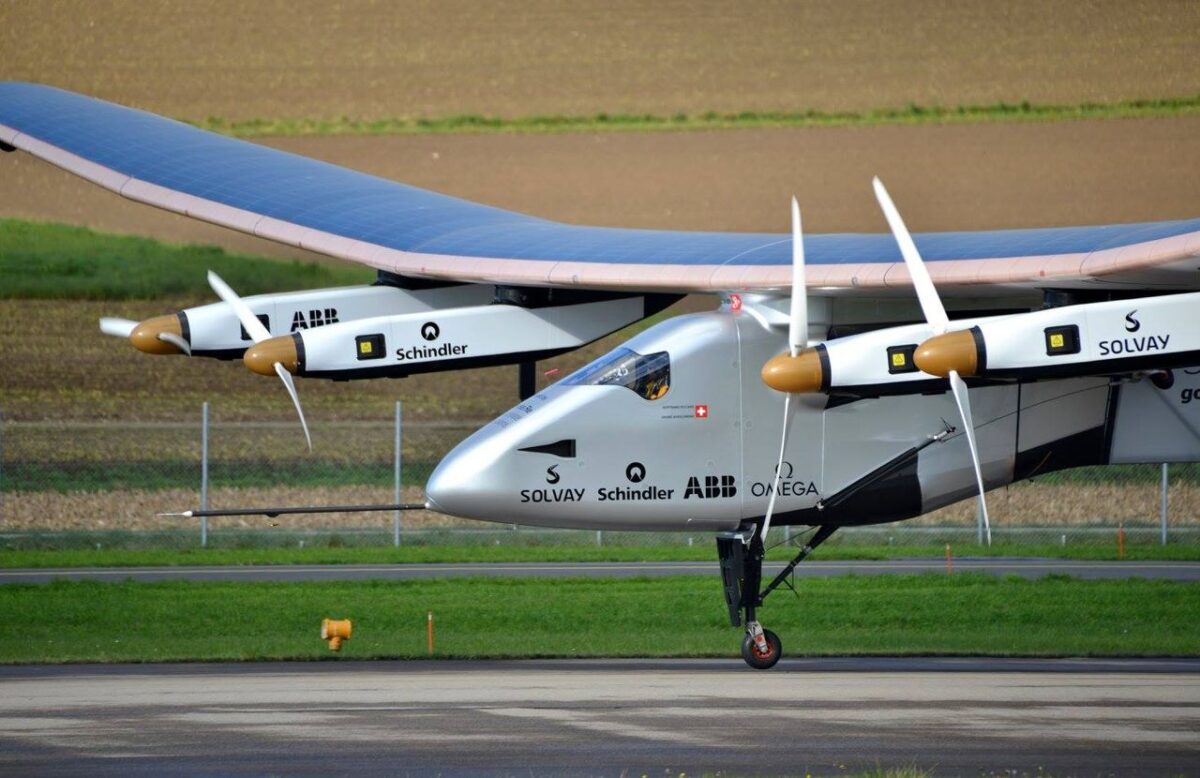
Solar Impulse 2, the pioneering aircraft that completed the first around-the-world journey by a fixed-wing plane powered only by sunlight, has crashed in the Gulf of Mexico during an unmanned test flight. The aircraft was being operated by Skydweller Aero, which acquired the airframe in 2019 and repurposed it as an autonomous, ultra-long-endurance platform.
According to preliminary information cited from the U.S. National Transportation Safety Board, the aircraft lost power shortly after takeoff from Stennis International Airport on May 4 and went down in international waters near Bay St. Louis, Mississippi. Because the flight was uncrewed, there were no fatalities or injuries.
The loss is significant beyond the destruction of a famous experimental plane. Solar Impulse 2 had become a highly visible test bed for a broader idea: whether solar-electric flight can move from symbolic demonstration missions into practical, persistent airborne operations.
From proof of concept to autonomous platform
Solar Impulse 2 was originally developed by Bertrand Piccard and Andre Borschberg as a demonstration of what solar-powered aviation could achieve. Between 2015 and 2016, it completed a 17-leg circumnavigation of the globe, covering about 42,000 kilometers using solar energy captured by the aircraft and stored for continued flight.
That mission established the aircraft as one of the most recognizable symbols of renewable-energy engineering. But its second life under Skydweller Aero aimed at something different from record-setting. The company turned the aircraft into an autonomous long-endurance system intended to remain aloft for extended periods while carrying out missions that conventional aircraft or satellites do not handle as efficiently.
The plane’s design made it an unusual candidate for that role. It carried roughly 17,000 photovoltaic cells across its wings, giving it the ability to harvest energy continuously in daylight. In principle, that enables long persistence with low operating emissions and reduced dependence on fuel logistics.
What the crash appears to show
At this stage, the cause has not been fully established in the supplied reporting, and the investigation remains preliminary. What is known is narrow but important: the aircraft reportedly suffered a loss of power shortly after departure. In a conventional test program, a power-related event after takeoff is serious. In a solar-electric aircraft that depends on a tightly balanced relationship between propulsion, energy collection, storage, and onboard systems, it is especially consequential.
The crash does not invalidate the underlying concept of solar aviation, but it does underline the fragility of attempting to turn a lightweight experimental aircraft into a dependable autonomous platform. Solar-powered aircraft operate under unusually strict design constraints. Weight, structural efficiency, power margins, weather exposure, and system redundancy all matter more because the aircraft is built around extracting useful flight time from limited energy flows.
That challenge becomes harder when the mission shifts from a piloted technology demonstrator to an autonomous asset meant for real-world endurance operations. Reliability expectations rise sharply. So do requirements for fault tolerance, remote operations, and safe recovery from failures.
A setback for persistent solar flight
Skydweller Aero’s work represented one of the more ambitious attempts to commercialize the legacy of Solar Impulse 2. Rather than treating the aircraft as a museum piece, the company used it as the foundation for a new category of high-persistence aviation. The crash is therefore more than an accident involving a retired icon. It is a setback for an effort to show that solar-electric aircraft can serve practical surveillance or communications roles over long durations.
Even so, the broader field is unlikely to disappear because of one loss. Experimental aerospace programs often move through failure as much as through milestone successes, and Solar Impulse 2 itself had always occupied the frontier between inspiration and engineering difficulty.
The strongest lesson may be that the path from demonstrator to deployable system remains steep. Flying around the world on solar energy proved that sustained solar flight was possible. Building an autonomous aircraft that can repeatedly perform operational missions is a different benchmark, involving robustness as much as endurance.
Why the aircraft still matters
Solar Impulse 2 remains important because it changed the public and technical conversation around renewable-energy flight. It showed that solar power could move beyond supporting systems and become the central energy source for a full flight profile. That achievement gave later developers a concrete example to extend, adapt, or challenge.
The aircraft’s destruction does not erase that legacy. Instead, it sharpens the distinction between historic demonstration and operational maturity. The first chapter of Solar Impulse 2 proved a point to the world. The second chapter attempted to prove a business and engineering case for autonomous endurance. The crash suggests that second case is still unresolved.
- The aircraft crashed during an unmanned test flight, with no injuries reported.
- Preliminary reporting says it lost power soon after takeoff from Stennis International Airport.
- The plane had been reworked by Skydweller Aero as an autonomous solar-powered endurance aircraft.
- The event highlights the technical gap between demonstrator success and reliable operational deployment.
For the solar aviation sector, the next developments will matter more than the symbolism of the wreck itself. Investigators will need to establish what failed, and developers will need to show whether the concept can absorb that lesson. Solar Impulse 2 once demonstrated the outer limit of what sunlight could do in flight. Its final mission now raises a harder question: whether that promise can be engineered into durable, repeatable service.
This article is based on reporting by PV Magazine. Read the original article.
Originally published on pv-magazine.com