Con Edison is investing for electrification, not a data-center boom
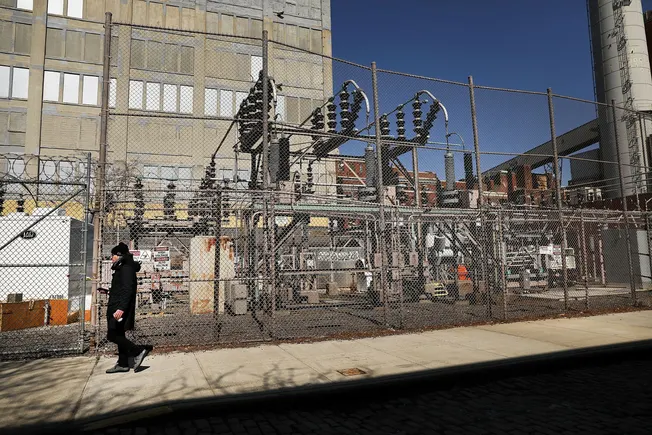
Consolidated Edison is preparing to spend more than $29 billion over the next five years on substations and other electric-grid upgrades across New York City and surrounding areas, a plan that highlights a different version of U.S. power demand growth than the one dominating much of the national conversation. While many utilities are orienting their strategies around hyperscale data centers, Con Edison says its territory is being reshaped mainly by building and transportation electrification.
That distinction matters. It suggests the utility sees a slower but structurally persistent increase in electricity needs rather than a sudden wave of concentrated industrial-scale load. In its latest outline, the company’s main electric utility, Consolidated Edison Company of New York, or CECONY, expects roughly $27.2 billion in capital spending between 2026 and 2030. Orange & Rockland Utilities, the company’s smaller electric arm in the western Hudson Valley, is planning another roughly $2.3 billion over the same period.
Together, those figures put electric-system investment above $29 billion, while Con Edison’s broader capital-spending program through 2030, including gas and steam, remains around $38 billion. The emphasis is clear: the company is hardening and expanding the electric side of the business to meet a future in which more buildings and vehicles plug into the grid.
A different demand story is playing out in New York
The national utility narrative in 2026 has been shaped heavily by data centers and artificial intelligence. In some regions, utilities are fielding enormous new-load requests tied to cloud infrastructure and trying to decide how much cost and risk ratepayers should absorb. Con Edison’s service territory is not seeing that same influx. Instead, the growth drivers are more diffuse and more urban: electrified buildings, transportation systems, and related network needs.
That makes New York an instructive case. Electrification in dense cities does not always show up as explosive short-term sales growth, but it can still require major grid work because the network must serve more load in places that are already built out and operationally complex. Substations, feeders, and supporting infrastructure need to be added or strengthened before the growth becomes obvious in annual demand totals.
Con Edison’s first-quarter numbers reflect that more gradual profile. Weather-adjusted electricity sales at CECONY were down 0.1% from the same period a year earlier, while Orange & Rockland saw a 1.9% increase. Those are not the kinds of jumps that create headlines on their own. Yet the company is still planning major system investment, which signals management’s belief that underlying electrification trends are durable even when quarter-to-quarter sales look flat.

The spending plan is built around infrastructure depth
According to the utility’s presentation summarized by Utility Dive, Con Edison plans 22 new substations across CECONY and O&R territory through 2034. That figure helps explain the scale and logic of the investment program. Electrification is not just about generating more power. It is also about moving that power through constrained local networks where reliability standards are high and service interruptions are costly.
In New York City and its suburbs, those challenges are amplified by geography and existing land use. New infrastructure has to fit into a mature urban system with limited room for error. Spending on substations and related upgrades therefore becomes a way to prepare for load shifts before they become operational bottlenecks.
The company’s latest quarter also showed cost pressure. CECONY reported a $29 million year-over-year increase in fuel costs in the three months ending March 31, 2026, driven by higher unit costs and larger purchased volumes from company generating facilities. That is a reminder that grid expansion is not happening in a vacuum. Utilities still have to manage fuel, procurement, and customer affordability while building for a more electric future.
Why flat sales do not mean flat strategy
One of the more important takeaways from Con Edison’s plan is that infrastructure decisions are being made on long-run expectations, not on a single quarter’s weather-adjusted sales line. A 0.1% decline in one part of the territory does not negate the company’s view that electrification is the key long-term trend. In fact, gradual demand growth can be more planning-intensive than sudden growth because it requires utilities to sequence investments carefully and justify them before the load is fully visible in system totals.
That challenge is especially acute in states that are pursuing policy-driven decarbonization through electrified heating and transportation. The utility may need to build ahead of demand while also persuading regulators and customers that the capital program is necessary. In Con Edison’s case, the spending outline suggests the company believes that preparation cannot wait for headline growth.
Chairman and CEO Tim Cawley, in comments cited by Utility Dive, argued that the relatively slow pace of growth masks important tailwinds for the electric business. The logic is straightforward: even modest aggregate growth can conceal substantial localized increases, new seasonal peaks, or reliability pressures as buildings and vehicle fleets switch from direct fossil fuel use to electricity.
An affordability test is embedded in the buildout
There is an unavoidable tension in this strategy. Electrification is often promoted as a cleaner and eventually more efficient energy pathway, but getting there requires major capital spending on wires infrastructure. Utilities recover those investments over time, which means the pace and design of grid upgrades inevitably raise affordability questions. That issue is especially sensitive in the New York metropolitan region, where energy and housing costs are already closely watched.
The source material does not frame Con Edison’s plan as a controversy, but the scale alone ensures scrutiny. Spending more than $29 billion on electric-grid assets over five years is not incremental maintenance. It is a significant build cycle aimed at reshaping the system for a new demand profile. Whether regulators and customers view that pace as prudent will depend on how clearly the company can connect today’s investment to tomorrow’s reliability and electrification goals.
A major utility is placing a long bet on the city’s electric future
Con Edison’s plan offers a useful counterpoint to the current fixation on AI-driven power demand. In one of the country’s largest and most complex urban service territories, the defining load story is still ordinary in one sense and transformative in another: more homes, buildings, and transportation uses are expected to run on electricity. That does not produce the same spectacle as a single massive data-center campus, but it may be just as consequential for how grids evolve.
If Con Edison is right, the next phase of New York’s energy transition will be determined less by sudden megaprojects than by a steady accumulation of electrified end uses that demand a stronger network underneath them. The company’s response is to build that network now. More than $29 billion in planned upgrades is a large wager that electrification in and around New York City is no longer a policy aspiration. It is an infrastructure requirement.
This article is based on reporting by Utility Dive. Read the original article.
Originally published on utilitydive.com