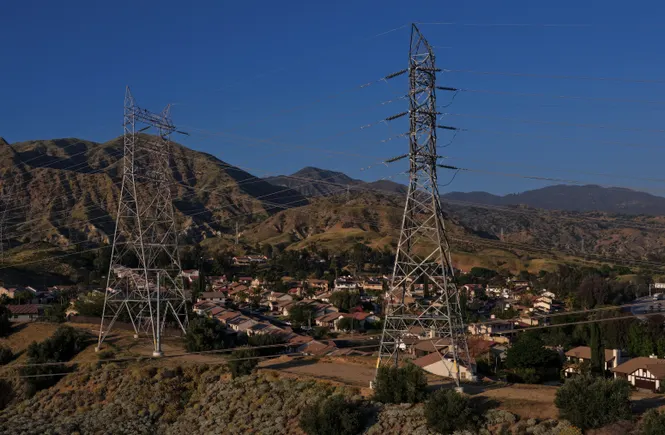
California’s grid expansion logic is shifting
California’s grid operator has approved a transmission plan recommending 38 projects costing about $6.7 billion over the next decade, according to the supplied source material. The most important part of the decision is not simply the size of the build-out. It is the reason behind it. More than half of the projects are being driven by forecasted load growth, marking a shift from transmission planning centered mainly on connecting low-cost renewable generation toward planning that also has to accommodate rising customer demand.
That change in emphasis matters because it reflects a broader power-sector reality. Electrification, manufacturing growth and data-center development are no longer side conditions in grid planning. They are becoming primary drivers of where wires need to go and how fast new capacity must be integrated.
What CAISO approved
The California Independent System Operator Board of Governors approved the transmission plan in a 5-0 vote, making official the recommendation that utilities pursue 38 projects over the next 10 years. The source says the plan is intended to help the grid accommodate forecasted load growth and support critical resource development identified by the California Public Utilities Commission.
The resource assumptions behind the plan are large. CAISO points to development pathways that include 45 gigawatts of solar across parts of California, Nevada and Arizona; 8 gigawatts of in-state wind in Tehachapi; more than 2 gigawatts of geothermal, largely in the Imperial Valley and southern Nevada; and imports of more than 10 gigawatts of wind from Idaho, Wyoming and New Mexico.
This is not a minor network tune-up. It is a major enabling layer for the next phase of the western grid.

Demand growth is now central
The source material says California forecasts a need for an additional 107 gigawatts of installed capacity by 2040 to meet rising demand from building electrification, transportation electrification, manufacturing and large loads including data centers. That figure captures why the transmission conversation is changing. Clean generation is necessary, but the system also has to serve a materially larger electric economy.
California may not face the same scale of data-center demand as some other regions, according to the source, but it is still planning against a future in which electricity consumption expands meaningfully across sectors. Transmission therefore becomes both an energy-transition tool and a load-growth insurance policy.
This is a notable evolution in language. For years, transmission debates often focused on unlocking remote renewable resources. That remains part of the mission. But as demand rises, planners also have to think about delivering enough power reliably into growing load pockets. The CAISO plan reflects that dual role directly.
The projects show a mixed strategy
The specific recommendations cited in the source include a 500-kilovolt line from Trout Canyon to Lugo, expansion of the Tesla-Trimble-Metcalf 230-kilovolt corridor serving the south Greater Bay Area, and series compensation on the Gates-to-Los Banos 500-kilovolt corridor. Those examples indicate a mix of new line development and targeted upgrades on existing infrastructure.
The plan also includes 12 reconductoring projects, which increase transmission capacity without requiring all-new corridors. That detail is significant because it points to a pragmatic approach. Building entirely new infrastructure is slow, costly and politically difficult. Upgrading what already exists can often deliver capacity faster, even if it cannot solve every bottleneck.
Why this matters beyond California
CAISO’s decision illustrates how grid planning is changing across the United States. Power systems that were once optimized around relatively stable demand and gradual generation shifts are now being asked to absorb several transformations at once: rapid renewable build-out, new industrial loads, building and transport electrification, and reliability stress from extreme weather.
Transmission is where those pressures become concrete. Without new lines and upgraded corridors, generation targets remain stranded and demand growth becomes harder to serve affordably. That is why this plan matters even outside California. It shows an operator publicly acknowledging that load growth is now driving major transmission investment decisions.
The $6.7 billion price tag is large, but the system stakes are larger. If demand forecasts prove accurate, underbuilding transmission would create far more expensive constraints later through congestion, delayed interconnection and reliability risk. The plan is therefore not just a spending recommendation. It is an adaptation strategy for a grid that has to move more power, from more sources, to more electric uses than before.
This article is based on reporting by Utility Dive. Read the original article.
Originally published on utilitydive.com