Energy storage keeps scaling despite policy uncertainty
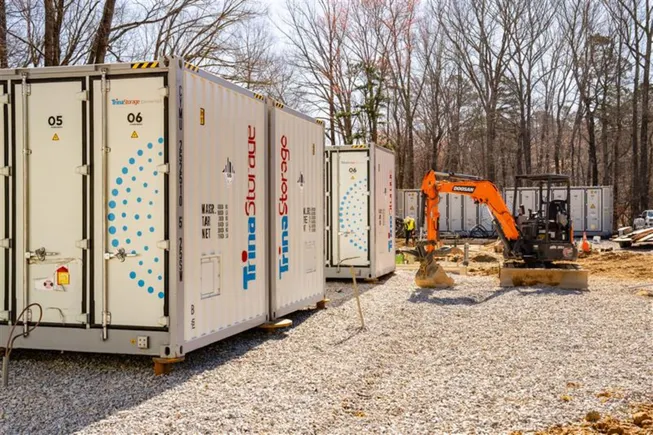
The United States installed a record 9.7 gigawatt-hours of battery energy storage in the first quarter of 2026, up 32% from a year earlier, according to the Solar Energy Industries Association figures cited in the supplied source. That makes it the country’s strongest first quarter on record for storage deployment and offers another clear signal that batteries are moving from a supporting clean-energy technology to a central grid resource.
The breakdown is equally telling. Utility-scale projects accounted for 1.5 gigawatts and 7.8 gigawatt-hours. Commercial and industrial deployments reached 648 megawatt-hours. Residential installations hit 515 megawatt-hours. In other words, growth is not coming from one narrow niche. Storage is expanding across utility, business and household contexts at the same time, even though the economics and use cases differ across each segment.
Why this quarter matters
First-quarter records are useful because they show momentum before the industry reaches its usual seasonal peak activity later in the year. A high opening quarter suggests the market is building from a stronger baseline, not merely benefiting from late-year project timing. SEIA’s longer-range forecast, as summarized in the source, projects 613 gigawatt-hours of U.S. deployment by 2030, slightly above prior expectations.
That forecast reflects a stronger business case for batteries, especially as power systems become more exposed to price volatility, interconnection constraints and reliability pressures. The industry group argues that storage reduces exposure to fuel-price shocks, lowers electricity costs and supports grid reliability. Those are broad claims, but they align with why batteries are becoming attractive to utilities and large customers alike.

Data centers are now part of the battery story
One of the most important details in the supplied reporting is that data centers have emerged as a major driver of storage deployment. Utilities have announced large volumes of new gas generation to serve expanding data-center demand, but batteries are increasingly being used to get projects online faster, provide backup support and manage power-quality issues created by fluctuating computing loads.
That shift matters because it connects two of the fastest-moving parts of the U.S. infrastructure economy: AI-linked data center growth and grid-scale storage. Batteries cannot solve every capacity problem, particularly over long durations, but they can address several near-term operational constraints better and faster than some conventional alternatives. Speed to deployment is especially important when power demand is rising faster than long-lead generation assets can be built.
The source also notes that some hyperscalers are pushing the limits of lithium chemistry, which experts say is most economical for discharge durations under four hours. That is a reminder that today’s battery build-out is both a practical solution and a technical boundary test. Large customers increasingly want batteries to do more than their traditional use case would suggest.
Solar-plus-storage and standalone systems are both winning
The deployment mix shows a maturing market structure. According to the supplied figures, 48% of installed utility-scale energy storage capacity is colocated with solar generation, 51% is standalone, and the rest is colocated with wind. That near-even split between solar-paired and standalone storage is significant. It suggests batteries are no longer valuable only as an add-on to renewable generation. They are now being built as independent grid assets with their own operational logic.
Standalone systems are especially important in markets where developers want flexibility about when and how storage charges and discharges. Solar-paired systems remain compelling where developers want to capture and shift midday output. The coexistence of both models points to a broader commercial maturity.

The policy risk has not gone away
The bullish deployment numbers do not remove the sector’s vulnerabilities. The source material warns that federal policy gridlock threatens the industry’s trajectory. That tension has become typical of the U.S. energy transition: market momentum is strong, but policy signals remain unstable enough to affect capital planning, supply chains and project finance.
Storage developers have a favorable demand environment, especially with reliability concerns, load growth and data center expansion pulling in the same direction. But that demand still interacts with tariffs, tax policy, permitting bottlenecks and grid interconnection delays. A record quarter therefore says more about underlying need than about a frictionless policy environment.
A core grid technology, not a side bet
The broader takeaway from the first-quarter record is that energy storage is no longer a peripheral technology waiting for its moment. It is already being built at a pace that makes it central to grid planning, customer strategy and power market design. Utilities need it for flexibility. Businesses need it for reliability and resilience. Households increasingly use it for backup and self-management. Data centers now see it as part of the speed-to-power equation.
That convergence is why 9.7 gigawatt-hours in one quarter matters. It is not just another installation statistic. It is evidence that batteries are becoming embedded in how the U.S. power system grows.
This article is based on reporting by Utility Dive. Read the original article.
Originally published on utilitydive.com




