Automakers are entering a more uncertain trade era
North America’s auto industry was built around the assumption that tightly integrated cross-border manufacturing could be planned years in advance. That assumption is now under pressure. As the review of the United States-Mexico-Canada Agreement approaches, automakers are facing a region in which tariff policy, political signaling, and structural constraints are all making long-term decisions harder to commit to.
The supplied source frames the problem directly: manufacturers are grappling with the end of the free-trade era as USMCA review looms. Its excerpt adds the essential tension. Tariffs aimed at bringing auto production back home have not produced a clean industrial reset, because the sector still faces structural challenges and pending USMCA changes that leave companies frozen. That combination of political pressure and operational reality is now defining strategy.
Why the industry cannot pivot as quickly as politics demands
Automotive manufacturing is unusually resistant to abrupt policy swings. Vehicle programs are developed across long timelines. Parts supply chains are layered across multiple countries. Plants are optimized around particular models, volumes, and logistics networks. When governments change trade rules or threaten to do so, companies cannot simply redraw the map in a quarter or two.
That helps explain the paralysis described in the source. Even if the policy objective is to push production toward the United States, the existing North American system is too interconnected for a fast or painless reordering. Engines, transmissions, electronics, stamped components, and finished vehicles all move through cross-border flows that were built precisely because earlier agreements rewarded regional integration.
The result is a strategic mismatch. Policymakers may want a visible reshoring story. Manufacturers, by contrast, need predictability more than rhetoric. Without clarity on how the USMCA review will unfold, companies risk making investment decisions that could look smart under one ruleset and costly under another.

The USMCA review matters because it reopens assumptions, not just clauses
Trade reviews are important not only for the formal changes they may produce, but for the uncertainty they introduce before anything changes at all. In autos, that uncertainty is magnified because the agreement underpins location decisions worth billions of dollars. A review that raises the possibility of tougher terms, altered rules of origin, or new tariff exposure can slow decisions immediately, long before negotiators settle the details.
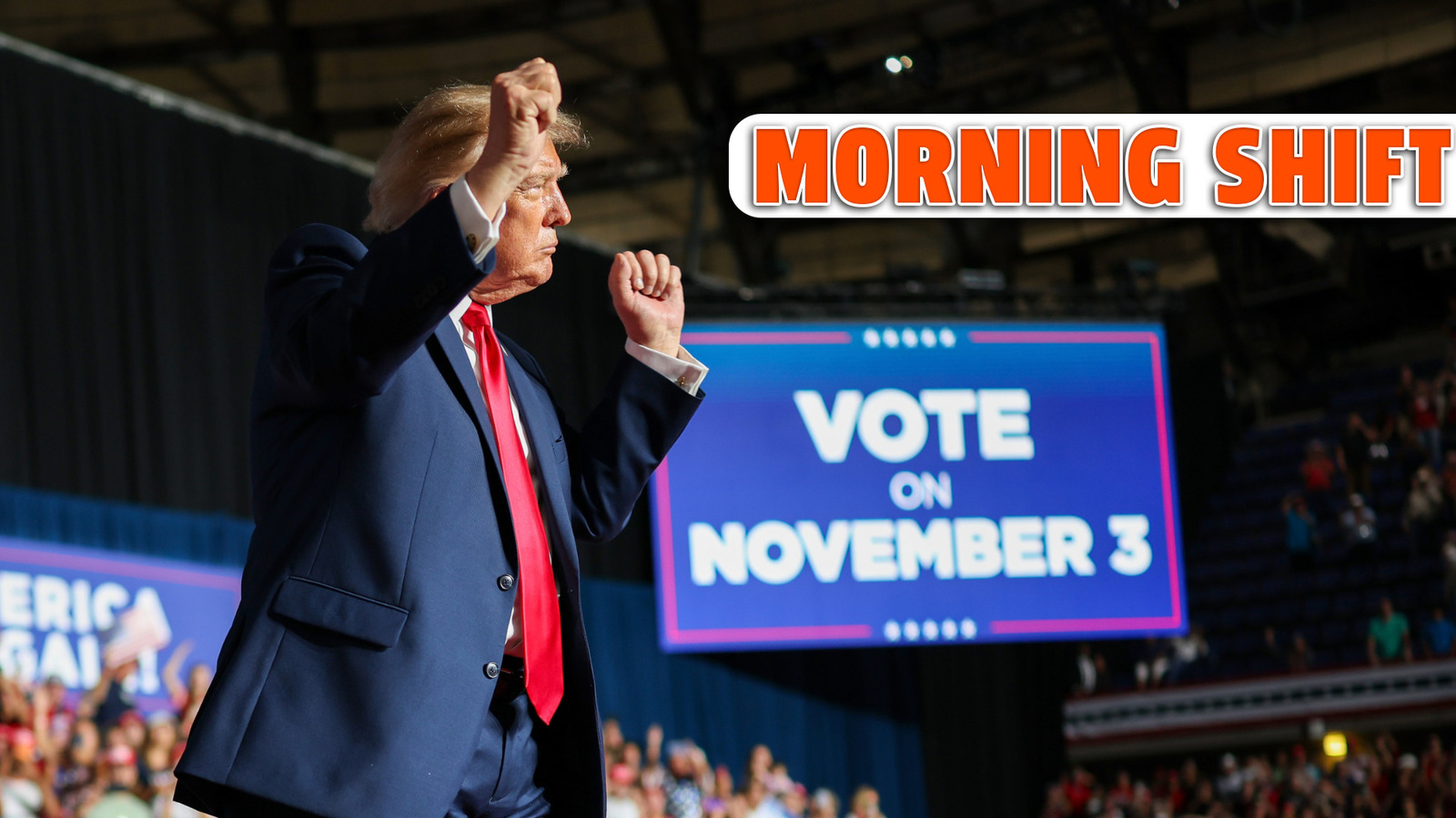
The source text includes a caption noting that President Donald Trump has reordered automotive trade rules since March 2025. Whether companies agreed with that direction or not, the message was unmistakable: old assumptions about stable regional trade can no longer be taken for granted. Once that confidence weakens, boards and executives naturally become more cautious about plant assignments, sourcing plans, and product allocation.
That caution is rational, but it comes at a bad time. The auto sector is already balancing expensive transitions in software, electrification, platform redesign, and cost control. Adding unresolved trade risk on top of those demands can delay spending that the industry otherwise needs to make.
Tariffs can change incentives, but they do not erase constraints
The source excerpt points to an important reality often lost in political debate: tariffs may alter the economics of where to build, but they do not eliminate the reasons supply chains were internationalized in the first place. Labor pools, supplier ecosystems, logistics corridors, existing capital investment, and regulatory alignment all shape manufacturing footprints. Those structural factors cannot be wished away by a tougher tone on trade.
This is why the industry’s response looks less like rapid relocation and more like suspension. Companies know they may need to adapt, but they also know premature moves can be expensive. Building or retooling capacity requires confidence in volumes and policy durability. If the trade environment remains unstable, waiting becomes a strategy, even if it is not an efficient one.
That waiting has consequences. Delayed sourcing decisions can ripple through suppliers. Hesitation around future capacity can affect labor planning and local economic development. Product timing can become more difficult when the underlying manufacturing case is unsettled. In a capital-intensive business, indecision has a cost.
North American integration is being tested, not just revised
The deeper issue is that the region’s automotive system was never simply about tariff reduction. It was about trust that a shared production geography would remain usable over time. Once companies start questioning that durability, the benefits of integration weaken even before rules officially change.
That matters for all three USMCA countries. The agreement’s value lies partly in allowing manufacturers to treat North America as a production region rather than as three loosely connected national markets. A review that makes that premise feel less secure could reduce the efficiency gains the agreement was designed to deliver.
At the same time, political leaders may see pressure itself as a tool, hoping uncertainty nudges investment toward domestic facilities. But that approach can cut both ways. It may encourage some reshoring, yet it can also suppress broader investment if companies conclude the region is no longer stable enough for confident long-range planning.
Why the industry now looks frozen
The source’s central point, that manufacturers are left frozen, captures the current moment well. This is not a clean story of either adaptation or resistance. It is a story of delayed commitment. Automakers can see that trade policy is moving, but they cannot yet see clearly enough to reconfigure everything around it. So they hold back.
That holding pattern is politically unsatisfying because it does not produce dramatic announcements about new domestic capacity at the speed public officials may want. But it is commercially understandable. No executive wants to authorize a multibillion-dollar restructuring only to watch the policy backdrop shift again during implementation.
The auto sector has always lived with regulation, but it performs best when rules are legible and durable. What it is facing now is something different: a moving negotiation over the very framework that made North American manufacturing integration possible.

The next phase depends on clarity, not just pressure
If the coming USMCA review yields a clear and durable framework, automakers will eventually adjust. They always do. The real risk is an extended period in which pressure continues but clarity does not. That would deepen the freeze described in the source and leave companies less willing to place the long-horizon bets the industry requires.
For now, the main development is not a sudden geographic realignment of production. It is the return of strategic uncertainty to a sector that had organized itself around regional predictability. That alone is a major shift. The North American auto industry may not be at the end of integration, but it is plainly at the end of taking that integration for granted.
This article is based on reporting by Automotive News. Read the original article.
Originally published on autonews.com