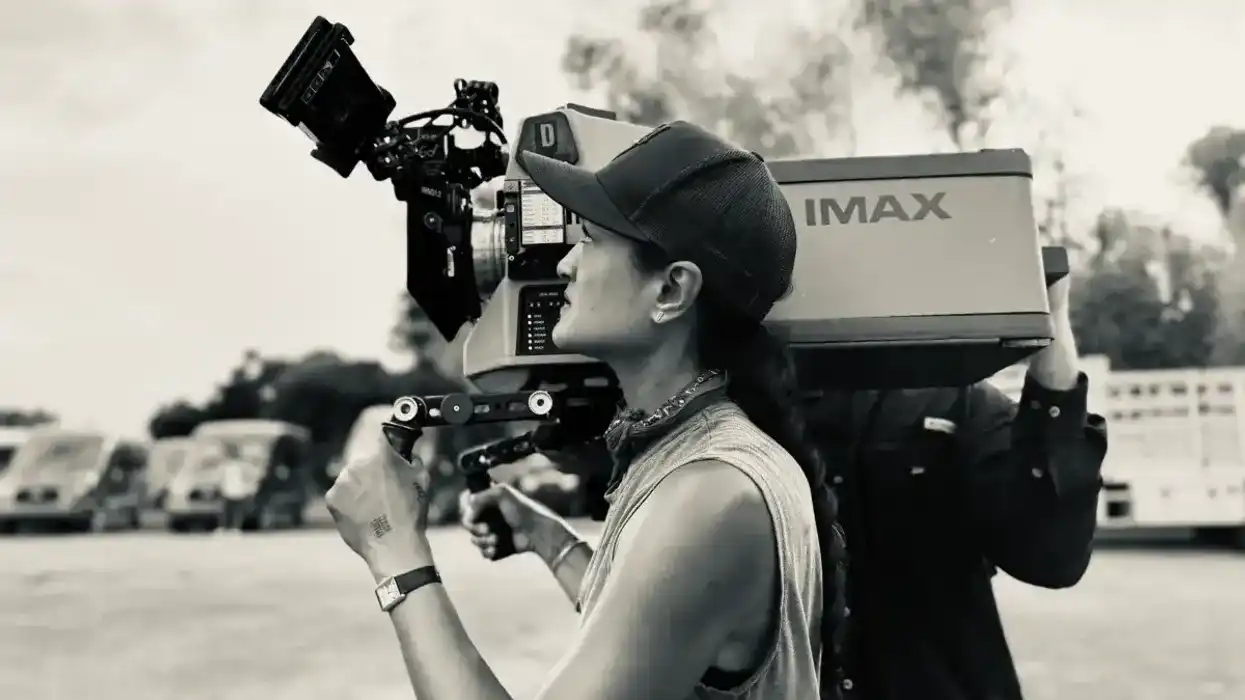
The Tradeoff at the Center of Large-Format Filmmaking
Shooting a movie on IMAX 15/70 cameras can produce incredible film, but one of the major tradeoffs for filmmakers is how loud they can get when rolling. That single reality — spectacular image quality purchased with a machine that announces itself on every take — is one of the least glamorous facts of life in large-format production. It influences shooting schedules, sound department planning, and sometimes the decision about which scenes are worth capturing in the format at all.
The noise is not a defect that a manufacturer forgot to fix. It is a consequence of what the format physically is. Understanding why the cameras sound the way they do explains a great deal about how modern large-format movies actually get made.
What 15/70 Actually Is
IMAX 15/70 is a film format rather than a digital one. It uses 65mm film stock that travels horizontally through the camera body, with each frame occupying 15 perforations. That is a dramatically larger piece of film per frame than a conventional 35mm frame, and the resulting negative carries far more visual information. When projected, the format is associated with the enormous, sharply resolved image audiences associate with the IMAX brand.
That extra image area is exactly why the hardware is so substantial. Bigger frames require bigger film paths, bigger gates, bigger lenses and bigger motors to pull everything through at a consistent speed. Every one of those components is a potential source of sound, and they all sit inches away from where actors are delivering dialogue.

Where the Noise Comes From
The loudness filmmakers describe is mechanical in origin. A camera rolling is a collection of moving parts, and in a large-format camera those parts are heavier and move with more force than their smaller-format counterparts.
- Film transport: Pulling a wide strip of film through the gate at a steady frame rate requires powerful motors and gearing, and that machinery generates sustained mechanical noise while the camera runs.
- Shutter and movement: The intermittent motion that advances and holds each frame creates rhythmic, repetitive sound rather than a smooth hum.
- Size and mass: Because the body is large and heavy, the camera is frequently mounted on substantial support rigs, and the whole assembly can resonate and amplify what the mechanism produces.
- Limited enclosure options: The housings used to quiet smaller cameras — often called blimps — become far more difficult to design when the camera itself is this bulky.
In practice this means the noise is not a faint background hiss that a sound editor can easily subtract. It is loud, textured and unpredictable enough that it competes directly with the audio a production is trying to record.
What That Means on Set
Dialogue Becomes the Hard Part
Quiet, intimate dialogue scenes are the worst-case scenario for a loud camera, because the performance depends on capturing subtle vocal detail in a controlled environment. When the camera itself is generating significant sound, the production has to find ways to separate the performance from the machinery.
The Standard Workarounds
Filmmakers have developed a familiar toolkit for dealing with the problem, and each option carries costs:
- Soundproofing and enclosures: Productions try to muffle the camera with housings and insulating materials, accepting the added weight, bulk and setup time.
- Distance and framing: Putting the camera farther from the action reduces how much noise reaches the microphone, but it constrains the shot and can push the camera into positions that are harder to light and rig.
- Alternative coverage: Dialogue may be captured with quieter cameras while the large-format camera handles the wide, effects-heavy or visually spectacular shots where its strengths matter most.
- Post-production replacement: When clean audio simply cannot be recorded on the day, performers re-record their lines later, a standard practice that adds cost and requires actors to recreate a performance away from the set.
None of these solutions is free. Each one adds time, money or creative compromise — and often all three at once.
_.png)
Why the Format Survives Anyway
The obvious question is why anyone would accept the inconvenience. The answer is that the tradeoff is deliberate, and the payoff is visible on screen. Filmmakers who choose IMAX 15/70 are choosing resolution, depth and a physical image quality that they believe smaller formats cannot match.
- Image fidelity: The large negative captures a level of detail that survives projection on very large screens.
- A distinct look: Large-format film has a rendering character that some directors consider inseparable from the stories they want to tell.
- Audience impact: The format is marketed and experienced as a premium presentation, which matters to studios and exhibitors alike.
- Selective use: Because the cameras are unwieldy, they are frequently reserved for the sequences where spectacle outweighs the cost of working around them.
That last point is why so many large-format productions are a hybrid. The loud, heavy cameras go where their strengths are maximized, and quieter tools carry the conversation-driven scenes. The result is a film that shifts formats mid-story, sometimes without most of the audience noticing.
The Economics of a Noisy Camera
Noise is not only an artistic problem; it is a scheduling one. Every workaround consumes time on a set where time is the most expensive resource. Additional setup for soundproofing, extra takes to capture usable audio, and later sessions to replace dialogue all represent real money. Producers weigh those costs against the value of the format's image, and the calculation is not the same for every project.
The constraint also shapes creative decisions earlier than most viewers would guess. A director writing toward a large-format shoot may instinctively favor wide vistas, action and visually dense compositions — the kinds of scenes that thrive when the camera is loud and the dialogue is minimal.

What It Means for Audiences
The sound of an IMAX camera is essentially invisible in the finished product. Audiences see a clean, immersive image and hear polished sound design; the mechanical racket that accompanied the shoot has been engineered out long before release. That invisibility is the point, and it is also why the tradeoff gets so little attention outside the industry.
What remains is a useful reminder about how premium formats work. Every gain in image quality has to be paid for somewhere — in weight, in setup time, in post-production labor, or in the simple fact that the camera cannot stop announcing that it is running. The loudness of IMAX 15/70 cameras is not a flaw to be eliminated so much as a cost of admission, and filmmakers who choose the format have decided the picture is worth the noise.
Key Takeaways
- IMAX 15/70 delivers exceptional image quality, but the cameras are widely known for being loud while rolling.
- The noise comes from the mechanical demands of moving a much larger film format through the camera.
- Productions respond with soundproofing, distance, alternative coverage and post-production dialogue replacement.
- Because the workarounds are expensive, large-format cameras are often used selectively rather than for an entire film.
This article is based on reporting by Engadget. Read the original article.
Originally published on engadget.com


