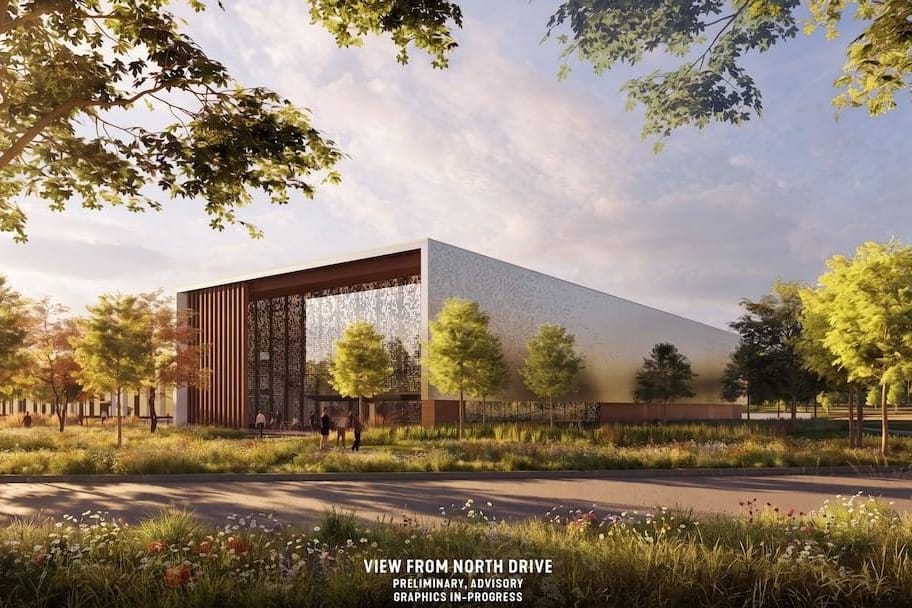
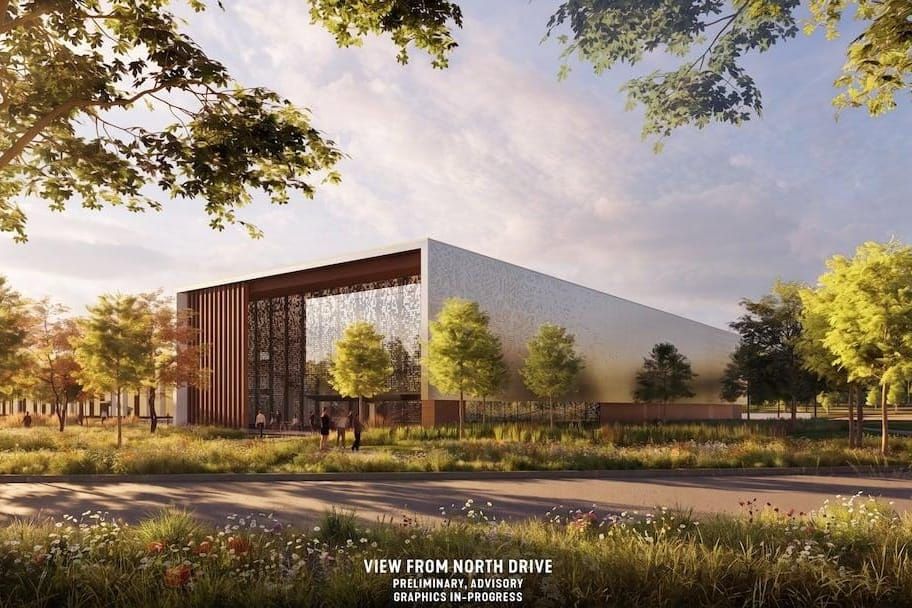
The University of Michigan’s board of regents has approved construction of a proposed research computing center in Ypsilanti Township, Michigan, despite opposition from local residents, faculty and staff. The project, described by 404 Media as a $1.25 billion data center intended to support American nuclear weapons research, passed in a 7-1 vote at a public meeting on November 19.
The decision advances a project developed with Los Alamos National Laboratory. University and laboratory plans were first announced in 2024, when the university referred to the facility as an “AI research facility.” The university now calls it a research computing center. The terminology has become part of the dispute surrounding the proposal, with critics arguing that the project’s role in nuclear-weapons work has not been given sufficient prominence.
A large project with a contested purpose
Under the plans described in the source report, construction on a 125,000-square-foot facility could begin in late 2027. The center could expand to no more than 300,000 square feet, according to a University of Michigan blog post cited by 404 Media.
The project’s supporters and opponents have framed its consequences very differently. University representatives have promoted it as a step that would support novel research. Critics at the regents meeting emphasized that Los Alamos would use most of the planned computing capacity. A student who addressed the board said the portion associated with the university’s research was only 10%, while the remaining 90% would be used by Los Alamos, which the student characterized as a nuclear-weapons developer.
That distinction is at the heart of the opposition. The computing facility is not being debated simply as another campus research building; it is being examined as infrastructure tied to a national-laboratory partner and nuclear-weapons research. For critics, a name focused on research computing does not settle the more fundamental question of what the system will principally enable.

Local resistance continues after the vote
404 Media reported that Ypsilanti Township leaders and residents gathered after the regents vote to discuss how to stop the project. Community members and university speakers used the public meeting to raise concerns about the facility and its local effects.
One student who appeared before the board questioned why the university should proceed with another major high-tech data center when it already has three research data centers. The student also criticized the project’s connection to nuclear warfare. Another student, speaking about carbon emissions, said the university had approved a $785 million data-center project in Ypsilanti despite local opposition, and referred to concerns that residents have described as environmental racism.
A library worker addressing the board on a separate labor issue also invoked the data center, saying township officials and residents were asking the university to stop and arguing that the university was proceeding without adequate consent. These statements reflect the intensity of the local debate, though they are objections voiced by participants rather than findings established in the source report.
Jobs and research are part of the case for construction
The project also has organized support. An electrician from Ypsilanti Township who represented the International Brotherhood of Electrical Workers told the regents that the construction would create more than 300 local jobs for union members and benefit the community. The union representative endorsed the project, while also referring to it as a “high compute research center.”
The competing perspectives show why the vote is likely to remain contentious. A large construction project can create local employment and become a significant institutional investment. At the same time, the stated relationship with Los Alamos and nuclear-weapons research has led opponents to ask whether those economic benefits outweigh the project’s social, environmental and ethical implications.
The dispute also sits within a wider shift in how universities, national laboratories and technology infrastructure are connected. High-performance computing is a foundational tool for scientific work across fields. A facility capable of supporting advanced research can be relevant to many disciplines, yet the uses, ownership and allocation of computing resources can determine how the public interprets its mission.

What the approval does and does not resolve
The regents’ vote authorizes the project to move forward, but it does not end the political or community conflict. The source report says township leaders and residents were considering how to oppose it after the meeting. With construction not expected to begin until late 2027 under the cited plan, the project still faces a long period in which public scrutiny may continue.
The approval is a consequential institutional decision because of its scale, its proposed relationship with Los Alamos and the breadth of the opposition recorded at the meeting. It also illustrates a recurring challenge around major computing facilities: their technical description can be straightforward, while the question of whom they serve and what their capacity will be used for can be far more difficult to resolve.
For now, the University of Michigan has chosen to proceed. The next phase will test whether it can address the concerns raised by Ypsilanti Township residents, university community members and other critics while carrying out a project supporters say will bring research and employment benefits.
This article is based on reporting by 404 Media. Read the original article.
Originally published on 404media.co