
UK prepares broad social media restrictions for teenagers
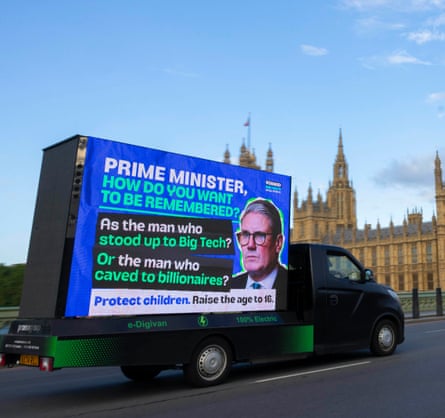
The UK government is preparing one of its most sweeping internet safety interventions yet, with plans to block children under 16 from major social media platforms and impose additional safeguards on older teenagers. The proposal, described in the source reporting as an “Australia plus” approach, would extend beyond headline bans to reshape how younger users interact with social apps, gaming services, and AI chat products.
The plan marks a significant hardening of the government’s position. Rather than relying on voluntary platform changes or incremental safeguards, ministers are moving toward direct age-based restrictions on access to major services including TikTok, Instagram, and X. The measure would align the UK more closely with Australia’s recent nationwide restrictions on social media access for children, while going further in some areas.
What the policy would do
Based on the supplied reporting, the core measure would prevent under-16s from using major social media platforms. Government sources indicated the UK ban would likely apply to a similar range of services to those covered in Australia, where restrictions were introduced across large social and video-sharing platforms.
The UK plan would not stop there. Products outside the main social media ban, including gaming apps, would face tighter rules intended to reduce risk from contact with strangers. One of the specific changes flagged in the source text is the removal of stranger-chat functionality for younger users on apps not covered by the primary ban.
The government is also considering rules for older teenagers up to age 18. Those measures would target compulsive use patterns, including limits designed to stop late-night “scrolling.” In addition, under-18s would be barred from accessing romantic or sexual AI chatbots, reflecting a widening definition of online safety that now includes synthetic and conversational systems as well as conventional social feeds.

Why the government is acting now
The source reporting frames the policy as a response to sustained pressure on ministers to address the effects of addictive content, algorithmic recommendation loops, and unsafe contact online. Protecting teenagers from harmful material and from interactions with strangers were identified as central drivers behind the tougher stance.
Politically, the move also reflects the growing pressure on governments to show that online child-safety rules can be enforced in practice, not just discussed in principle. The UK has already been debating how far platforms should be held responsible for user wellbeing, especially where product design encourages prolonged use. By focusing not only on access but on design features such as endless scrolling and direct messaging, the new package signals a broader regulatory ambition.
The proposal lands in a global context in which policymakers are increasingly willing to test stricter digital-age limits for minors. Australia’s 2025 social media ban created a high-profile precedent. The UK now appears ready to adapt that model while broadening it to other app categories and AI-driven services.
Implementation questions remain
Even with the direction of travel now clearer, major operational questions remain unresolved in the supplied reporting. Any under-16 ban on major platforms would require reliable age assurance, and that immediately raises questions about verification methods, privacy, compliance costs, and enforcement.
Platforms would also need to determine how to classify mixed-use products that combine messaging, video, gaming, and creator tools. The source text suggests gaming apps may avoid the full ban while losing some communication features for younger users, but the line between a social platform and a gaming platform is increasingly blurred. That means the details of implementation may matter as much as the headline policy itself.
Another open issue is how restrictions for 16- to 17-year-olds would work in practice. Limiting late-night scrolling sounds straightforward as a policy goal, but it implies either device-level controls, account-based usage rules, or platform-specific curfews. Each route would bring different technical burdens and different political objections.
_.png)
A broader redefinition of youth online safety
The inclusion of AI chatbot restrictions is especially notable. It suggests the government is no longer treating online safety as a problem confined to classic social media feeds. Instead, it is starting to regulate digital experiences based on behavioral and emotional risk, whether those experiences are delivered through recommendation engines, multiplayer chat, or synthetic companions.
That widens the policy perimeter considerably. A law initially framed around social media could influence how companies design youth access across entertainment, communication, and AI products. For developers and platforms, the likely result is a more fragmented youth internet, with age tiers dictating which features can be used, when they can be used, and with whom.
Criticism is likely from multiple directions. Civil-liberties groups and some lawmakers may question whether bans are proportionate or enforceable. Platforms will scrutinize the technical feasibility and legal exposure. But the source reporting makes clear that the government has decided the status quo is no longer acceptable.
If enacted in the form outlined, the UK would move beyond content moderation debates and into direct product regulation for minors. That would make this more than a social media story. It would be a structural shift in how a major market defines the responsibilities of digital platforms toward children and teenagers.
This article is based on reporting by The Guardian. Read the original article.
Originally published on theguardian.com


