A draft policy exposed a more aggressive vision for police drones in New Orleans
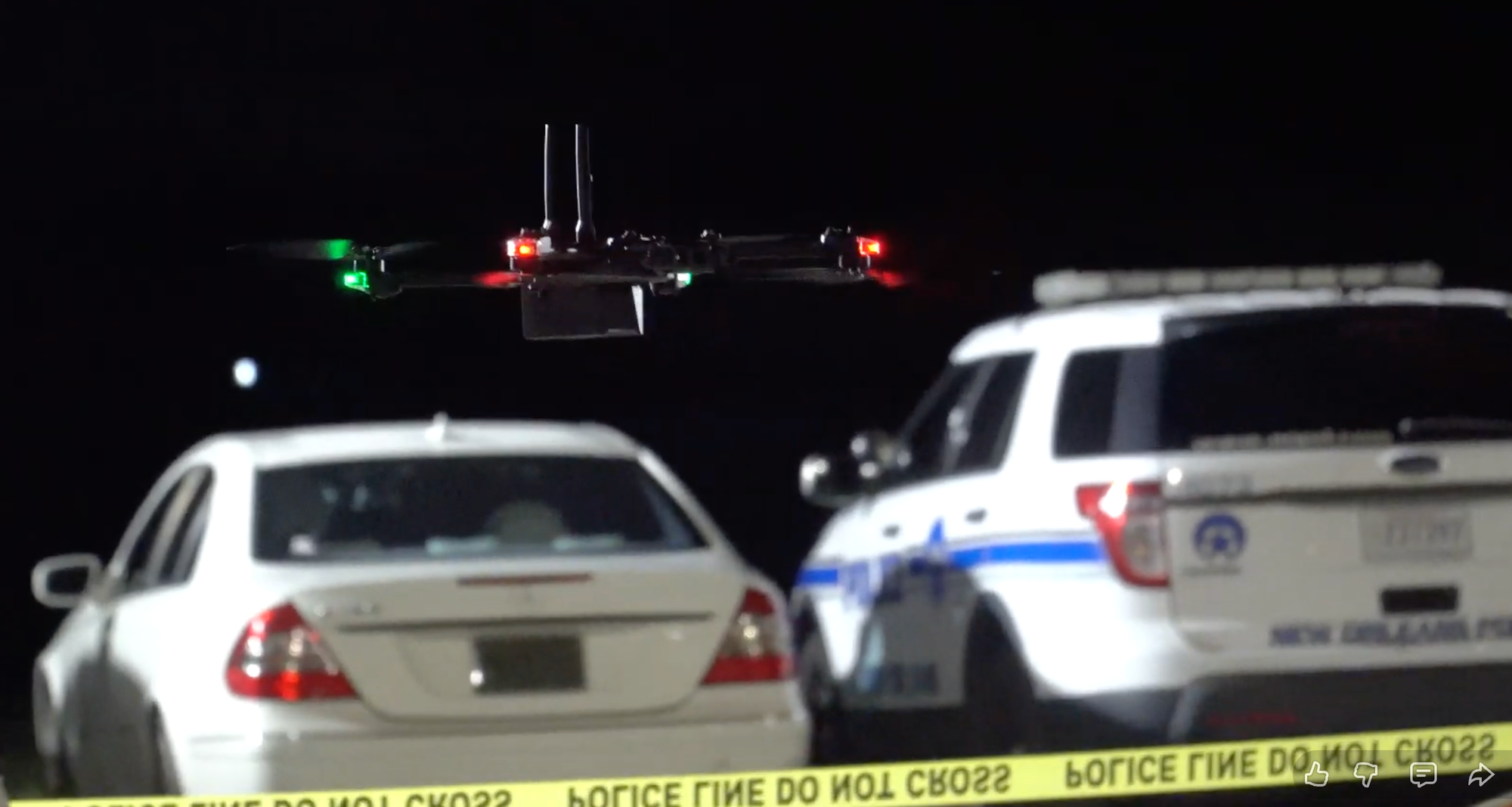
The New Orleans Police Department briefly published a draft drone operations manual that allowed small unmanned aerial systems to be equipped with weapons if the superintendent gave written approval, according to reporting based on a version of the manual that was live on the department’s website in June.
That language does not appear in the current version of the policy. As of July 1, the published manual states that the department’s drones “shall not be equipped with weapons or hazardous materials of any kind.” NOPD told 404 Media that the earlier document was a draft presented for review before adoption of the current policy and said the department will not equip drones with weapons or hazardous materials.
Even with that formal disavowal, the episode is significant because it shows that weaponized drone language existed inside an official police policy document closely enough tied to operations to be posted publicly. It offers a glimpse into how law enforcement agencies may be thinking about drone deployment internally, even when final public-facing policies are more restrictive.
What the two policies said
The difference between the draft and current manuals is narrow in wording but broad in implication. In the draft, arming drones was not categorically banned. It was something that could happen with written authorization from the top of the department. In the current version, the restriction is absolute: no weapons and no hazardous materials.
That distinction matters because policy documents do more than describe abstract possibilities. They define operational boundaries, establish review standards, and shape procurement decisions. A rule that allows weapons with approval implies that the department was at least considering scenarios in which armament might be lawful, useful, or defensible. A rule that forbids weapons entirely closes that door on paper.
NOPD did not answer follow-up questions from 404 Media about how or why the draft version was published. That leaves an important gap. Without an explanation of how far the draft had progressed internally, it is hard to judge whether the language represented a live operational option, a preliminary legal thought experiment, or boilerplate that was later rejected. But the existence of the text itself is enough to raise concern among civil-liberties advocates and police-technology watchdogs.

Why the disclosure matters beyond one city
The New Orleans document surfaced at a time when drone capabilities are improving quickly and law-enforcement interest in unmanned systems is expanding. Police agencies increasingly use drones for surveillance, search operations, scene assessment, and tactical awareness. What remains far more contested is whether those platforms should ever carry weapons.
According to the report, drone companies and police agencies have shown growing interest in that possibility. The publication of a draft manual that contemplated weaponized quadcopters therefore becomes more than a local paperwork issue. It suggests that the policy frontier is moving in parallel with the technical frontier, even if public regulations have not kept pace.
Matthew Guariglia, a senior policy analyst at the Electronic Frontier Foundation, told 404 Media that he did not see how police arming drones could be legal given Federal Aviation Authority regulations prohibiting operation of drones equipped with a “dangerous weapon.” That legal tension is central to the story. A department may explore what it wants in policy drafts, but aviation rules set a broader ceiling on what can actually be flown.
In that sense, the New Orleans case highlights a recurring pattern in emerging technology governance: capabilities, internal experimentation, and public accountability rarely advance at the same speed. Draft documents can reveal ambitions that are more aggressive than official public positions, especially in areas where oversight mechanisms are still catching up.
New Orleans’ larger surveillance backdrop
The drone manual drew added scrutiny because New Orleans already has a reputation for pushing surveillance practices into controversial territory. The report notes that a private company, Project New Orleans, operated a network of cameras that provided live facial recognition to city police in secret cooperation with NOPD for two years before that arrangement was exposed in 2025.
According to the report, the ACLU says NOPD has continued to use Project New Orleans in violation of local laws and has stonewalled public-records requests. Those allegations matter because they shape how the public is likely to interpret the drone manual incident. In a city where surveillance governance is already under dispute, even a draft document can be read as evidence of institutional intent rather than an abandoned idea.
That context also explains why the distinction between “draft” and “final” may not fully settle the issue. Formal policy language can change, but residents and oversight groups are likely to focus on the internal decision-making process that allowed weaponized-drone language to appear in the first place. They may also ask whether similar concepts remain under discussion elsewhere inside policing, outside public view.

The broader policy question
Weaponized drones occupy a uniquely volatile place in domestic policing debates. Traditional use-of-force policies were written around human officers making direct, visible decisions in physical space. Drones introduce distance, automation, aerial vantage points, and different escalation dynamics. Even if a department claims such systems would be tightly controlled, the public-policy burden is much higher because the technology changes both the mechanics and the psychology of force.
The New Orleans episode underscores how those debates may increasingly start with document trails rather than deployments. A city does not need to actually field an armed drone for the policy stakes to become real. Once a department drafts rules for approval pathways, questions about legality, oversight, transparency, procurement, training, and civil liberties are already on the table.
For now, NOPD’s official position is clear: its current policy bars weapons and hazardous materials on department drones. But the release of the earlier draft has made one thing equally clear. The idea of weaponized police drones is not confined to speculation or science fiction. It has already entered the language of police policy development, and that alone is enough to intensify scrutiny.
This article is based on reporting by 404 Media. Read the original article.
Originally published on 404media.co