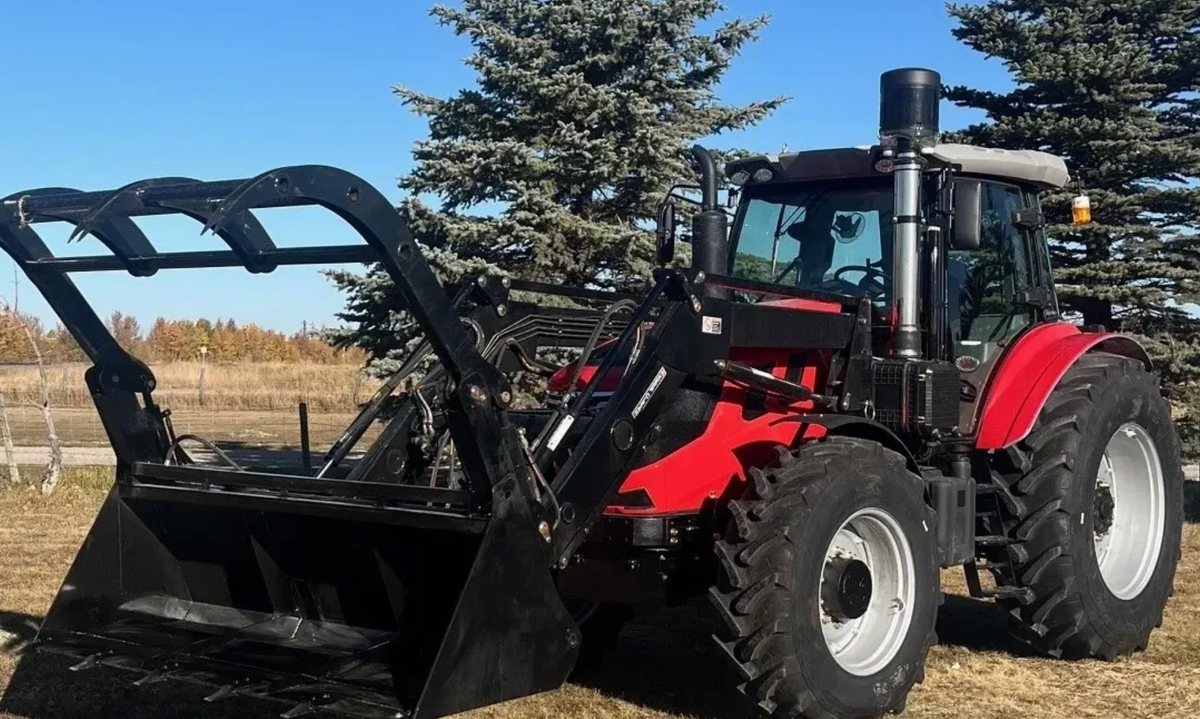
A simple tractor is hitting a nerve
A Canadian manufacturer says demand is surging for a new repairable, low-tech tractor designed as an alternative to increasingly computerized farm machinery. According to the supplied source text, Alberta-based Ursa Ag has been inundated with interest after introducing a tractor that it says is simpler to maintain, less loaded with unnecessary technology, and priced at roughly half the cost of a Deere.
The appeal is not mainly nostalgia. It is a reaction to a practical problem that has been building for years in modern agriculture: farmers rely on expensive machines they often cannot fully repair themselves. Software locks, digital rights management systems, sensor dependence, and manufacturer-controlled parts and diagnostics have turned repair access into a business and political fight. Ursa Ag’s bet is that many farmers would rather buy a machine that does less if it can reliably do the work and be fixed without permission.
Why repairability has become a selling point
The source material describes a secondary market boom for decades-old John Deere tractors because farmers want equipment they can actually fix. That market behavior is revealing. Used machines from the 1980s can remain desirable not because they outperform new equipment, but because they remain legible to owners. They start, run, and fail in ways that can be diagnosed and repaired without an authorized intermediary.
Ursa Ag has turned that logic into a product strategy. Its tractor is marketed as “no frills” and “built to last,” with the company saying it was designed around a simple customer need: turn it on at the start of the day, use it, and shut it off at the end of the day. In a sector where machines increasingly arrive with connectivity, software terms, and embedded control systems, that pitch is unusually direct.
The demand numbers cited in the source text suggest the message is resonating far beyond a niche online audience. Ursa Ag’s Doug Wilson said more than a thousand farmers from roughly 30 countries contacted the company after a Canadian farm show and media exposure. He also said the company has produced just under 100 tractors so far and is working to triple production capacity.

The backlash against locked-down machinery
The repair fight in agriculture has been one of the clearest examples of the broader right-to-repair movement. Farmers have complained for years that modern tractors can be sidelined by minor sensor failures, software restrictions, or delays in accessing authorized technicians. In time-sensitive windows such as planting and harvesting, even short delays can ruin output and income.
The source text describes crops dying while owners wait for approved repairs, a vivid example of how digital restrictions can create real-world losses. That is why this story reaches beyond one product launch. It reflects a larger shift in what some buyers now value. For a growing group of customers, reduced complexity has become a premium feature rather than a compromise.
Ursa Ag’s approach also places farm equipment in the same conceptual lane as repairable consumer electronics from companies such as Fairphone and Framework, both cited in the source material. The comparison is imperfect because tractors are industrial tools, not personal gadgets. But the underlying argument is similar: ownership should include meaningful repair rights, and modular or accessible design can become a competitive advantage.
What this says about agricultural technology
Precision agriculture, telematics, and connected machinery are often presented as the inevitable future of farming. In many contexts, they may be. Data-rich machines can improve efficiency, reduce inputs, and support fleet management across large operations. But the Ursa Ag response shows that technological sophistication does not always align with user priorities.
Many farmers are not rejecting all innovation. They are rejecting systems that make essential tools harder to maintain, more expensive to own, or too dependent on proprietary service networks. That is an important distinction. The market opportunity here comes not from anti-technology sentiment in the abstract, but from dissatisfaction with technology that appears to serve manufacturers better than operators.
Price is part of that equation too. The source text says Ursa Ag’s tractor costs roughly half as much as a Deere. If a cheaper machine is also easier to maintain and less likely to be immobilized by a software-related issue, its value proposition becomes especially strong for smaller farms and cost-conscious buyers.

A niche product or a meaningful shift?
It is too early to know whether low-tech, repairable tractors will become a major segment or remain a specialized alternative. Production is still limited, and demand spikes after media attention do not always translate into sustained deliveries at scale. But the fact that the company is expanding capacity suggests it sees the demand as real enough to justify rapid growth.
The broader importance lies in what buyers are signaling. They are telling manufacturers that convenience features and connected systems are not automatically improvements if they undermine control, serviceability, or uptime. That message could influence future machinery design even among larger incumbents that continue to emphasize software-heavy platforms.
In that sense, Ursa Ag’s tractor is not just a product. It is a critique of a development path in modern equipment design. It asks whether the industry has over-optimized for control, data capture, and proprietary ecosystems at the expense of resilience and owner autonomy.
- Ursa Ag says more than 1,000 farmers from about 30 countries have expressed interest.
- The company has built just under 100 tractors and is working to triple production capacity.
- Its machine is marketed as repairable, low-tech, and about half the cost of a Deere.
- Demand reflects wider frustration with software locks and manufacturer repair control.
If that frustration continues to spread, the most disruptive idea in farm machinery may not be a smarter tractor. It may be a simpler one.
This article is based on reporting by 404 Media. Read the original article.
Originally published on 404media.co