Wizards is turning 2027 into a year-long multiverse campaign
Wizards of the Coast has laid out its 2027 roadmap for Magic: The Gathering, and the headline is clear: the publisher wants the game’s next year to feel connected by scale, travel, and setting. According to the announced plan, 2027 will revolve around the “Magic Multiverse,” combining three named in-universe sets, three still-unannounced Universes Beyond releases, and four MagicCon events spread across North America, Asia, and Europe.
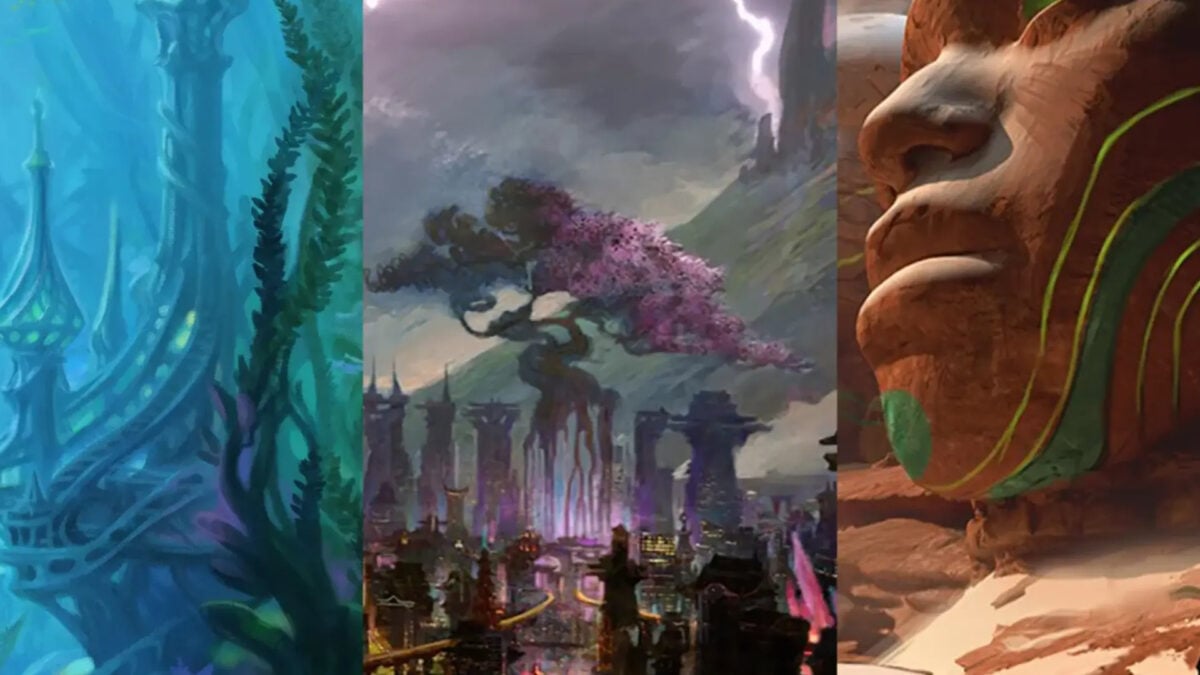
Roadmaps are common in live and collectible games, but this one stands out because it puts worldbuilding front and center. Rather than presenting 2027 as a loose sequence of standalone products, Wizards is framing the year as an extended tour through different planes, aesthetics, and play fantasies. The plan reaches from underwater kingdoms to giant monsters and mechs to an Afrofuturist plane powered by five suns.
The announcement also suggests that the company sees the multiverse not just as lore, but as a release architecture. Magic can move between tones, genres, and visual identities without abandoning the umbrella brand. That flexibility has always been one of the game’s strengths. In 2027, Wizards appears ready to make it the organizing principle.
The three major in-universe sets
Nauctis: The Sunken Realm arrives first on February 5
The 2027 slate begins with Nauctis: The Sunken Realm on February 5. Wizards describes it as the game’s first set devoted to a water plane. The setup centers on a group trying to prevent war between two feuding kingdoms, while the world itself is presented as a place rich with brine, adventure, and creatures living far below the surface.
That matters because Magic has long explored oceanic imagery, sea monsters, and blue-mana themes, but a full plane built around a submerged world gives Wizards room to make water the defining premise rather than a background flavor. Based on the roadmap description, Nauctis is positioned as both a new setting and a thematic expansion into territory the game has not previously treated as its own full-scale destination.
Kamigawa: Titanbreach follows on June 4
The middle release of the year is Kamigawa: Titanbreach, scheduled for June 4. This set returns to Towashi, the modern neon city on Kamigawa, but adds a collision with another plane: a chunk of Ikoria falls into the city, bringing giant monsters with it. Wizards says the result will be Magic on a scale players have not seen before.
The creative pitch is explicit. Kamigawans will fight Ikoria’s creatures with manmade mechs, turning the set into a mashup of urban futurism, kaiju destruction, and engineered defense. Even from the brief description available so far, Titanbreach looks like the most overtly cinematic entry in the roadmap. It is also the set that most clearly leans on Magic’s ability to merge previously established worlds into a single spectacle.
For Wizards, that approach does more than create novelty. It leverages existing player attachment to well-known planes while giving the company a reason to escalate scale. Returning to Kamigawa alone would be familiar. Dropping Ikoria into the middle of it creates an event.
Zhalfir closes the in-universe arc on October 1
The final multiverse set arrives October 1 with Zhalfir. The source description positions the plane as an Afrofuturist world that now exists as its own plane and has replaced the metal plane Mirrofin. It is powered by five suns and never experiences nightfall.
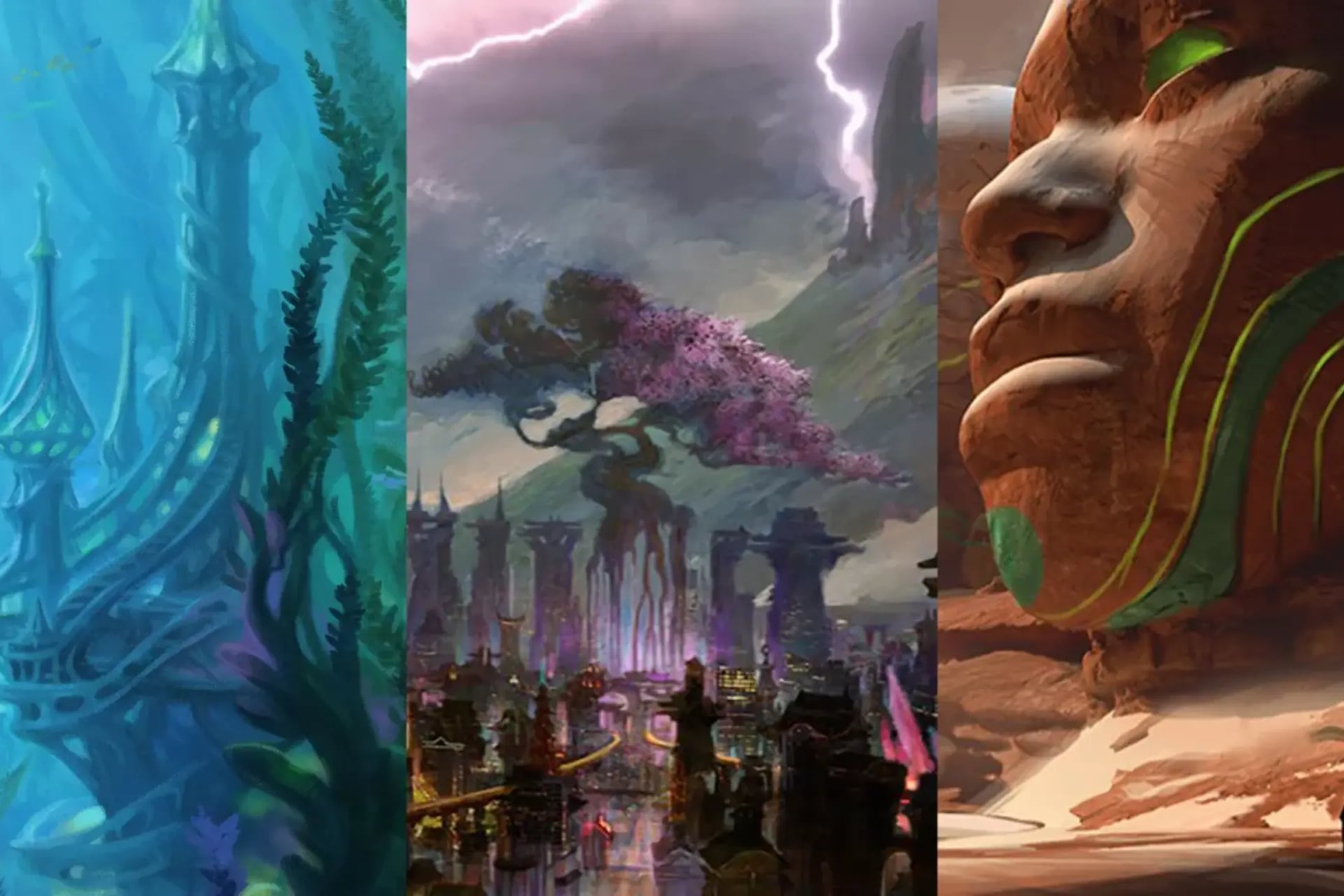
The return of chronomancer Teferi Akosa is central to the set’s framing. Wizards says newer players will encounter innovative new forms of magic along with “mindbending” cards. Just as important is the company’s stated intent to honor Zhalfir’s legacy in every aspect of the set.
That wording points to a broader challenge that has become increasingly important for long-running fantasy franchises: how to revisit or expand culturally coded settings in ways that feel intentional rather than superficial. The roadmap does not yet offer mechanical details, but it clearly presents Zhalfir as more than a generic location drop. It is being positioned as a major world with a defined aesthetic and narrative identity.

Universes Beyond and the event circuit fill the gaps
Between those three tentpole releases, Wizards plans to publish three currently unannounced Universes Beyond sets on April 9, August 6, and November 19. Even without titles, their placement in the calendar is meaningful. They create a cadence in which cross-brand collaborations alternate with core multiverse releases, keeping the year active without leaving long quiet periods between launches.
That alternating structure reflects the current shape of Magic’s business. The game no longer lives only inside its original fiction. Universes Beyond has become a major channel for growth, bringing outside intellectual properties into Magic’s card framework. By spacing those sets between original-plane releases, Wizards can serve both audiences at once: players invested in Magic’s own worlds and players drawn by crossover events.
The company is also tying the release year to a global in-person schedule. MagicCon events are planned for Detroit from February 26 to 28, Tokyo from May 14 to 16, Las Vegas from August 27 to 29, and Amsterdam from December 3 to 5. Those stops help turn the roadmap from a product calendar into a community calendar.
For a game with a strong convention and organized-play culture, that matters. A roadmap can build anticipation, but physical events create milestones where reveals, previews, and fan engagement can concentrate. The geographic spread also shows that Wizards is continuing to treat Magic as a global live brand rather than only a retail product line.
What the roadmap says about Magic’s current strategy
There are still many missing details. Wizards says more information on the three named sets will come closer to their releases, and the Universes Beyond titles remain unknown. But the broad strategy is already visible. Magic is using its multiverse as a framework that can absorb very different creative directions without losing coherence: underwater politics, techno-monster warfare, Afrofuturist magic, and crossover properties can all fit inside the same yearly plan.
The 2027 roadmap also extends momentum already building in 2026. Before the next year begins, Wizards still has
Reality Fracture set for October 2 and a
The Hobbit set scheduled for August 14. That means the company is bridging one release year into the next rather than treating them as isolated cycles.
For players, the immediate takeaway is volume, variety, and a deliberate sense of progression. For Wizards, the roadmap is a statement that Magic’s future lies not in narrowing its identity, but in scaling it. The multiverse is no longer just background lore. It is the product engine.
This article is based on reporting by Gizmodo. Read the original article.

Originally published on gizmodo.com