
A neighbourhood on the edge of the AI build-out
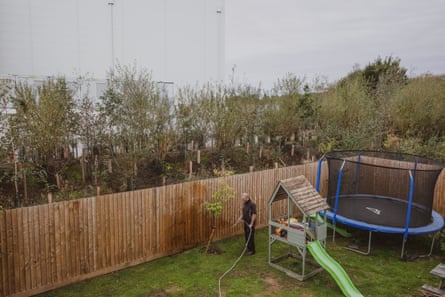
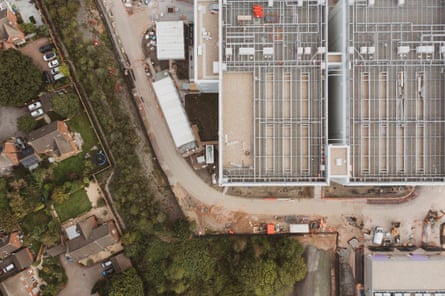
On the western fringes of Newport in south Wales, a small group of homes now sits beside a rapidly expanding data-centre campus. For residents such as Dale Johnston, the development is not an abstract argument about artificial intelligence or digital infrastructure. It is a structure visible from the garden, a source of existing low-level noise, and a reason to worry about what will happen when new facilities begin operating.
The building Johnston can see from his home is a 23-metre-high hyperscale data centre, made up of a large expanse of prefabricated panels. Local Labour politicians have presented the development as a job creator. Johnston and his neighbours see a different balance of benefits and costs. He says the building has taken away much of the sunlight and view from the garden he shares with his wife and grandchildren.
The conflict in Newport captures a broader tension emerging around the infrastructure required for powerful AI systems. Technology companies need facilities capable of housing and operating large numbers of servers. Those facilities need a dependable connection to electricity and equipment to manage the heat generated by computing hardware. But the physical consequences of that expansion are experienced locally, by people living nearest to the sites.
Computing demand meets the grid
Britain’s data-centre expansion is being driven by demand for the computing capacity behind AI models and other digital services. The scale of planned connection requests is striking. There are 315 hyperscale data centres waiting to connect to the national grid, according to the figures reported from Newport. Together, those proposed centres would require 73 gigawatts of power.
That number is 28 gigawatts higher than the country’s typical peak electricity demand of 45 gigawatts on a cold winter day. The comparison does not mean every proposed facility will necessarily be built or draw its maximum power at the same moment. It does, however, illustrate why the queue for grid connections has become central to debates about the next phase of the digital economy. Data centres are not merely internet infrastructure: at this scale, they are major electricity users competing for capacity in a network that also serves homes and businesses.
Hyperscale generally refers to facilities with at least 5,000 servers and 10,000 square feet of space. Their size allows technology companies to concentrate large amounts of computing capacity, but it can also concentrate visual, acoustic and environmental concerns in particular locations. Wales is among the main development hotspots outside London, making the region a key test of how national technology ambitions are reconciled with local planning and infrastructure realities.

The concerns are concrete
For the homeowners beside the Newport campus, the concerns concern ordinary conditions of daily life. Johnston worries about the sound produced by 36 sets of air-blast coolers, equipment used to prevent the chips inside a data centre from overheating. He also points to the regular testing of 60 backup diesel generators, intended to reduce the risk of an interruption to data flows. Residents fear the testing could create harmful fumes.
Johnston says he already keeps a bathroom window closed because of a low hum from another facility on the campus. His wife, a nurse working night shifts, is struggling to sleep, he says. These accounts do not establish what noise levels or emissions the new facility will produce once it is operational. They do establish why residents want more clarity before the site switches on. In a debate framed nationally around jobs, growth and AI capacity, the immediate questions are much closer to home: how loud will the equipment be, how frequently will generators be tested, and what recourse will neighbours have if the impacts are worse than expected?
The issue is also one of trust. Johnston says he has invited councillors and members of Parliament who support the development to visit his garden, but feels that decision-makers have not engaged with the view from the homes most affected. That disconnect can turn an infrastructure dispute into a wider argument about whose evidence counts in planning decisions.
The planning challenge of the AI era
The Newport dispute should not be reduced to a simple choice between data centres and local communities. Digital infrastructure can support services and economic activity, and elected representatives may reasonably view investment as a source of jobs. At the same time, a project’s potential economic value does not erase the need to assess its effects on nearby residents.
The most difficult question is how to make the trade-offs visible early enough for communities to influence them. Projects of this kind require more than a headline figure about investment or server capacity. Neighbours need specific, comprehensible information about building height, operating noise, cooling systems, backup power, local air quality safeguards and anticipated grid impacts. Officials, developers and residents may not reach the same conclusion, but the discussion is more credible when it addresses those details directly.
Grid planning also matters beyond an individual development. With hundreds of hyperscale sites waiting to connect, decisions about access to electricity will shape where data centres are built and how quickly they can operate. The reported 73-gigawatt requirement shows why those decisions cannot be treated as routine local matters alone. They carry implications for a national network whose normal winter peak is far lower.

A local view of a global technology shift
AI is often discussed in terms of models, chips and software. Newport provides a reminder that it also has a built environment: tall buildings, server halls, cooling equipment, generators and high-capacity power connections. The physical infrastructure may be necessary for digital services, but it is never placeless.
As Britain’s data-centre boom continues, the decisions that last will likely be those that make room for both national infrastructure needs and credible local scrutiny. For Johnston and his neighbours, that starts with being heard before uncertainty becomes a permanent feature of life next to the campus. For policymakers, it means recognizing that public acceptance of AI infrastructure will depend not only on its promised economic benefits, but on how fairly its most immediate effects are managed.
This article is based on reporting by The Guardian. Read the original article.
Originally published on theguardian.com