The premium robot vacuum market keeps promising autonomy
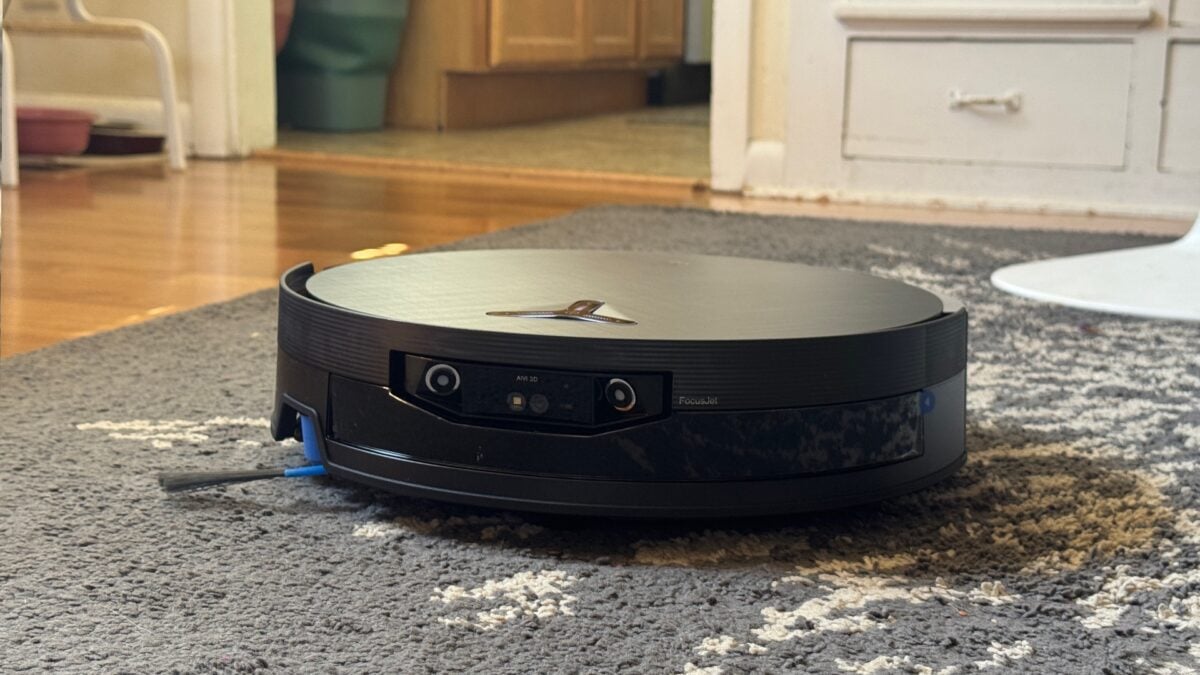
Robot vacuum makers increasingly sell a future in which the machine does more than follow a schedule. It is supposed to learn a home, interpret preferences, and make cleaning decisions with minimal human involvement. Ecovacs is pushing that vision with the Deebot X12 OmniCyclone, a $1,500 robot vacuum and mop that uses on-device AI to adapt its behavior based on both explicit instructions and observed usage.
On paper, that is a compelling pitch. A self-adjusting cleaner that remains usable even if cloud services change or a manufacturer loses interest would answer a real problem in the smart-home market. But Gizmodo’s review of the X12 suggests that AI features alone do not make a premium robot feel dependable. In practice, the product appears caught between an ambitious software story and basic operational shortcomings that are much harder for consumers to ignore.
What Ecovacs improved
The X12 is described as essentially the same device as the X11 OmniCyclone released in late 2025, with one notable addition: a shield over the mop roller intended to keep a dirty mop from dragging across carpet. That detail shows Ecovacs is paying attention to a common pain point in combo cleaning machines, where mopping systems can complicate carpet handling.
Gizmodo’s testing also found several strengths. The review cites very good mopping performance, generally solid vacuuming, quiet operation, good battery life, and fast charging. Setup was straightforward, with the machine taking roughly 30 minutes to unbox and prepare before its initial mapping run. That first mapping pass took about seven minutes and consumed around 10 percent of the battery, which suggests reasonably efficient navigation during onboarding.
The app also made a better first impression than some rivals. According to the review, Ecovacs’ software was more approachable at a glance than competing apps from Dreame for other high-end models. That matters because a premium robot vacuum is no longer just an appliance. It is a software-defined household system, and bad app design can quickly undermine the entire experience.
Where the product fell short
The main problem is that the machine did not appear reliable enough to justify its price. After more than a week of testing in a real home environment, the reviewer described broad disappointment once the robot moved beyond initial setup and controlled tests into unsupervised daily use.
The list of cited weaknesses is long and concrete: the X12 was slow, had poor object avoidance, could hit furniture too hard, sometimes dropped debris it had already picked up, and had a dustbin prone to clogging. Those are not abstract complaints about edge cases. They cut directly into the premise of an autonomous cleaner. If a device is meant to make decisions on its own, then collision behavior, obstacle handling, and debris retention are among the first requirements it has to meet.
The review’s conclusion is not that the concept is misguided, but that the feature set is not yet mature enough. On-device AI may eventually let owners maintain more control over their products even if external services disappear. But that future-facing advantage does not offset present-tense frustration when the robot struggles with everyday messes.
The wider lesson for consumer AI hardware
The X12’s mixed performance says something broader about consumer technology in 2026. Companies are attaching AI language to products across the home, often framing intelligence as the next major differentiator. But intelligence is only meaningful when the underlying system is dependable. A robot vacuum is judged less by the elegance of its adaptive logic than by whether it avoids obstacles, cleans thoroughly, and stays out of trouble when left alone.
That is especially true at $1,500. Buyers in this tier are not paying to test a concept. They are paying for fewer compromises. Strong mopping and quiet operation can help, but they do not erase repeated friction in core tasks. If the object avoidance is weak and the dustbin clogs, the AI story starts to look secondary.
The product also highlights a tension in smart-home design: how much autonomy users actually want versus how much predictability they need. Adaptive behavior sounds attractive until it becomes unclear whether the machine’s decisions are improvements or just inconsistencies that are harder to diagnose.

Why this review matters
Gizmodo’s assessment is a useful reminder that the most important breakthroughs in home robotics may still be mundane ones. Better carpet handling, more reliable debris capture, safer movement around furniture, and fewer clogs may matter more than a chatbot-style interface or preference-learning engine.
Ecovacs appears to have built a machine with strong fundamentals in a few areas and significant gaps in others. That makes the X12 less a clear advance than a snapshot of a category in transition. Robot vacuums are becoming more software-driven and more autonomous, but the market is still learning a familiar lesson: consumers notice “smart” features only after the hardware does the boring parts consistently well.
Until that balance improves, on-device AI in premium cleaning robots may remain more interesting as an industry direction than as a decisive reason to buy.
This article is based on reporting by Gizmodo. Read the original article.
Originally published on gizmodo.com




_.png)