Genetics Is Adding New Detail to One of Ancient Korea’s Most Disturbing Mortuary Practices
Archaeology has long shown that power in ancient societies could be expressed through burial as much as through monuments, weapons, or writing. A new DNA study from South Korea adds unusual biological detail to that history by examining the remains of people associated with sunjang, a funerary practice in which attendants were buried with elites. The findings do not make the custom any less grim, but they do sharpen understanding of how hierarchy and kinship operated in the Silla Kingdom.
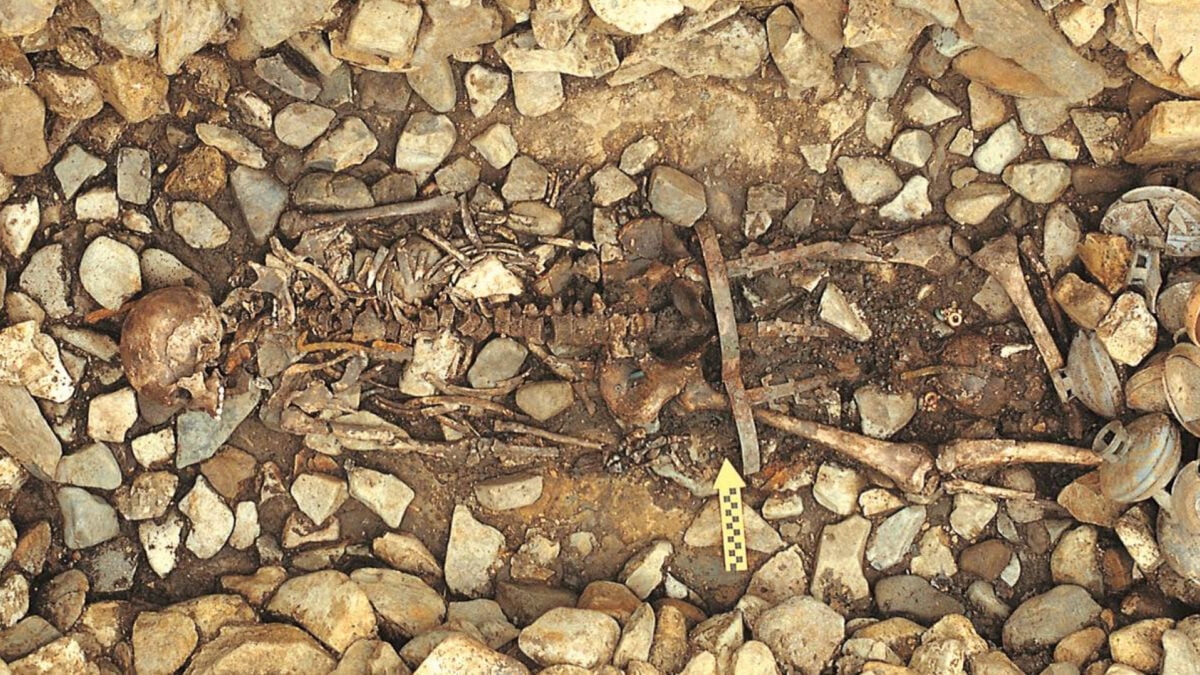
The study, reported in Science Advances and described by Gizmodo, analyzed 78 skeletons from a Korean cemetery dating from 57 BCE to 668 CE, the period of the Three Kingdoms. The tomb investigated in the report is attributed to Silla, one of the states that dominated the peninsula before unification. Researchers say the genetic evidence points to patterns of inbreeding and exogamy that differ from the patrilocal systems often documented in ancient Europe.
What researchers were trying to answer
For scholars of ancient Korea, one of the key questions has been how much these dramatic burial assemblages can reveal about social structure. Historical records and archaeological work had already established that sacrificial burials occurred and that sunjang was associated with elite rank. But genetic data offered a chance to test assumptions about whether those buried together were close relatives, social dependents, outsiders, or some combination of these.
Daewook Kim, a co-lead author of the study and curator at Yeongnam University Museum, said the team’s questions centered on blood relations and kinship structures in Silla society. According to the article, they combined bioanthropological analysis of human remains with molecular genetic evaluation of ancient DNA to reach their archaeological conclusions.
That matters because mortuary evidence can be difficult to interpret on symbolism alone. Tomb layout, grave goods, and placement suggest rank and ritual meaning, but biology can clarify relationships inside the burial assemblage. In this case, the researchers appear to have used genetics to investigate not only who these individuals were but what their grouping says about the society that entombed them.
A ritual of domination and status
The report situates sunjang within a wider global history of sacrificial burial. Such practices have been documented in multiple ancient societies and have been linked to motives including resource conflicts, ritualized belief, and the justification of concentrated wealth and power. In Silla, historical records indicate that the practice was used to reinforce the rank and status of noblemen.
Kim described the practice as a reflection of both the authority to take lives for the sake of the afterlife and the hierarchical nature of the society at the time. The article notes that numerous examples of sunjang have been identified at the Imdang and Joyeong-dong tomb complexes in Gyeongsan, the focus of the study.
The Encyclopedia of Korean Culture, as cited in the piece, says kings and social elites were buried with people ranging from servant women to soldiers and coachmen, individuals considered necessary to the tomb owner in the afterlife. Sacrificial victims were typically in their late teens to thirties and appeared to be in relatively good physical health. The practice was eventually banned in 502 CE.
Those details underscore the political function of the ritual. Burial was not only about religious belief or private mourning. It was also a public declaration of authority, capable of absorbing living people into the social logic of an elite person’s death.
Why the DNA evidence matters now
What gives this study added significance is its contribution to a less Eurocentric ancient genetics record. Gizmodo notes that although local and international scholars already knew of sunjang through texts and excavation, genetic studies confirming how such mass burials functioned were comparatively scarce, especially for ancient civilizations outside Europe.
That gap matters because ancient DNA has transformed historical interpretation, but its geographic distribution remains uneven. When more of that work is concentrated in Europe, global comparisons can become distorted. A study like this broadens the evidence base and offers a more regionally grounded account of how kinship and hierarchy worked in early Korea.
The finding that the Silla patterns differ from ancient European patrilocal systems is especially important in that respect. Even in a short report, it signals that researchers are not simply using DNA to confirm old assumptions. They are identifying social structures that may have operated according to different family, marriage, and status logics than those familiar from other parts of the ancient world.
A window into power, family, and the afterlife
The study does not reduce sunjang to a simple formula. But it appears to make one point clearer: these burials were embedded in a sophisticated and deeply hierarchical social order, one in which death could be organized to preserve status and project authority beyond the grave. Genetics helps show how those arrangements were structured, who may have been linked by blood, and where social obligation or coercion may have overridden kinship.
That is why the work resonates beyond the gruesome shock of burial sacrifice. It opens a more detailed view into how a kingdom understood rank, family, and the claims the dead could make upon the living. Archaeology has long exposed the material traces of that world. Ancient DNA is now helping explain the human relationships inside it.
This article is based on reporting by Gizmodo. Read the original article.
Originally published on gizmodo.com