From Sky to Roof
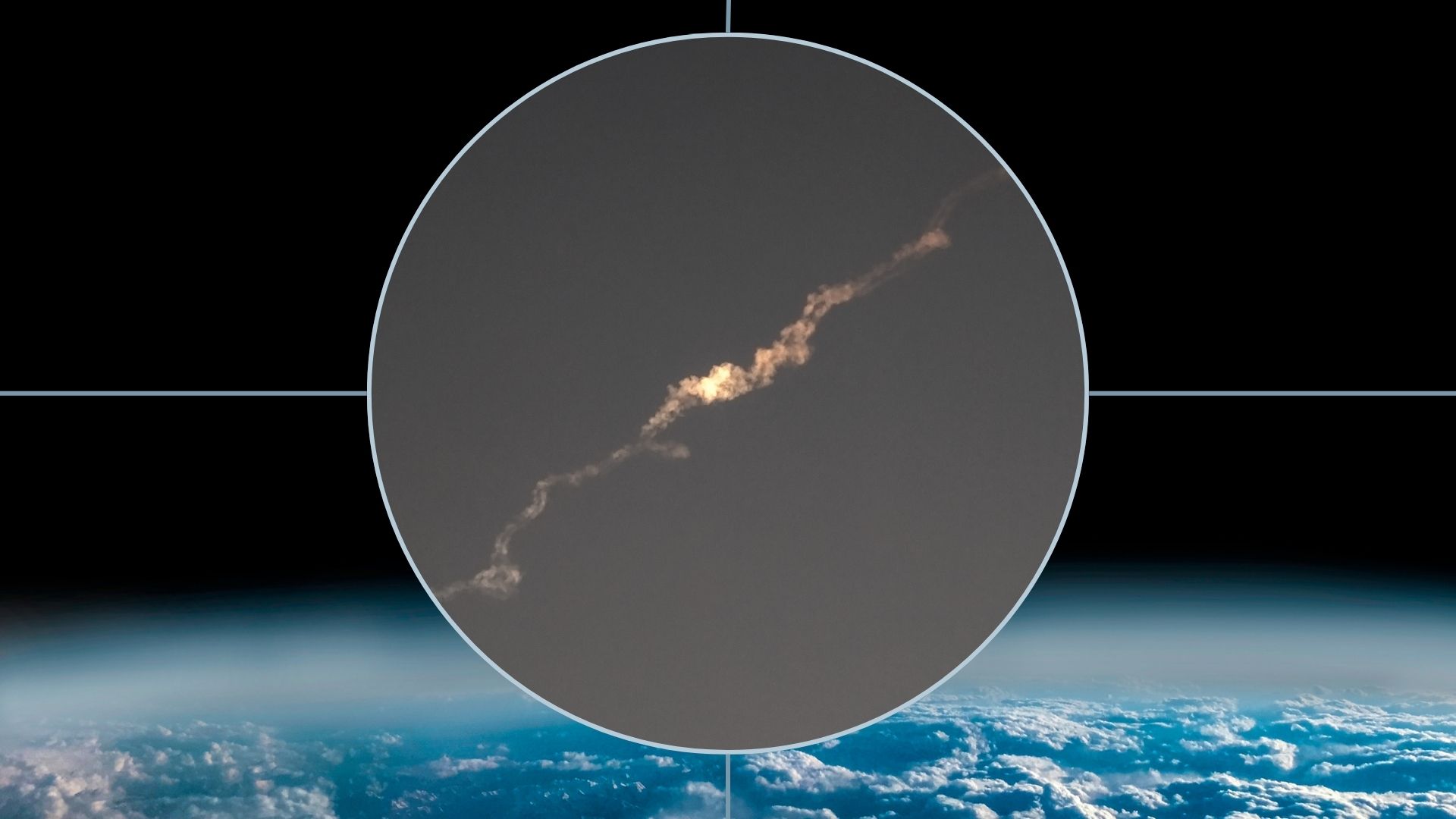
Thousands of observers across western Europe witnessed a spectacular fireball streak across the sky on March 8 before a meteorite fragment crashed through the roof of a residential home in Germany. The event marks one of the rarest occurrences in astronomy: a confirmed meteorite strike on an occupied building, with the space rock punching through roofing materials and coming to rest inside the home.
The fireball was visible across a wide area including parts of Germany, the Netherlands, Belgium, and France, with observers reporting a bright, slow-moving streak of light accompanied by fragmentation and color changes typical of a large object entering the atmosphere at high speed. The event occurred in the evening hours, maximizing the number of witnesses and the quality of visual observations.
Multiple security cameras, dashcams, and dedicated meteor observation networks captured video of the fireball, providing scientists with the data needed to reconstruct the object's trajectory through the atmosphere and calculate its origin in the solar system.
The Impact
The meteorite fragment that struck the German home was one of several pieces that survived the atmospheric passage. When a meteoroid enters Earth's atmosphere, the extreme heat and pressure typically cause it to break apart at altitudes of 20 to 40 miles, scattering fragments over an area known as a strewn field. The larger and denser fragments travel farthest along the trajectory, while smaller pieces fall closer to the point of initial breakup.
The homeowner reported hearing a loud crash followed by the discovery of a dark, dense rock that had penetrated the roof tiles and underlying structure. The fragment, which appeared to be a stony meteorite based on preliminary visual assessment, was warm to the touch but had cooled significantly during its fall through the lower atmosphere.
Local authorities and scientists from nearby universities responded quickly to the scene, securing the meteorite and beginning documentation of the impact damage. Fresh meteorites are scientifically valuable because they have not been contaminated by prolonged exposure to Earth's environment, preserving information about their composition and the conditions of the early solar system.
How Rare Is This?
While approximately 48 tons of meteoritic material falls to Earth every day, the vast majority consists of microscopic particles that burn up in the upper atmosphere or fall unnoticed into oceans and uninhabited areas. Only a handful of meteorites each year are recovered after observed falls, and strikes on buildings are exceptionally rare.
The most famous building strike occurred in 1954, when a meteorite crashed through the roof of a home in Sylacauga, Alabama, and struck resident Ann Hodges while she napped on a couch — the only confirmed case of a meteorite injuring a person. Since then, documented building strikes have occurred roughly once every few years worldwide, though many likely go unreported in remote areas.
The German strike is notable because it occurred after a widely observed fireball, providing both the meteorite itself and extensive observational data about the atmospheric entry. This combination allows scientists to connect the recovered material to a specific trajectory and potentially trace it back to its parent body in the asteroid belt.
Scientific Value
Fresh meteorite falls are prized by planetary scientists because they provide samples of solar system material that can be analyzed with modern laboratory techniques without the degradation caused by terrestrial weathering. The composition of a meteorite reveals information about the conditions that prevailed in the early solar system when the parent body formed, roughly 4.5 billion years ago.
The trajectory data captured by observation networks is equally valuable. By combining visual and radar observations of the fireball with the known recovery location of the meteorite, scientists can calculate the object's orbit before it encountered Earth. This allows them to determine which region of the asteroid belt the meteorite originated from and potentially link it to a specific asteroid family.
Researchers will conduct a battery of analyses on the recovered fragment, including mineralogical classification, isotopic analysis, and measurement of cosmogenic nuclides — radioactive atoms produced by cosmic ray exposure during the meteorite's time in space. These measurements can reveal how long the object spent as a small body in space before encountering Earth, adding to our understanding of the dynamics of the asteroid belt.
The European Fireball Network
The event was well documented thanks to Europe's extensive network of fireball observation cameras, operated by multiple national organizations that coordinate data sharing. These networks have dramatically increased the rate of meteorite recoveries by providing precise trajectory information that allows search teams to identify likely landing areas.
In this case, the meteorite's landing was immediately apparent because it struck a building, but the network data will be crucial for locating additional fragments that likely fell in the surrounding area. Search teams guided by the calculated strewn field will comb fields, roads, and open areas looking for additional pieces in the coming days and weeks.
The success of fireball networks has inspired similar efforts in other regions, including North America and Australia, where automated camera systems continuously monitor the sky for bright meteors. As these networks expand, the rate of meteorite recoveries is expected to increase, providing scientists with a steadily growing collection of fresh extraterrestrial samples.
This article is based on reporting by Space.com. Read the original article.
Originally published on space.com