A sprawling contamination story is back in focus
PFAS, the class of compounds often called “forever chemicals,” have become shorthand for one of the most consequential pollution crises of the industrial era. A new Live Science interview with investigative journalist Mariah Blake, author of They Poisoned The World, revisits how these substances spread through the environment and why the scale of the contamination continues to shock scientists, regulators, and the public alike.
The broad outline is now familiar but still difficult to absorb: chemicals developed for useful industrial and consumer purposes entered water systems and ecosystems at enormous scale, persisted because of their chemical stability, and accumulated into a public-health and environmental problem that has proven exceptionally hard to contain. Blake describes the story as one of the greatest corporate scandals in history, a framing that captures the gravity of the allegations surrounding PFAS production and disposal.
Why PFAS became so hard to escape
The nickname “forever chemicals” is powerful because it captures the central property that makes PFAS so troublesome. These substances are known for their persistence. Once released, they do not readily break down, which means contamination can remain in water, soil, and biological systems for long periods. The interview emphasizes that the chemicals are now effectively everywhere, a striking summary of how thoroughly this class of pollutants has spread.
That ubiquity is what elevates the story beyond a local contamination event. PFAS are not being discussed as an isolated industrial accident affecting one site. They are being described as a globally dispersed legacy of chemical use and waste practices that escaped meaningful containment. In public understanding, that is the turning point. A pollution issue changes character once it becomes clear it is not exceptional, but widespread.
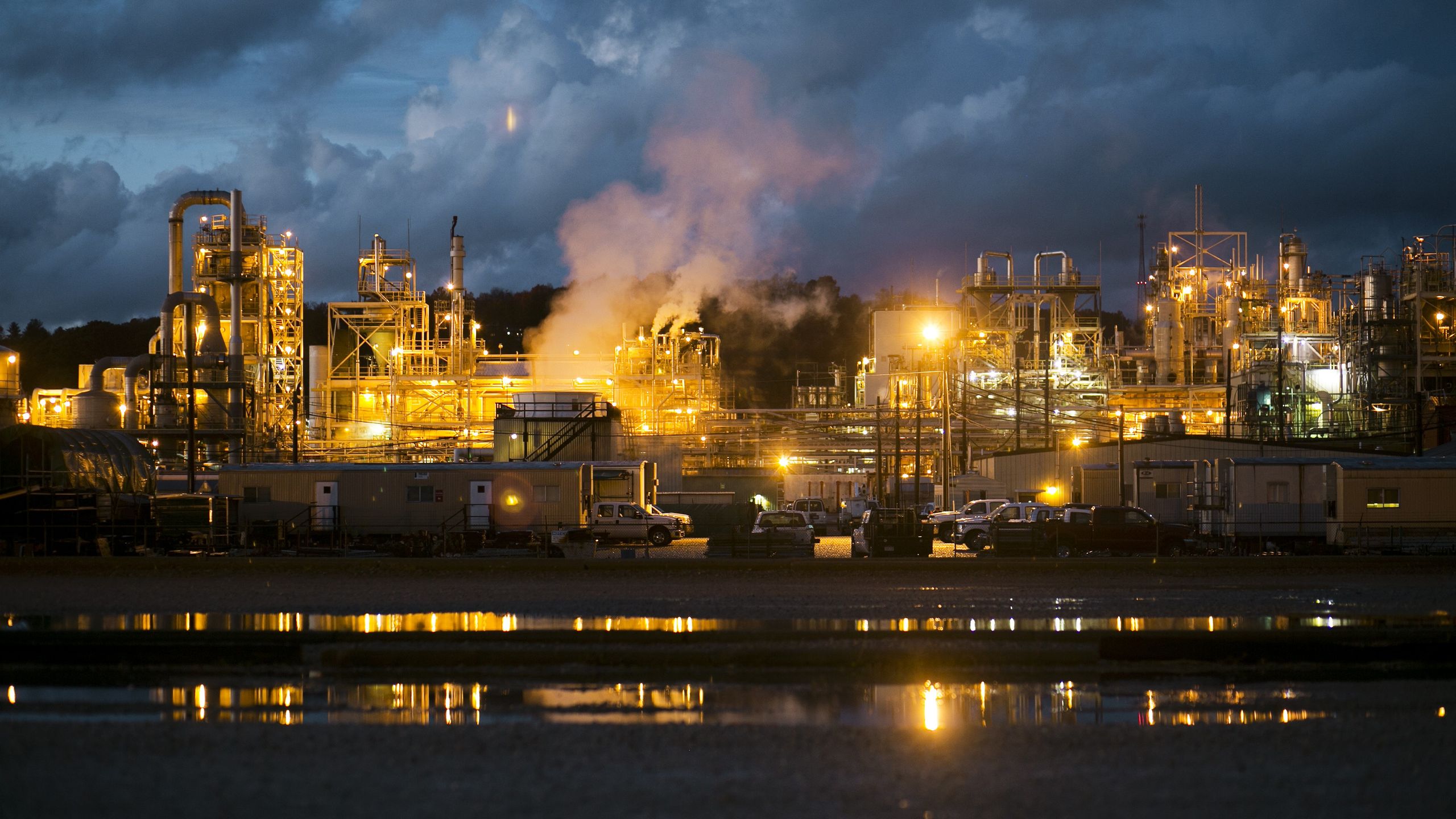
The Washington Works DuPont plant in Parkersburg, West Virginia, appears in the reporting as an infamous location in PFAS litigation. The plant has long carried symbolic weight in the public conversation because it is associated with enormous discharges of these chemicals into surrounding waters. That history helped transform PFAS from a technical chemical-regulation issue into a broader story about industry conduct, environmental exposure, and delayed recognition of harm.

From useful chemistry to public scandal
Much of the lasting force of the PFAS story comes from the gap between industrial utility and downstream consequence. Chemicals developed because they solved practical problems also created a pollution burden that has proven unusually persistent. Blake’s account, as described by Live Science, places that contradiction at the center of the scandal: substances valued for stability and performance also became difficult to eliminate once they entered the environment.
That contradiction has shaped lawsuits, investigative reporting, and scientific inquiry for years. It also explains why PFAS have become a defining case study in modern environmental accountability. When contamination is both long-lasting and geographically broad, questions intensify about what was known, when it was known, and how institutions responded.
The public resonance of the issue rests partly on that timeline. People tend to understand acute disasters, explosions, spills, visible events. PFAS are different. Their spread is slower, quieter, and more chemically abstract, but in some ways more unsettling because it suggests ordinary systems of production and disposal allowed a durable pollutant to disperse with consequences still unfolding.
Why the issue remains urgent
The interview’s value lies not in introducing PFAS as a new issue, but in underscoring why the issue remains urgent. Describing the chemicals as “literally everywhere” is not just rhetorical force. It reflects the scale of concern around how far contamination has traveled and how difficult it is to reverse. That persistence complicates both cleanup and policy. Once a pollutant is entrenched across many environments, response becomes expensive, slow, and politically fraught.
It also means the story cannot be reduced to one lawsuit, one company, or one region, even though landmark sites and litigation have helped define the public narrative. PFAS contamination spans categories: environmental science, industrial regulation, public health, and corporate accountability. That breadth helps explain why the chemicals have become a major topic of reporting well beyond specialist circles.
Another reason the issue remains active is that PFAS have become a test of whether society can adapt regulation to persistent chemical risks after the fact. The challenge is not only to study and manage existing contamination, but also to decide what lessons should be applied to future materials and industrial practices. In that sense, PFAS are both a current pollution problem and a warning about how difficult it is to govern technologies once they have scaled.

The power of investigative framing
Scientific findings are crucial to understanding PFAS, but so is investigative storytelling. The reason is straightforward: environmental scandals often emerge not from a single decisive experiment, but from the accumulation of documents, exposures, legal disputes, and community experiences over time. Blake’s work, as presented in the interview, fits into that tradition by assembling the human and institutional dimensions of the contamination story.
That matters because PFAS can otherwise seem remote or overly technical. Terms such as perfluoroalkyl and polyfluoroalkyl substances do not naturally convey moral or political urgency. “Forever chemicals,” by contrast, does. So do reporting frames centered on polluted water, long-running litigation, and the claim that one of the great corporate scandals in history has been hiding in plain sight through industrial normalcy.
The interview therefore functions as both a recap and a reminder. It places PFAS back into a larger narrative about how contamination becomes visible, who bears the burden of proving harm, and how long it can take for dispersed industrial damage to enter mainstream public consciousness.
A contamination story with no easy endpoint
The disturbing feature of PFAS pollution is that there is no neat ending built into the chemistry. Persistence means the story continues after exposure is discovered, after reporting appears, and after lawsuits are filed. Even when awareness rises, cleanup and regulation remain difficult because the underlying substances do not simply disappear.
That is why the PFAS issue continues to command attention. It is not only a historical account of what happened at industrial sites such as Washington Works. It is an ongoing reckoning with chemicals whose durability turned them into one of the defining environmental inheritances of modern manufacturing.
Blake’s interview brings that point back into sharp focus. PFAS pollution is alarming not merely because it was widespread, but because widespread persistence changes what environmental damage looks like. It becomes less like a single event and more like a condition of the world that institutions must now confront for years to come.
This article is based on reporting by Live Science. Read the original article.

Originally published on livescience.com