Tongwei Targets the Next Solar Cell Format
Tongwei has moved deeper into advanced photovoltaic manufacturing with a new partnership focused on hybrid heterojunction back-contact solar cells. The company said it signed a strategic cooperation agreement with Gold Stone (Fujian) Energy Co. Ltd. and Golden Solar (Quanzhou) New Energy Technology Co. Ltd. to develop a mass-production facility for the technology.
The agreement was signed on March 18, 2026, at Golden Solar’s headquarters in Quanzhou, according to the companies. While the partners did not disclose the plant’s location or planned capacity, they described the effort as a large-scale commercialization project rather than a limited pilot.
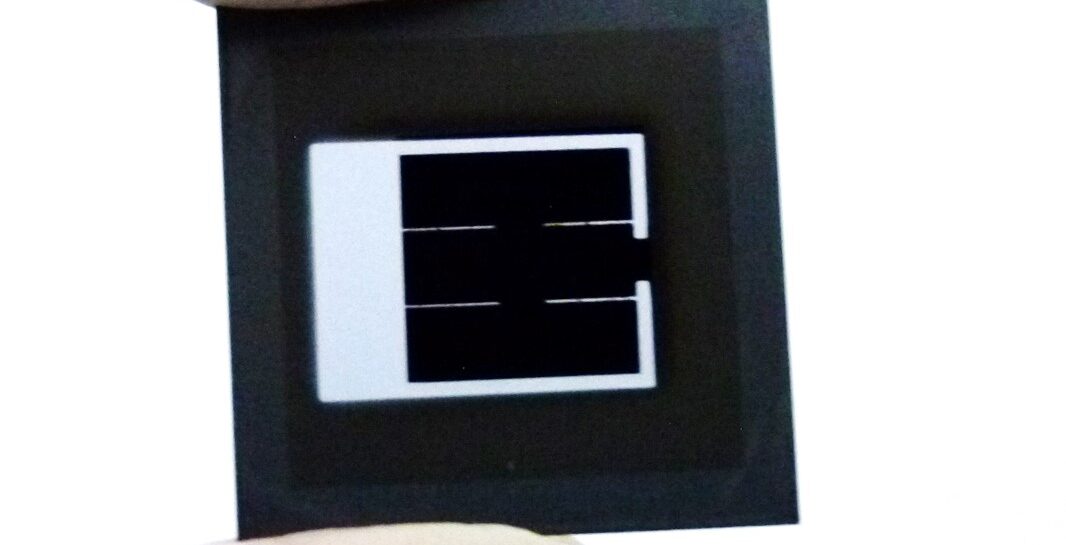
That matters because hybrid heterojunction back-contact, or HBC, is being positioned as a combination of several of the solar industry’s most closely watched design approaches. In the description provided with the deal, the format brings together heterojunction passivation, tunneling oxide and polysilicon structures associated with TOPCon designs, and the grid-free front-side architecture typical of back-contact technologies.
Why the Design Is Getting Attention
The appeal of the HBC concept is straightforward: it aims to merge multiple efficiency-enhancing features into a single cell structure. Heterojunction designs are valued for passivation performance, TOPCon-style structures have become central to recent mainstream manufacturing upgrades, and back-contact layouts remove front-side metal grid shading from the light-facing surface.
By combining those elements, manufacturers are chasing performance gains while trying to hold onto a path toward industrial-scale output. Tongwei’s decision to put its name and manufacturing resources behind the effort suggests the company sees HBC as more than an experimental branch of the market.
Under the agreement, Tongwei Solar, a wholly owned Tongwei subsidiary, will contribute manufacturing capacity, production facilities, supply-chain resources, and operational support. The partnership is described as spanning the full value chain, including technology development, manufacturing, and process optimization.
That breadth is notable. It indicates the project is not limited to a single equipment order or a simple licensing arrangement. Instead, the companies appear to be trying to build an integrated route from lab-scale design to repeatable industrial output.

A Manufacturing Story, Not Just a Lab Story
Solar technology announcements often center on record cells or early-stage prototypes. This one is different because it is framed around factory development. The companies are explicitly talking about mass production and commercialization, even if they have not yet attached a timetable, plant size, or output target.
That makes the announcement significant for a market that increasingly rewards manufacturable efficiency improvements over isolated technical milestones. The solar sector has spent the past several years moving from one production architecture to another at speed, and the next shift will likely depend as much on factory execution as on device physics.
Tongwei already has the scale to influence that transition. When a manufacturer with established capacity starts supporting a new cell concept with facilities and supply-chain backing, the industry pays attention. The move does not guarantee HBC will become the next dominant format, but it does raise the odds that the technology will be tested in a serious commercial setting.
What Is Still Unknown
Key details remain missing. The partners have not disclosed where the facility will be built, how large it will be, or when production could begin. They also have not outlined expected efficiencies, yield targets, or the commercial applications they plan to prioritize.
Those omissions leave major questions unanswered about cost, scalability, and competitiveness. In solar manufacturing, promising architectures can stumble if they add too much process complexity or fail to translate strong cell performance into reliable module output at scale.
Still, the announcement establishes an important point: Tongwei is placing a bet on a hybrid design that tries to combine several of the field’s most important technical ideas. That alone makes the project worth watching, especially as manufacturers continue searching for the next edge in performance and production economics.
Why It Matters
The commercial solar industry is now in a phase where incremental gains can have outsized effects. A cell structure that improves light capture, preserves passivation benefits, and fits into mass manufacturing could shift the competitive balance for suppliers trying to stay ahead of commoditization.
Tongwei’s new partnership does not yet prove that HBC will deliver that outcome. What it does show is that one of the sector’s major manufacturers is willing to devote industrial muscle to finding out.
This article is based on reporting by PV Magazine. Read the original article.
Originally published on pv-magazine.com