حروف الحياة، الموجودة في الفضاء
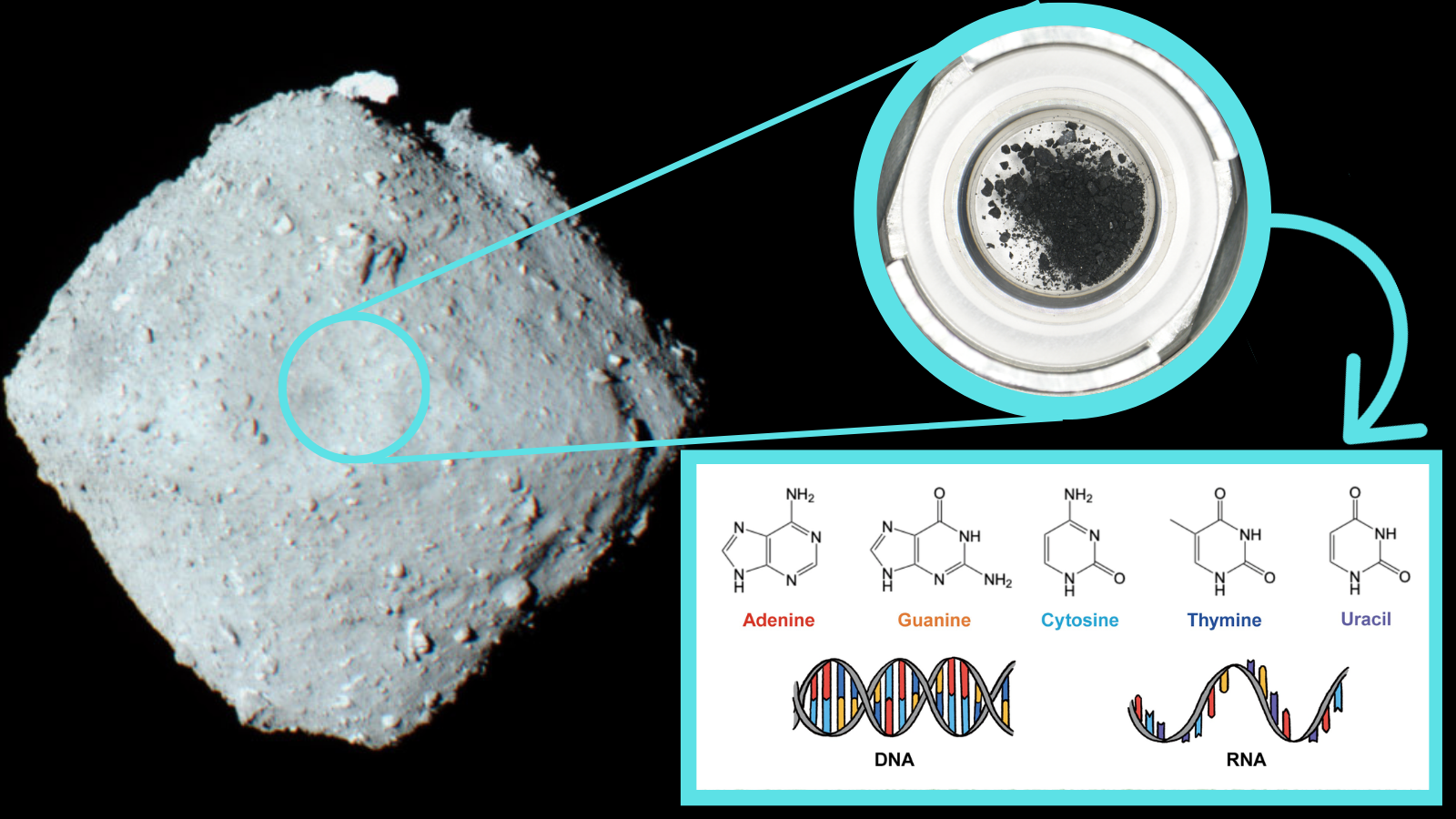
القواعد النيتروجينية الخمس — الأدينين والجوانين والسيتوسين والثايمين واليوراسيل — هي الحروف الكيميائية التي تشفر المعلومات الوراثية في DNA و RNA، وهي الجزيئات التي تشكل أساس جميع الحياة المعروفة على الأرض. تم تأكيد وجودها في مادة الكويكب بشكل فردي من قبل، لكن اكتشاف جميع الخمسة في عينة خارجية أرضية واحدة غير ملوثة من كويكب معروف الأصل هو إنجاز يعزز بشكل كبير الحالة العلمية لمساهمة كونية في أصول كيمياء الحياة.
أكد العلماء الذين يحللون المادة المعادة من كويكب Ryugh القريب من الأرض بواسطة مركبة Hayabusa2 اليابانية بالضبط هذا الاكتشاف. عينة Ryugu — التي تم جمعها في عام 2019 وأعيدت إلى الأرض في أواخر عام 2020 — أصبحت واحدة من أكثر العينات الخارجية أرضية إنتاجية من الناحية العلمية في التاريخ، حيث أسفرت عن سيل من الاكتشافات حول التركيب الكيميائي لكويكب بدائي غني بالكربون تشكل في بداية النظام الشمسي.
لماذا Ryugu مهم
ليست جميع الكويكبات متساوية علمياً بشأن أسئلة أصول الحياة. يتم تصنيف Ryugu كجسم من نوع C (كربوني) — الفئة الأكثر بدائية كيميائياً، المكونة من مادة لم تتعرض لتغيير نسبي كبير منذ تشكل النظام الشمسي قبل 4.6 مليار سنة. هذه الأجسام هي أقرب نظائر في نظامنا الشمسي للغبار بين الكواكب والأجسام الكوكبية التي تم تجميع الأرض المبكرة منها.
تم تصميم مهمة Hayabusa2 خصيصاً لإعادة عينات من السطح السفلي لـ Ryugu وكذلك سطحه، والقيام بذلك بطريقة محكومة بعدم التلوث تسمح للعلماء بنسب المركبات المكتشفة بشكل قاطع للكويكب وليس للتلوث الأرضي. هذا الصرامة المنهجية هي ما يجعل كشف القاعدة النيتروجينية ذا أهمية علمية: الدراسات السابقة للنيازك واجهت دائماً إمكانية التلوث الأرضي، حيث أن النيازك تتعرض للمحيط الحيوي الأرضي من اللحظة التي تهبط فيها.
تأكيد جميع القواعس النيتروجينية الخمسة
كانت التحليلات السابقة لعينة Ryugu قد اكتشفت بالفعل عدة قواعد نيتروجينية. يرفع تأكيد الخمسة جميعاً — الأدينين والجوانين (البيورينات)، السيتوسين والثايمين (البيريميدينات الموجودة في DNA)، واليوراسيل (ما يعادل RNA من الثايمين) — هذه النتيجة من المثيرة للاهتمام إلى علامة بارزة.
اكتشاف جميع الخمسة معاً في عينة واحدة بدائية يقترح أن العمليات الكيميائية التي تعمل في الكويكبات الكربونية البدائية قادرة على تصنيع مجموعة كاملة من القواعد النيتروجينية من خلال الكيمياء الآبيوتية. المسار الاصطناعي الأكثر احتمالاً ينطوي على تفاعلات بين المركبات الكربونية البسيطة والأمونيا في وجود الثلج المائي والإشعاع فوق البنفسجي — عمليات يتم فهمها جيداً في الإعدادات المخبرية ومعروفة أنها تعمل في الوسط بين النجمي.
الآثار المترتبة على أصل الحياة
يساهم الاكتشاف في — لكن لا يحل — أحد أعمق الأسئلة في العلم: كيف نشأت الآلية الجزيئية للحياة على الأرض؟ تقترح فرضية panspermia، في أكثر أشكالها تواضعاً، أن المكونات الكيميائية للحياة تم تسليمها إلى الأرض المبكرة بواسطة الكويكبات والمذنبات الكربونية خلال القصف الثقيل المتأخر تقريباً 3.8-4.1 مليار سنة. تدعم نتائج Ryugu هذه الفرضية من خلال إظهار أن كويكب بدائي قادر كيميائياً على حمل جميع القواعس النيتروجينية الخمسة موجود وأن واحداً على الأقل من هذه الكويكبات سلم المادة إلى مدار عابر للأرض.
ما لا تثبته النتائج هو أن الحياة نفسها، أو حتى الكيمياء الحيوية قبل الحياة الأكثر تعقيداً، يمكن أن تتشكل في الكويكبات. الفجوة بين وجود القواعس النيتروجينية وامتلاك جزيئات RNA أو DNA ذاتية التكاثر ضخمة، تتضمن الحفز والتركيز وبيئة كيميائية غير محتمل أن توفرها الكويكبات. تثبت عينة Ryugu أن الفضاء سلم الحروف — السؤال عن كيفية تجميع تلك الحروف إلى الكلمات الأولى من علم الأحياء يبقى مفتوحاً.
هذا المقال مبني على التقارير من Space.com. اقرأ المقالة الأصلية.

Originally published on space.com