Introduction: A New Vision for the Cosmos
The Big Bang is the cornerstone of modern cosmology, but it leaves fundamental questions unanswered. What triggered it? What came before? The standard inflationary model posits a rapid expansion from a quantum fluctuation, but it still begins with a singularity—a point of infinite density where physics breaks down. Enter the ekpyrotic theory, a bold alternative rooted in string theory that envisions a universe without beginning or end. In this model, our cosmos is a brane (short for membrane) floating in a higher-dimensional space, and the Big Bang is simply the result of two such branes colliding. This article explores the ekpyrotic universe, its elegant picture, and how it challenges inflation.
What Is a Brane? The Foundation of Ekpyrotic Cosmology
To understand ekpyrotic theory, we must first grasp the concept of a brane. In string theory, branes are fundamental objects that can have various dimensions. Our universe, according to ekpyrotic cosmology, is a three-dimensional brane—a vast sheet embedded in a higher-dimensional space called the bulk. Imagine a bedsheet floating in a room; the sheet is our universe, and the room is the bulk. We are confined to the sheet, unable to perceive the extra dimensions. This picture is not just a mathematical abstraction; it provides a physical mechanism for the Big Bang without invoking a singularity.
The ekpyrotic model typically involves two parallel branes, each a complete universe, separated by a tiny gap in the extra dimension. These branes are not static; they drift, oscillate, and occasionally collide. When they meet, the collision releases an enormous amount of energy, which manifests as the hot, dense state we call the Big Bang. After the collision, the branes bounce apart, and the universe expands and cools, eventually leading to the structure we observe today. Crucially, this process can repeat indefinitely, making the universe cyclic.

How the Ekpyrotic Universe Avoids the Singularity
One of the most attractive features of the ekpyrotic theory is that it eliminates the initial singularity. In standard Big Bang cosmology, extrapolating backward leads to a point of infinite density and temperature where general relativity breaks down. The ekpyrotic model avoids this by having the Big Bang arise from a finite, physical event—a brane collision. The energy of the collision is spread over the entire brane, not concentrated at a point. Moreover, the branes themselves have a finite thickness in the extra dimension, so the collision is a smooth process, not a catastrophic singularity. This makes the ekpyrotic universe mathematically tractable and conceptually appealing.
The theory also addresses the horizon and flatness problems that inflation solves. In the ekpyrotic model, the universe before the collision is in a slow, contracting phase. This contraction smooths out any inhomogeneities and flattens the geometry, much like inflation does but through a different mechanism. The resulting universe is remarkably uniform and flat, matching observations.
Comparing Ekpyrotic Theory with Cosmic Inflation
Cosmic inflation has been the dominant paradigm for decades, explaining the large-scale structure of the universe and the cosmic microwave background. However, inflation is not without its critics. Some argue that inflation is too flexible, able to accommodate almost any observational result. The ekpyrotic theory offers a testable alternative. While both models predict a nearly scale-invariant spectrum of primordial fluctuations, they differ in the details. For example, ekpyrotic models typically produce a slightly red-tilted spectrum (more power on large scales) and a specific level of non-Gaussianity, which future observations could detect.
Another key difference is the nature of gravitational waves. Inflation predicts a stochastic background of primordial gravitational waves, while ekpyrotic models generally produce a much weaker signal. If future experiments (like the BICEP or LiteBIRD projects) detect primordial gravitational waves, that would strongly favor inflation. If not, the ekpyrotic theory becomes more plausible. Thus, the debate is not just philosophical; it is empirically testable.

The Role of String Theory and Extra Dimensions
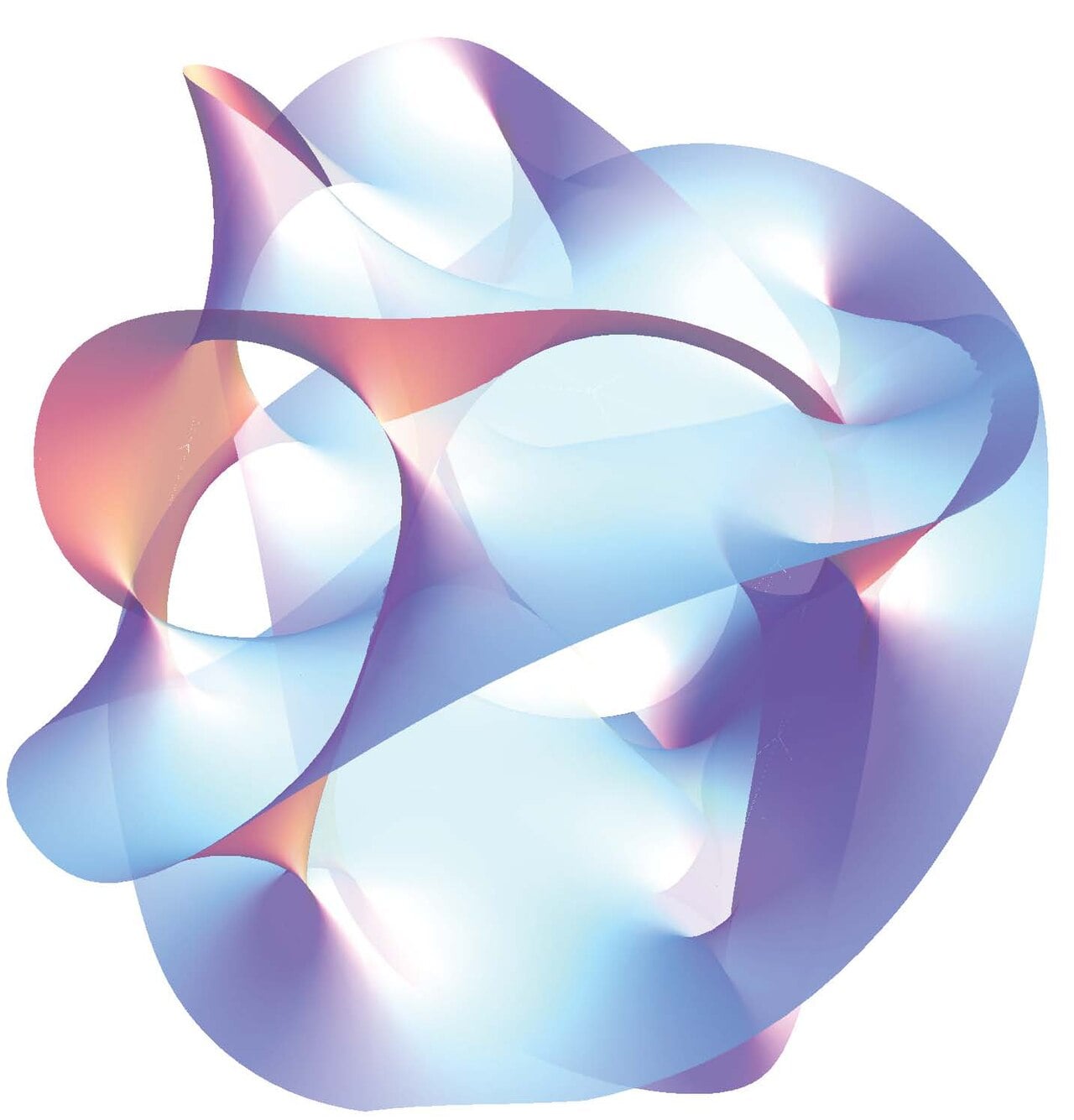
The ekpyrotic theory is deeply rooted in string theory, which posits that fundamental particles are not point-like but tiny vibrating strings. String theory requires extra spatial dimensions—typically six or seven—beyond the three we experience. In ekpyrotic cosmology, these extra dimensions are compactified (curled up) and play a crucial role in the dynamics of branes. The branes themselves are solutions of string theory, and their interactions are governed by the theory's equations.
However, string theory remains unverified, and the ekpyrotic model inherits its speculative nature. The mathematics is extraordinarily complex, and many versions of the theory rely on approximations that may not hold. Critics argue that the ekpyrotic theory is not yet a fully consistent model; it is more a framework or a collection of ideas. Nonetheless, it has inspired a rich body of research and has forced cosmologists to think beyond inflation.
Observational Tests and Future Prospects
How can we test the ekpyrotic universe? One way is through the cosmic microwave background (CMB). The pattern of temperature fluctuations in the CMB carries imprints of the early universe's physics. Ekpyrotic models predict specific signatures, such as a lack of B-mode polarization from primordial gravitational waves and a particular bispectrum (three-point correlation function) of temperature fluctuations. Upcoming CMB experiments will measure these with unprecedented precision.
Another test comes from large-scale structure surveys. The distribution of galaxies and dark matter can reveal the primordial power spectrum and its deviations from scale-invariance. If the ekpyrotic model is correct, we might see a suppression of power on small scales or a distinctive running of the spectral index. Additionally, the search for cosmic strings or other topological defects could provide clues, as some ekpyrotic models predict their existence.
Finally, the cyclic nature of the ekpyrotic universe raises profound questions. If the universe has gone through infinite cycles, what does that mean for entropy and the arrow of time? Some versions of the theory incorporate a mechanism to reset entropy at each bounce, but this remains controversial. The idea of an eternal universe is philosophically appealing, but it requires new physics to avoid the heat death predicted by the second law of thermodynamics.

Conclusion: The Beauty and Challenge of the Ekpyrotic Universe
The ekpyrotic theory presents a stunning alternative to cosmic inflation. By envisioning our universe as a brane colliding with another in higher-dimensional space, it offers a natural explanation for the Big Bang without singularities. It solves the classic problems of cosmology through a contracting phase before the bounce, and it makes distinct predictions that future observations can test. However, the theory's reliance on string theory and extra dimensions means it remains speculative. The mathematics is daunting, and many details are still being worked out.
Nevertheless, the ekpyrotic universe is a testament to human creativity and our drive to understand the cosmos. Whether or not it turns out to be correct, it has already enriched cosmology by challenging assumptions and opening new avenues of research. As we gather more data from telescopes and experiments, we may finally determine whether our universe is a one-time event or part of an eternal cycle of colliding branes.
This article is based on reporting by Universe Today. Read the original article.
Originally published on universetoday.com